

Royal Albert Hall
Images

File:Paramore at Royal Albert Hall - 19th June 2017 - 11.jpg

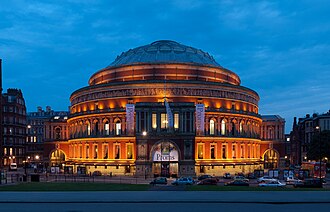


Architectural Icon and Memorial Foundation
The Royal Albert Hall stands as a monumental testament to Victorian ambition and artistic vision. Its distinctive circular design, a feat of engineering for its time, is not merely aesthetic but functional, aiming for optimal acoustics and sightlines for a large audience. Commissioned as part of a grand memorial to Prince Albert, the hall was conceived by Prince Albert himself as the 'Central Hall of Arts and Sciences.' Upon its completion and opening in 1871 by Queen Victoria, it embodied his lifelong dedication to fostering culture, science, and industry.
The hall’s construction, using materials like brick and terracotta, reflects the architectural trends of the era, while its sheer scale and purpose cemented its status as a national landmark. It forms a crucial part of the larger Albert Memorial complex, visually linked to the ornate Albert Memorial across Kensington Gore.
A Living History
The genesis of the Royal Albert Hall is deeply rooted in the personal and public life of Queen Victoria and her beloved husband, Prince Albert. Following Prince Albert's untimely death in 1861, Queen Victoria was determined to create a lasting tribute. The hall, initially envisioned as a place to showcase scientific and artistic achievements, evolved into a premier venue for public gatherings and performances.
Its opening in 1871 marked the culmination of years of planning and construction. Over its 153-year history, the hall has witnessed pivotal moments, from suffragette meetings and speeches by influential figures like Winston Churchill and Charles de Gaulle, to legendary sporting contests and the performances of countless world-renowned artists. This rich tapestry of events underscores its evolving significance beyond its original memorial purpose.
The Hall's Enduring Significance in the Cultural Landscape
The Royal Albert Hall's significance extends far beyond its architectural grandeur; it is a dynamic hub of global culture. As the permanent home of the BBC Proms since 1941, it hosts an annual summer festival that is a cornerstone of classical music in the UK and internationally. The hall’s capacity to stage over 390 diverse events annually-ranging from opera and ballet to rock concerts, film premieres with live orchestras, and major award ceremonies-demonstrates its unparalleled versatility.
This adaptability ensures its continued relevance in a rapidly changing entertainment landscape. Furthermore, its role in hosting school events, community gatherings, and charity performances highlights its deep connection to the public and its function as a space for shared experiences and civic engagement.
A Multifaceted Venue
The Royal Albert Hall is a testament to the power of adaptable architecture and programming. Its main auditorium, capable of seating over 5,000, is a canvas for an astonishing array of performances. Beyond the main stage, over 1,000 additional events utilize its various spaces annually, from intimate recitals to large banquets.
The hall has hosted legendary musicians like Eric Clapton and Shirley Bassey, iconic sporting figures such as Muhammad Ali and Lennox Lewis, and intellectual giants like Albert Einstein. This broad spectrum of activity-from high art to popular entertainment, from political discourse to athletic prowess-solidifies the Royal Albert Hall's status not just as a concert venue, but as a vital institution that reflects and shapes cultural trends, historical moments, and public life.
Go deeper
Frequently Asked Questions
What is the Royal Albert Hall?+
Why is the Royal Albert Hall shaped like a circle?+
Who opened the Royal Albert Hall and when?+
What kinds of events happen at the Royal Albert Hall?+
How many people can sit in the main hall?+
Based on content from Wikipedia · Licensed under CC BY-SA 4.0