

Rotes Rathaus
Images

Rotes Rathaus



Geographical and Climatic Context of the Rotes Rathaus
The Rotes Rathaus is strategically situated in the historic center of Berlin, Germany, specifically on Rathausmarkt. This central location places it within the core of the city's administrative, cultural, and historical landscape. Berlin itself is the capital and largest city of Germany, a sprawling metropolis characterized by a temperate continental climate.
Summers are generally warm with average temperatures around 22°C (72°F), while winters are cold, often with temperatures dipping below freezing and occasional snowfall. This climate influences urban life, from the seasonal activities in public spaces surrounding the Rathaus to the architectural considerations for building maintenance. The city's geography, bisected by the Spree River, and its extensive parklands contribute to its unique urban fabric, with the Rotes Rathaus serving as a constant, anchoring presence amidst this dynamic environment.
A Chronicle in Red Brick
The construction of the Rotes Rathaus, initiated in 1861 and completed in 1869, marked a significant moment in Berlin's urban development during the era of the German Empire. Designed by architect Hermann Friedrich Waesemann, its neo-Renaissance style was intended to project an image of imperial grandeur and civic pride. The building has endured a tumultuous history, including substantial damage during World War II.
Its subsequent reconstruction, completed in the 1950s, was a deliberate act of civic resilience and a commitment to preserving this vital symbol. The Rotes Rathaus has thus served as a silent witness to profound historical transformations, from imperial ambitions and wartime devastation to post-war division and reunification, consistently functioning as the locus of Berlin's municipal governance.
The Nexus of Berlin's Governance and Civic Life
The Rotes Rathaus is not merely an administrative building; it is the symbolic and functional heart of Berlin's political system. It houses the offices of the Governing Mayor of Berlin, the city's chief executive, and the Senate, comprising the heads of the city's various administrative departments. Furthermore, it is home to the plenary chamber of the Berlin House of Representatives (Abgeordnetenhaus von Berlin), the city's unicameral parliament.
Here, elected representatives engage in legislative debate, policy formulation, and oversight of the executive branch. The Rathaus serves as the stage for critical decision-making processes that shape public policy, urban development, social services, and cultural initiatives for the city's 3.7 million inhabitants. Its presence underscores the democratic principles and the complex machinery of municipal governance in a major European capital.
Architectural Significance and Enduring Presence
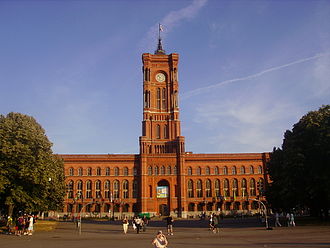
Standing approximately 74 meters (243 feet) tall, the Rotes Rathaus is a commanding structure characterized by its distinctive red brick facade, a feature that has cemented its identity and name. The building's neo-Renaissance design, with its arcaded ground floor, prominent central tower, and ornate detailing, reflects the architectural trends of its time while conveying a sense of permanence and authority. The tower, a focal point of the facade, often features a clock, symbolizing the relentless march of time and the ongoing work of governance.
Despite its historical age, the Rotes Rathaus remains a functional and vital center of power, its enduring architectural presence a constant reminder of Berlin's rich history and its continuous evolution as a global city.
Education and Cultural Integration within the City Hall's Sphere
While the Rotes Rathaus itself is primarily an administrative and legislative hub, its operations are intrinsically linked to the educational and cultural fabric of Berlin. Decisions made within its walls directly impact the city's educational institutions, from funding for schools and universities to the development of cultural programs. The Senate Department for Education, Youth and Family, for instance, works under the purview of the Governing Mayor and Senate, influencing curriculum development, teacher training, and youth services.
The Rathaus also plays a role in fostering cultural heritage, often serving as a venue for official ceremonies, exhibitions, and public events that celebrate Berlin's diverse artistic and historical contributions. Its very existence and continued function are a testament to the city's commitment to preserving its past while investing in its future through education and cultural enrichment.
Go deeper
Frequently Asked Questions
What is the Rotes Rathaus and why is it called "Red City Hall"?+
Where in Berlin is the Rotes Rathaus located?+
When was the Rotes Rathaus built and who designed it?+
What happens inside the Rotes Rathaus every day?+
Why is the Rotes Rathaus important to Berlin's history and government?+
Based on content from Wikipedia · Licensed under CC BY-SA 4.0