

Spinning Space Monsters: Rotating Black Holes!
Images

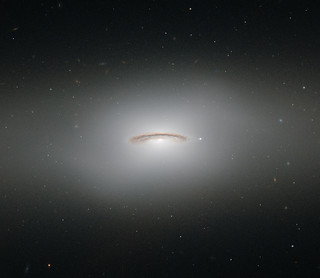
Rotating black hole




The Kerr Metric
Rotating black holes, mathematically described by the Kerr metric, represent a more realistic model of black holes than their non-rotating Schwarzschild counterparts. These objects possess angular momentum, a direct consequence of the rotating progenitor stars from which they form. The defining characteristic of a Kerr black hole is the presence of an ergosphere, a region external to the event horizon.
Within the ergosphere, the black hole's rotation is so intense that it drags spacetime along with it. This phenomenon, known as frame-dragging or the Lense-Thirring effect, means that even stationary observers within the ergosphere are forced to move in the direction of the black hole's spin. The boundary of the ergosphere, the static limit, is where the velocity of spacetime equals the speed of light, making it impossible to remain stationary relative to a distant observer.
Stellar Collapse and the Genesis of Rotation
The formation of rotating black holes is intrinsically linked to the final stages of massive stars. When a star with a mass significantly greater than our Sun exhausts its nuclear fuel, it undergoes gravitational collapse. If the star possessed a substantial rotation rate, this angular momentum is conserved and amplified as the star's radius decreases, following the principle of conservation of angular momentum (analogous to an ice skater pulling in their arms).
This rapid spin is imprinted onto the resulting black hole. The precise mass and rotation rate of the progenitor star dictate the properties of the resulting Kerr black hole, including the size of its event horizon and ergosphere. Understanding this process is crucial for stellar astrophysics and the study of compact objects.
Astrophysical Significance
Rotating black holes are not merely theoretical constructs; they are believed to be the central engines powering some of the most luminous and energetic phenomena in the universe, such as active galactic nuclei (AGN) and quasars. As matter accretes onto a Kerr black hole, it forms a swirling accretion disk. The intense gravitational field and the frame-dragging effect within the ergosphere can efficiently convert gravitational potential energy into kinetic energy and radiation.
Furthermore, the rotation is thought to play a key role in launching powerful relativistic jets of plasma from the poles of the black hole. These jets can extend for millions of light-years, influencing the intergalactic medium and the formation of new stars within galaxies, making rotating black holes fundamental architects of cosmic structure.
The Ergosphere
The ergosphere is a unique feature of rotating black holes that has profound theoretical implications. It is a region where energy can, in principle, be extracted from the black hole's rotation. The Penrose process, a theoretical mechanism proposed by Roger Penrose, describes how particles entering the ergosphere can split, with one part falling into the black hole and the other escaping with more energy than the original particle possessed.
This energy is effectively drawn from the black hole's rotational energy, causing it to spin down over time. The existence and properties of the ergosphere are direct predictions of Einstein's theory of general relativity and provide a unique laboratory for testing fundamental physics under extreme conditions.
Observational Evidence and Future Prospects
While direct observation of the ergosphere is currently beyond our technological capabilities, indirect evidence for rotating black holes and their associated phenomena is abundant. Observations of accretion disks around supermassive black holes in AGN, the detection of relativistic jets, and the gravitational wave signals from merging black holes (which can be spinning) all support the existence of rotating black holes. Future observatories, such as the Event Horizon Telescope, aim to image the immediate vicinity of black holes, potentially providing more direct evidence of frame-dragging and the ergosphere.
Studying these objects continues to push the boundaries of our understanding of gravity, spacetime, and the most extreme environments in the cosmos.
See also
Based on content from Wikipedia · Licensed under CC BY-SA 4.0