

Rope
Images
Rope
The Microscopic Architecture of Macro Strength
The remarkable strength of a rope is a direct consequence of its hierarchical structure and the physics of friction and interlocking. At the base level are the fibers, whether natural (cellulose-based like cotton or lignocellulosic like hemp) or synthetic polymers (polyamides like nylon, polyesters like PET). These fibers possess inherent tensile strength due to their molecular alignment.
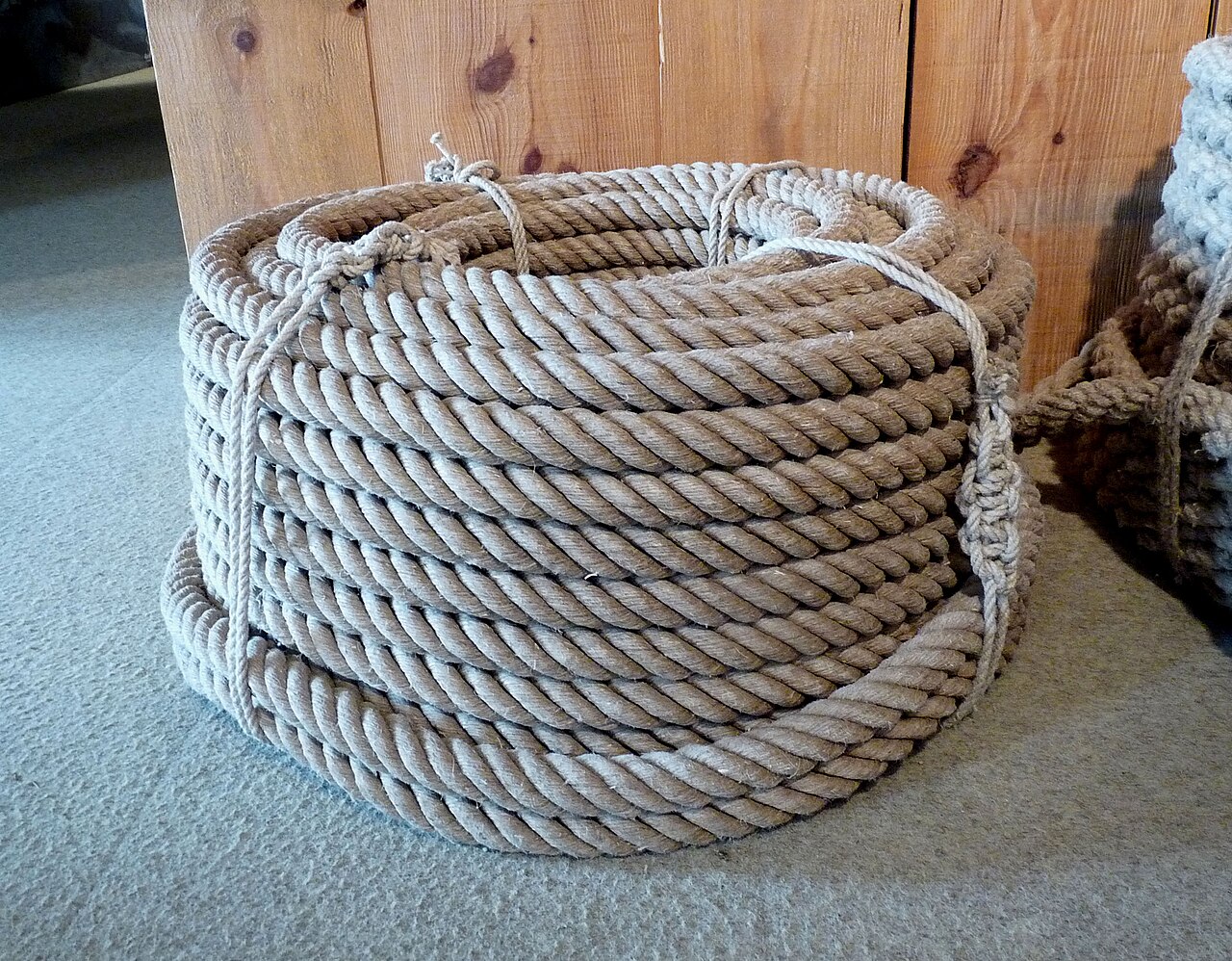
Multiple fibers are spun into yarns, increasing the surface area for friction and creating a more cohesive unit. These yarns are then twisted into strands, a process that further enhances strength by creating a helical structure where each yarn supports the others. The final stage involves twisting these strands together, often in the opposite direction of the yarn twist, to form the rope.
This 'laid' construction creates a stable, compact structure that resists unraveling. Braided ropes, on the other hand, involve interlacing strands in complex patterns, offering excellent flexibility, abrasion resistance, and a more uniform diameter, crucial for applications like climbing or sailing. The choice between laid and braided, and the specific materials used, dictates the rope's performance characteristics, including its breaking strength, elasticity, resistance to UV degradation, and water absorption.
From Prehistory to the Industrial Revolution
The invention and refinement of rope-making represent a pivotal technological advancement in human history, predating recorded time. Archaeological evidence suggests ropes were used by early hominids for tasks like tool-making and hunting. Ancient civilizations, notably the Egyptians, mastered rope construction using papyrus and other plant fibers, employing them in monumental construction projects such as the pyramids and obelisks, and for maritime activities.
The Romans and Greeks further developed rope technology for shipbuilding, warfare, and agriculture. Throughout the Middle Ages, rope-making remained a vital, albeit labor-intensive, craft, essential for sailing ships that powered global exploration and trade. The Industrial Revolution brought about transformative changes with the invention of mechanized rope-making machines, such as the ropewalk and later automated twisters.
This mechanization dramatically increased production efficiency, lowered costs, and allowed for the creation of stronger, more consistent ropes using materials like steel wire, leading to innovations in heavy lifting, mining, and infrastructure development.
Rope's Pervasive Influence Across Disciplines
The utility of ropes extends far beyond simple binding or lifting; they are integral to numerous scientific, engineering, and recreational fields. In engineering, high-strength ropes, including steel cables, are critical components in bridges (suspension and cable-stayed), elevators, cranes, and suspension railways. Their ability to withstand immense tensile loads makes them indispensable for civil engineering feats.
In the realm of safety and rescue, specialized ropes with high energy absorption capabilities are designed for applications like rock climbing, rappelling, and emergency services, providing a critical lifeline. Scientific research also utilizes ropes, from deep-sea exploration vehicles tethered by robust cables to the intricate rigging used in particle accelerators. In sports and recreation, ropes are fundamental to activities like sailing, mountaineering, gymnastics, and even team sports like tug-of-war, demonstrating their universal applicability and enduring importance in facilitating human endeavor and pushing the boundaries of what is possible.
Material Science and the Evolution of Rope Performance
The performance of modern ropes is a testament to advancements in material science. While natural fibers like manila and sisal were historically dominant due to their availability and strength, they are susceptible to rot, UV damage, and inconsistent performance. The advent of synthetic fibers revolutionized rope capabilities.
Polyamides like nylon offer exceptional elasticity and shock absorption, making them ideal for dynamic loads such as climbing falls. Polyesters provide high tensile strength, low stretch, and excellent resistance to abrasion and UV radiation, suitable for applications like sailing lines and control cables. Polypropylene, being lightweight and buoyant, is favored for marine use and general-purpose utility. High-performance fibers like Dyneema (UHMWPE) and Kevlar (aramid) offer tensile strengths far exceeding steel by weight, enabling the creation of ultra-strong, low-stretch ropes used in demanding applications like towing, rigging, and even bulletproof vests.
The ongoing development of new fiber technologies and composite rope structures continues to expand the possibilities for strength, durability, and specialized functionality.
Go deeper
Frequently Asked Questions
What is a rope?+
How do ropes become so strong?+
Why do some ropes have braided patterns?+
When did people first start making ropes?+
Where are ropes used today?+
Based on content from Wikipedia · Licensed under CC BY-SA 4.0