

Ron Howard: From Opie to Awesome Director!
Images

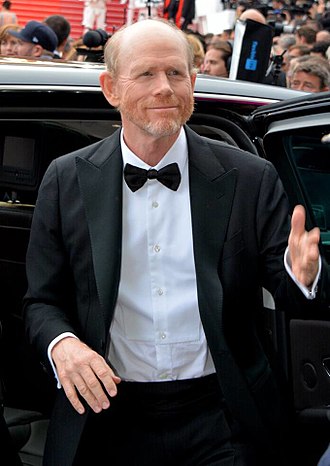
Ron Howard photographing David Shankbone



The Genesis of a Star
Ronald William Howard's journey into the entertainment industry began at a remarkably young age. Born on March 1, 1954, in Duncan, Oklahoma, his talent was evident early on. He first gained widespread recognition as Opie Taylor, the quintessential all-American son in 'The Andy Griffith Show,' a role he inhabited from 1960 to 1968.
This sustained presence on a beloved sitcom during his formative years provided him with an unparalleled apprenticeship in performance and the workings of television production. Simultaneously, he broadened his acting scope with a notable role in the critically and commercially successful 1962 musical film 'The Music Man.' His transition to a teenage heartthrob as Richie Cunningham in 'Happy Days' (1974–1980) cemented his status as a cultural icon, demonstrating an impressive ability to connect with diverse audiences across different eras and character archetypes.
These early experiences laid a robust foundation for his future endeavors.
The Pivotal Shift
Recognizing a deeper calling beyond acting, Ron Howard made a significant career pivot in 1980, dedicating himself to directing. This strategic move allowed him to explore storytelling from a new perspective, shaping narratives and guiding performances. His directorial debut, 'Grand Theft Auto' (1977), was a precursor to his full immersion.
He quickly established his directorial voice with a series of successful films that showcased his versatility. Comedies like 'Night Shift' (1982) and the imaginative 'Splash' (1984) demonstrated his knack for humor and romance, while 'Cocoon' (1985) offered a poignant exploration of aging and life. These early directorial efforts proved his ability to blend commercial appeal with artistic merit, signaling his arrival as a formidable force in filmmaking.
A Master of Diverse Genres
Howard's directorial filmography is a testament to his remarkable range and adaptability. He has helmed ambitious fantasy epics like 'Willow' (1988), intense thrillers such as 'Backdraft' (1991), and critically acclaimed dramas like 'The Paper' (1994). His ability to translate complex stories to the screen is perhaps best exemplified by his historical dramas. 'Apollo 13' (1995) masterfully recreated the harrowing true story of the ill-fated lunar mission, earning widespread praise for its tension and historical accuracy.
This success paved the way for his most celebrated achievement: 'A Beautiful Mind' (2001), which garnered him Academy Awards for Best Picture and Best Director. He continued to explore historical narratives with films like 'Frost/Nixon' (2008), 'Rush' (2013), and 'Thirteen Lives' (2022), demonstrating a consistent commitment to bringing significant real-life events to vivid cinematic life.
Beyond Narrative
In recent years, Ron Howard has expanded his directorial focus to include compelling documentaries, further showcasing his storytelling prowess. Films like 'The Beatles: Eight Days a Week – The Touring Years' (2016), 'Pavarotti' (2019), and 'We Feed People' (2022) offer intimate portraits of influential figures and impactful events, demonstrating his ability to capture the essence of his subjects. His extensive career, spanning over six decades, has been recognized with numerous accolades, including multiple Emmy Awards, Golden Globe Awards, and a Grammy Award, in addition to his two Oscars.
Awarded the National Medal of Arts in 2003 and inducted into the Television Hall of Fame in 2013, Howard's legacy is cemented by his two stars on the Hollywood Walk of Fame. He remains an influential figure, not only for his own body of work but also for his role in shaping cinematic narratives and inspiring future generations of filmmakers.
Go deeper
Frequently Asked Questions
Who is Ron Howard and what did he do as a child?+
What show did Ron Howard act in as Opie?+
When did Ron Howard start directing movies?+
Which famous movie did Ron Howard win an Academy Award for?+
What kind of movies has Ron Howard made?+
Based on content from Wikipedia · Licensed under CC BY-SA 4.0