

Rocket engine
Images
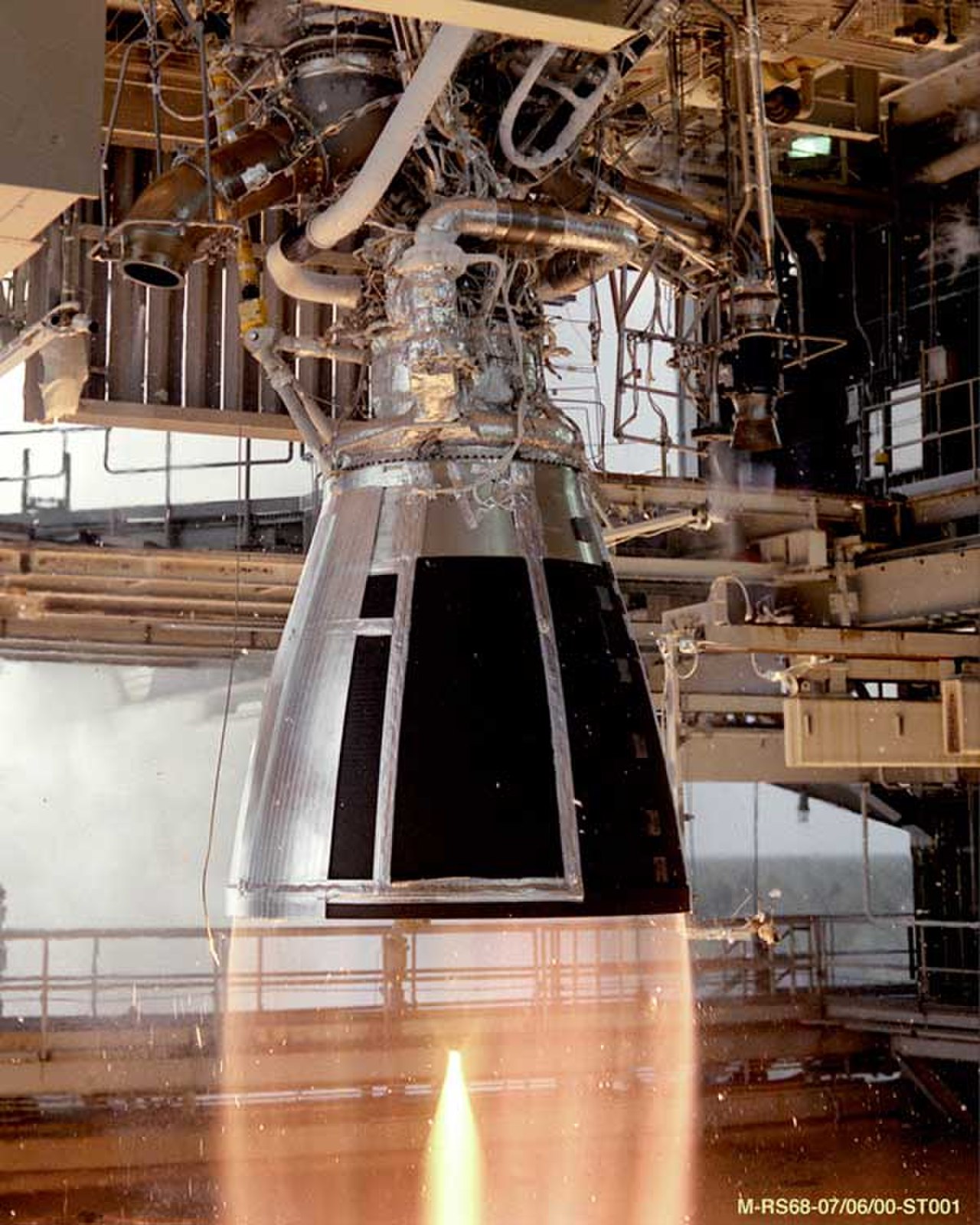
Rocket engine


Thermodynamic Powerhouses
Rocket engines operate on the fundamental principle of expelling mass at high velocity to generate thrust, a direct application of Newton's Third Law. Unlike air-breathing engines, rocket engines carry both fuel and oxidizer, enabling operation in a vacuum. The process typically involves the rapid combustion of propellants within a combustion chamber, generating extremely high temperatures and pressures.
This superheated gas is then channeled through a convergent-divergent (de Laval) nozzle. The nozzle's geometry is critical; it first accelerates the gas to sonic velocity at the throat and then further accelerates it to supersonic speeds in the diverging section. This expansion process converts thermal energy into kinetic energy, maximizing the exhaust velocity and, consequently, the engine's thrust and specific impulse (Isp), a key metric of efficiency.
The performance of a rocket engine is governed by factors such as propellant type, chamber pressure, nozzle expansion ratio, and combustion efficiency.
Pioneering the Frontier
The theoretical underpinnings of rocket propulsion were explored by figures like Konstantin Tsiolkovsky in the late 19th and early 20th centuries, who formulated the rocket equation. However, practical development accelerated in the 20th century. Robert Goddard's pioneering work in the 1920s and 30s, including the launch of the first liquid-fueled rocket, was foundational.
During World War II, Germany's V-2 rocket, developed by Wernher von Braun's team, demonstrated the military potential of large-scale liquid-propellant rockets, significantly advancing the technology. Post-war, both the United States and the Soviet Union leveraged this expertise for their burgeoning space programs, leading to the development of increasingly powerful and reliable engines for ICBMs and, subsequently, for launching satellites and crewed missions, culminating in the Saturn V rocket that powered the Apollo missions.
The Indispensable Engine
Rocket engines are the linchpin of modern space exploration and have profound societal implications. They enable the deployment of satellite constellations that underpin global communication networks, GPS, weather monitoring, and remote sensing technologies crucial for climate science and disaster management. Furthermore, they facilitate scientific endeavors such as space telescopes (e.g., Hubble, James Webb) that expand our cosmic understanding, robotic probes exploring distant planets, and the continuous operation of the International Space Station.
The development of rocket technology has also spurred innovation in materials science, engineering, and computing, with spin-off technologies benefiting numerous terrestrial industries. They are the primary means by which humanity extends its reach beyond Earth, fostering scientific discovery and potentially enabling future off-world habitation.
Propellant Chemistry and Engine Architectures
Rocket engines utilize a diverse range of propellants, broadly categorized as liquid, solid, and hybrid. Liquid-propellant engines, such as those using liquid hydrogen and liquid oxygen (LH2/LOX) or RP-1 (kerosene) and LOX, offer high performance and the ability to throttle or restart. They typically employ complex turbopump systems to deliver propellants to the combustion chamber.
Solid rocket motors, on the other hand, consist of a pre-mixed propellant grain within a casing; they are simpler, more robust, and provide high initial thrust but cannot be throttled or shut down once ignited. Hybrid engines combine aspects of both, typically using a solid fuel and a liquid or gaseous oxidizer, offering a balance of safety, storability, and performance. The choice of propellant and engine architecture is dictated by mission requirements, cost, and performance objectives.
Future Frontiers
The quest for more efficient and sustainable space travel continues to drive innovation in rocket engine technology. Research is ongoing into advanced concepts such as nuclear thermal propulsion, which promises significantly higher specific impulses than chemical rockets by using a nuclear reactor to heat a propellant. Electric propulsion systems, including ion thrusters and Hall-effect thrusters, offer extremely high specific impulses, making them ideal for long-duration, low-thrust missions, though their thrust levels are very low.
Reusable rocket technology, pioneered by companies like SpaceX, is revolutionizing launch economics by dramatically reducing the cost of access to space. Future developments may also include advanced materials for higher operating temperatures, more efficient nozzle designs, and novel propellant combinations to further push the boundaries of space exploration.
See also
Frequently Asked Questions
What is a rocket engine and how does it make a rocket go up?+
Why do rocket engines need both fuel and oxidizer?+
How does the nozzle help a rocket engine work better?+
Who were some people that helped invent rocket engines?+
What kinds of fuels do rocket engines use?+
Based on content from Wikipedia · Licensed under CC BY-SA 4.0