

Republic Day (India)
Images

Republic day, India - 26Jan


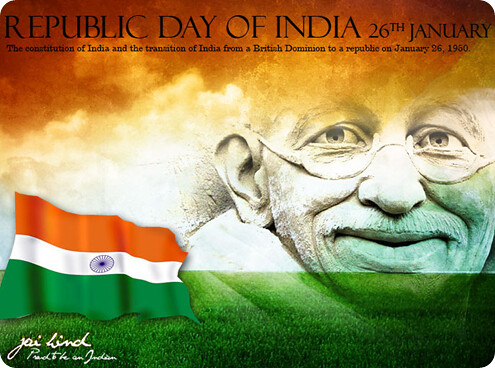


The Genesis of a Republic
Republic Day, observed annually on January 26th, commemorates the pivotal moment India transitioned from a dominion under the British Crown to a sovereign, democratic republic. This transformation was formalized with the adoption and enactment of the Constitution of India. Prior to this, India, despite achieving independence from British rule in 1947, was governed by the Government of India Act 1935, a legislative framework established by the British Parliament.
The adoption of the Constitution by the Constituent Assembly on November 26, 1949, and its subsequent coming into effect on January 26, 1950, marked the end of this colonial legacy and the dawn of a new era. This shift was not merely symbolic; it represented a fundamental redefinition of India's political identity, establishing a system where power resided with the people and their elected representatives, rather than a foreign sovereign. The Constitution itself was a monumental undertaking, a testament to the vision of India's founding fathers to create a just, equitable, and inclusive society.
The Constitution of India
The Constitution of India, enacted on Republic Day 1950, is the supreme law of the land and the bedrock of India's democratic governance. It replaced the Government of India Act 1935, effectively severing the last legal ties to British rule and establishing India as a republic. The Constitution is a comprehensive document that not only outlines the structure and powers of the government – comprising the executive, legislature, and judiciary – but also enshrines fundamental rights and directive principles for its citizens.
Its preamble famously declares India to be a 'Sovereign, Socialist, Secular, Democratic Republic,' reflecting the core values that guided its creation. The drafting process, led by Dr. B.R.
Ambedkar as the Chairman of the Drafting Committee, involved extensive deliberation and incorporated best practices from various global constitutions, while also addressing India's unique socio-cultural context. The Constitution's enduring strength lies in its adaptability and its commitment to upholding the principles of justice, liberty, equality, and fraternity for all Indians.
The Significance of January 26th
The selection of January 26th as Republic Day is deeply symbolic and carries profound historical weight. This date was chosen to commemorate the declaration of 'Purna Swaraj' (complete independence) by the Indian National Congress on January 26, 1930. This declaration was a watershed moment in the Indian independence movement, a resolute assertion of the nation's aspiration for complete self-rule, free from any external authority.
For decades, January 26th was observed as Independence Day by many Indians, symbolizing their unwavering commitment to achieving full sovereignty. Therefore, when India finally adopted its own Constitution and became a republic, it was fitting to designate this historically significant date as Republic Day. It serves as a powerful reminder of the sacrifices made by freedom fighters and the long, arduous journey towards self-determination, reinforcing the democratic ideals that the nation upholds.
Republic Day Celebrations
Republic Day is celebrated with immense fervor and nationalistic spirit across India, serving as a grand spectacle of the nation's unity in diversity. The focal point of the celebrations is the elaborate parade at Rajpath in New Delhi, a meticulously organized event that showcases India's military prowess, cultural richness, and technological advancements. The parade features contingents from the armed forces, displays of advanced weaponry, and the iconic fly-past by the Indian Air Force.
Equally captivating are the vibrant tableaux presented by various states and union territories, each a miniature representation of their unique cultural heritage, traditions, and developmental achievements. Beyond the capital, the day is marked by flag-hoisting ceremonies in schools, government offices, and public spaces, followed by cultural programs that highlight patriotic songs, dances, and skits. The President of India, as the Supreme Commander of the Armed Forces, awards bravery medals to deserving individuals, further underscoring the spirit of valor and service to the nation.
See also
Frequently Asked Questions
What is Republic Day in India?+
Why is January 26th chosen for Republic Day?+
When did India adopt its Constitution?+
Who helped write the Constitution of India?+
What does the Constitution say about India?+
Based on content from Wikipedia · Licensed under CC BY-SA 4.0