

Red Dwarf Stars: Tiny But Mighty!
Images
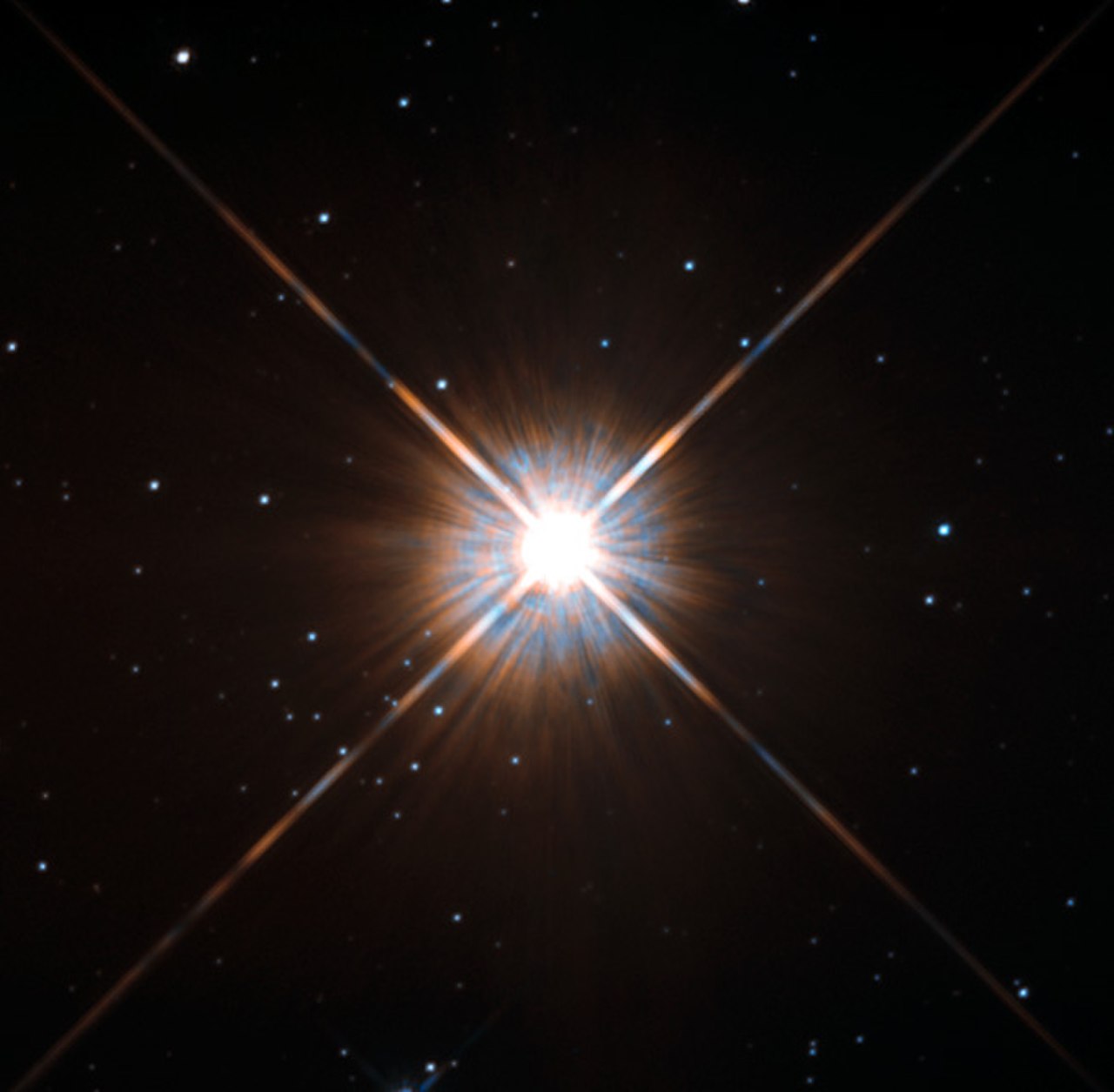
Red dwarf


The Ubiquitous Red Dwarf
Red dwarfs, classified as M-type main-sequence stars, represent the most common stellar population in the Milky Way and, by extension, the observable universe. Their spectral characteristics-low surface temperatures (typically 2,000–3,500 K) and consequently low luminosity-distinguish them from more massive stars. Their masses range from approximately 0.075 to 0.5 solar masses, and their radii are proportionally smaller.
This low mass dictates their evolutionary trajectory; they fuse hydrogen into helium through the proton-proton chain reaction, but at an exceptionally slow rate. Crucially, red dwarfs are fully convective, meaning their internal plasma circulates continuously. This process allows them to utilize a much larger fraction of their hydrogen fuel compared to stars with radiative cores, leading to their extraordinarily long lifespans.
Their sheer numbers mean they play a significant role in the overall mass and gravitational dynamics of galaxies.
Unprecedented Longevity
The defining characteristic of red dwarf stars is their immense longevity, with estimated lifespans stretching into trillions of years. This is orders of magnitude greater than the 10-billion-year lifespan of a Sun-like star. This extended duration is a direct consequence of their low mass and slow fusion rate.
As they slowly burn through their hydrogen fuel, they gradually contract and heat up, eventually evolving into white dwarfs after an incredibly long period. The current age of the universe (approximately 13.8 billion years) is insufficient for any red dwarf to have left the main sequence. This means that all red dwarfs ever formed are still actively fusing hydrogen, making them ancient relics of the early universe and crucial subjects for studying stellar evolution over cosmic timescales.
Their enduring presence offers a stable environment for planetary systems to persist for eons.
Exoplanetary Systems and the Search for Life Around Red Dwarfs
The abundance of red dwarfs has made them primary targets in the search for exoplanets, particularly those within the habitable zone. Due to their low luminosity, the habitable zone is situated much closer to the star than in Sun-like systems. This proximity facilitates the detection of orbiting planets using techniques like the radial velocity method and transit photometry.
Numerous rocky, potentially Earth-sized exoplanets have been discovered around red dwarfs, such as those in the TRAPPIST-1 system. However, habitability around these stars presents unique challenges. Red dwarfs are prone to intense stellar flares and coronal mass ejections, which can strip away planetary atmospheres and bombard surfaces with harmful radiation.
Furthermore, planets orbiting close to red dwarfs are likely to become tidally locked, resulting in extreme temperature differences between the star-facing and dark sides, potentially hindering the development of life as we know it.
Astrobiological Significance and Future Research
Red dwarfs hold profound implications for astrobiology. If life can arise and adapt to the conditions around these stars, then the sheer number of red dwarfs suggests that life might be far more common in the universe than previously thought. Understanding the resilience of life to stellar flares, the potential for atmospheric circulation on tidally locked planets, and the availability of water are key areas of research. Future missions and observational techniques, such as those employed by the James Webb Space Telescope, are crucial for characterizing the atmospheres of exoplanets around red dwarfs and searching for biosignatures.
The study of red dwarf systems is not just about finding other Earths, but about understanding the diverse range of environments where life might exist and the fundamental processes that govern its emergence and evolution across the cosmos.
Go deeper
Frequently Asked Questions
What is a red dwarf star?+
How long do red dwarf stars live?+
Why are red dwarfs good places to look for planets?+
Do planets around red dwarfs get hurt by flares?+
Why do scientists think red dwarfs could help us find life?+
Based on content from Wikipedia · Licensed under CC BY-SA 4.0