

Recumbent bicycle
Images
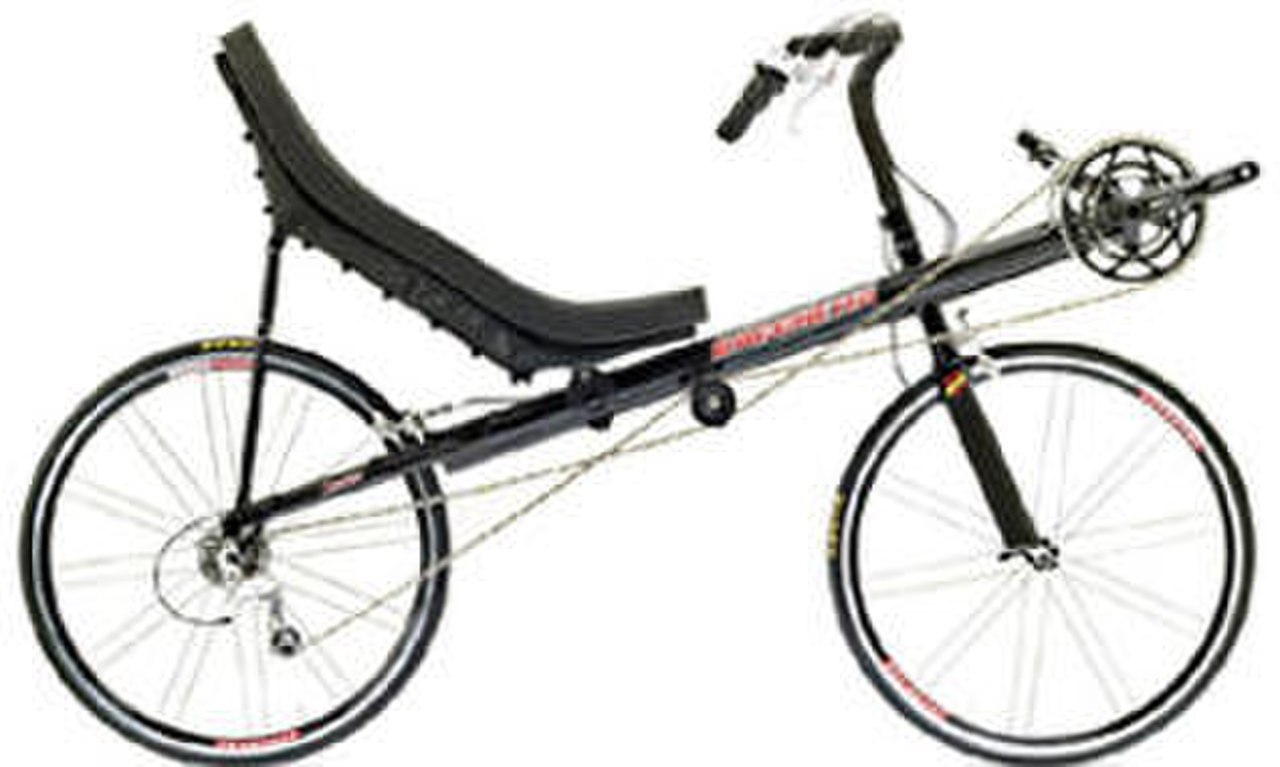
Recumbent bicycle
The Fundamental Design of Recumbent Bicycles
Recumbent bicycles represent a significant departure from the conventional upright bicycle, prioritizing rider comfort and aerodynamic efficiency. The core principle is the rider's position: a laid-back, reclining posture supported by a seat that distributes weight across the back and buttocks. This contrasts sharply with the upright bike, where weight is concentrated on the saddle, feet, and hands, often leading to discomfort and strain.
Recumbents are classified as human-powered vehicles (HPVs), and their design flexibility allows for numerous configurations. These include variations in wheelbase (long to short), wheel size (small, large, or mixed), steering mechanisms (overseat, underseat, or even no-hands steering), and drivetrain layout (rear-wheel drive or front-wheel drive). This adaptability allows recumbents to cater to a wide range of rider needs and performance goals, from leisurely touring to competitive racing.
A Controversial Past and Evolving Legacy
The history of the recumbent bicycle is marked by innovation and a notable brush with mainstream cycling politics. While rudimentary designs date back to the late 19th century, the modern recumbent gained traction in the early 20th century. Its potential for speed was dramatically demonstrated in 1933 when a recumbent bicycle won the prestigious Paris-Brest-Paris race.
This victory, however, sparked concern within the established cycling community. Fearing that recumbents would render traditional bicycle racing obsolete, the Union Cycliste Internationale (UCI) controversially banned them from UCI-sanctioned events in 1934. This ban effectively relegated recumbent development to independent enthusiasts and organizations.
Today, the legacy of speed and innovation is carried on by bodies like the World Human Powered Vehicle Association (WHPVA) and the International Human Powered Vehicle Association (IHPVA), which organize races and set records for these unique machines.
Ergonomic Superiority and Aerodynamic Prowess
The appeal of recumbent bicycles lies in two primary advantages: superior ergonomics and enhanced aerodynamics. The reclined position eliminates the pressure points common on upright bikes, such as the wrists, neck, shoulders, and perineum. By distributing the rider's weight over a larger surface area, recumbents offer unparalleled comfort, making them ideal for long-distance cycling, touring, or for individuals managing chronic pain or physical limitations.
Furthermore, the rider's body in a recumbent position presents a significantly smaller frontal profile to the oncoming air. This reduction in aerodynamic drag is a critical factor in achieving higher speeds, particularly on flat terrain and descents, often surpassing the performance of comparable upright bicycles. This combination of comfort and speed makes recumbents a compelling choice for both recreational and performance-oriented cyclists.
Diverse Configurations and Applications
The recumbent bicycle ecosystem is incredibly diverse, reflecting the adaptability of the core design. Riders can choose from a spectrum of wheelbase lengths, affecting stability and maneuverability. Wheel size combinations, such as the popular 'big wheel' front and smaller rear, or 'big-big' configurations, cater to different riding styles and terrain.
Steering systems vary widely; underseat steering is common and offers a low profile, while overseat steering can feel more familiar to traditional cyclists. Some advanced designs even incorporate 'no-hands' steering for specific applications. Beyond two-wheeled designs, the recumbent platform extends to three-wheeled recumbent tricycles, offering exceptional stability and ease of use, and four-wheeled recumbent quadracycles.
These variations find applications in touring, commuting, racing, adaptive cycling, and even specialized cargo or utility vehicles.
Recumbents in Modern Cycling and Mobility
In contemporary cycling, recumbent bicycles occupy a unique niche, appealing to those seeking comfort, performance, or an alternative to the conventional cycling experience. They are particularly favored by long-distance touring cyclists who prioritize comfort over extended periods in the saddle. The aerodynamic advantages also make them a popular choice for speed-focused riders and participants in human-powered vehicle races, where records continue to be pushed.
For individuals with physical challenges, such as back injuries, arthritis, or balance issues, recumbents offer a more accessible and enjoyable form of cycling, promoting mobility and an active lifestyle. As interest in sustainable transportation and alternative mobility solutions grows, recumbent bicycles stand out as a testament to innovative engineering, offering a comfortable, efficient, and often faster way to harness human power.
See also
Based on content from Wikipedia · Licensed under CC BY-SA 4.0