

Radar: Seeing with Invisible Waves!
Images
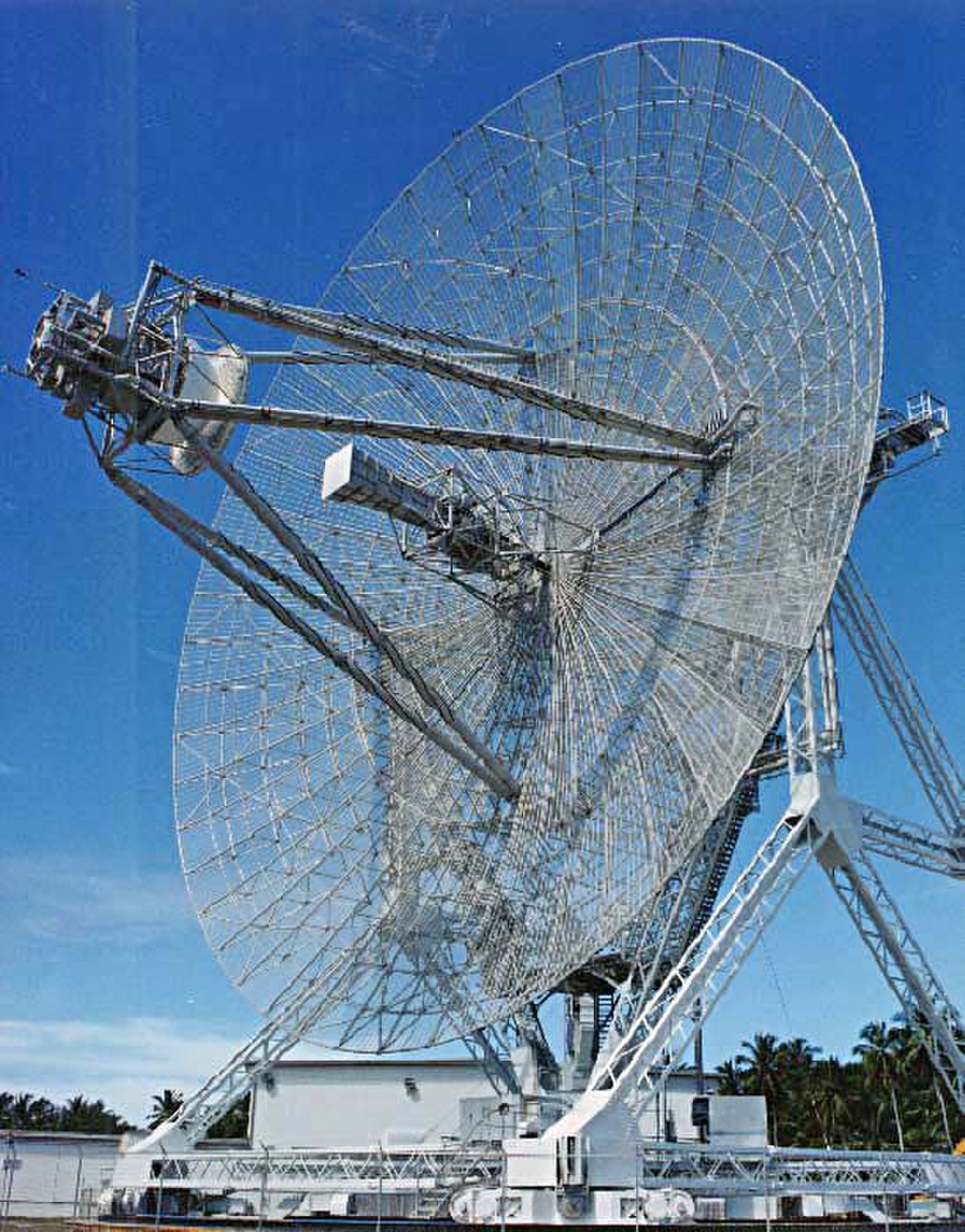
Radar


The Physics of Detection
Radar systems operate on the fundamental principle of transmitting electromagnetic energy and analyzing the reflected signals, or echoes, to infer characteristics of a target. The core components include a transmitter, an antenna, a receiver, and a signal processor. The transmitter generates high-frequency radio waves, often in the microwave range, which are directed by the antenna towards a target area.
These waves propagate at the speed of light. Upon encountering an object, a portion of the transmitted energy is scattered back towards the radar antenna. The receiver captures these weak echo signals, which are then processed to extract critical information.
The time delay between transmission and reception directly yields the range (distance) to the target. The direction from which the echo is received indicates the target's bearing. Furthermore, the Doppler effect, a shift in the frequency of the returning waves caused by the relative motion between the radar and the target, allows for the measurement of radial velocity.
Advanced signal processing techniques can also discern target size, shape, and material composition from the echo's characteristics, enabling sophisticated target identification and tracking.
A Century of Innovation
The theoretical underpinnings of radar emerged in the late 19th and early 20th centuries with discoveries in electromagnetism and radio waves. Early experiments by scientists like Christian Hülsmeyer, who patented a system for detecting ships and obstacles in 1904, laid groundwork. However, it was the escalating geopolitical tensions leading up to World War II that catalyzed intensive research and development.
Nations recognized radar's potential for early warning against aerial and naval threats, leading to parallel advancements in Britain (Chain Home system), Germany, and the United States. Post-war, radar technology transitioned from primarily military applications to civilian uses, revolutionizing air traffic control, maritime safety, and weather forecasting. The development of Doppler radar, pulse-Doppler radar, and synthetic aperture radar (SAR) in subsequent decades significantly enhanced precision and capability, enabling detailed mapping and surveillance from aircraft and satellites.
This evolution reflects a continuous drive to improve detection range, accuracy, resolution, and the ability to operate in diverse environmental conditions.
Ubiquitous Impact
Radar's influence permeates numerous sectors, underpinning critical infrastructure and scientific endeavors. In aviation, radar is indispensable for air traffic management, ensuring the safe separation of aircraft in complex airspace and facilitating instrument landings in adverse weather. Maritime radar is vital for navigation, collision avoidance, and vessel traffic services, particularly in congested shipping lanes and low-visibility conditions. Meteorology relies heavily on Doppler radar networks to track precipitation, wind patterns, and severe weather phenomena like tornadoes and hurricanes, providing essential data for forecasting and early warning systems. Law enforcement utilizes radar guns for speed enforcement, while automotive applications are expanding rapidly, with radar sensors integrated into advanced driver-assistance systems (ADAS) for adaptive cruise control, blind-spot monitoring, and automatic emergency braking.
Beyond these, radar plays a crucial role in space surveillance, tracking satellites and debris, and in scientific research, such as mapping planetary surfaces and studying atmospheric dynamics.
Advanced Radar Modalities
Modern radar technology encompasses a diverse array of sophisticated modalities designed for specific applications. Pulse-Doppler radar, for instance, excels at distinguishing moving targets from stationary clutter, making it invaluable for military surveillance and air traffic control. Synthetic Aperture Radar (SAR) is a powerful imaging technique used primarily from airborne or spaceborne platforms. By moving the antenna over a target area and coherently processing the received signals, SAR can generate high-resolution, two-dimensional images of the Earth's surface, capable of penetrating clouds and darkness.
Ground-penetrating radar (GPR) uses low-frequency radio waves to image subsurface structures, finding applications in archaeology, geology, and civil engineering for detecting buried utilities or geological formations. Phased-array radar systems offer enhanced flexibility and rapid beam steering without physical antenna movement, allowing for simultaneous tracking of multiple targets. These advanced systems represent the cutting edge of radar capabilities, continuously expanding the scope of what can be detected and analyzed.
Radar in Scientific Exploration
Radar's ability to penetrate atmospheric interference and interact with diverse materials makes it a cornerstone of scientific exploration. Planetary science extensively employs radar to study celestial bodies. For instance, the Magellan mission used SAR to map over 98% of Venus's surface, revealing volcanic features and tectonic structures hidden beneath its dense atmosphere.
Similarly, radar has been used to study the icy moons of Jupiter and Saturn, probing beneath their surfaces for potential liquid water oceans. On Earth, radar altimetry from satellites measures sea surface height with remarkable precision, crucial for understanding ocean currents, climate change, and sea-level rise. Atmospheric scientists utilize Millimeter-wave and microwave radar to study cloud microphysics, precipitation processes, and atmospheric turbulence, providing vital data for climate modeling and weather prediction.
The study of near-Earth objects (NEOs) also benefits from radar, with powerful ground-based radar systems used to precisely determine the orbits, sizes, and shapes of asteroids and comets, aiding in planetary defense efforts.
Go deeper
Frequently Asked Questions
How does radar see through fog or darkness?+
What parts are needed for a radar system?+
How does radar know how far something is?+
Why did countries build radar during World War II?+
How does radar help with weather forecasts?+
Based on content from Wikipedia · Licensed under CC BY-SA 4.0