

R-process: Cosmic Gold Makers!
Images
R-process

![Therapy goes to the dogs [Image 4 of 4]](https://live.staticflickr.com/6142/6029142919_1728de36aa_n.jpg)


The Astrophysical Challenge of Heavy Element Synthesis
The creation of elements heavier than iron, known as heavy elements, presents a significant challenge in nuclear astrophysics. While lighter elements are forged through fusion in stellar cores, the energy required to fuse nuclei beyond iron is greater than the energy released. This means that stars like our Sun cannot produce elements like gold or uranium through standard stellar evolution.
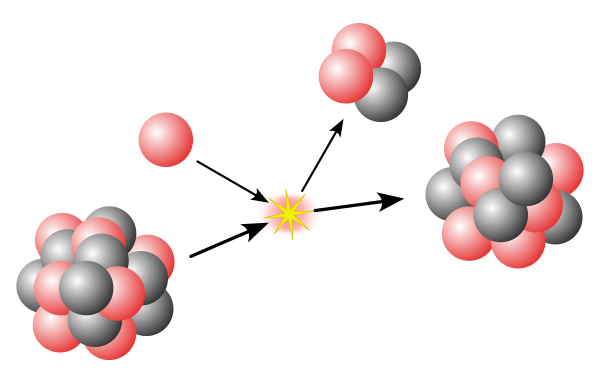
The R-process, or rapid neutron capture process, is the primary astrophysical mechanism believed to be responsible for the production of approximately half of the isotopes of elements heavier than iron. This process involves atomic nuclei capturing neutrons at a rate much faster than they can undergo radioactive decay, leading to the rapid build-up of very heavy nuclei.
Cosmic Laboratories
Identifying the precise astrophysical sites for the R-process has been a long-standing quest. Historically, core-collapse supernovae were considered the leading candidates due to their immense energy output and the abundance of neutrons. However, recent observations and theoretical models suggest that these events may not produce enough R-process elements to account for their observed cosmic abundances.
A more promising candidate, strongly supported by gravitational wave observations like GW170817, is the merger of two neutron stars. These cataclysmic events eject vast amounts of neutron-rich material into space, providing the extreme conditions necessary for rapid neutron capture and the subsequent synthesis of heavy R-process elements. Other potential sites, such as the jet ejecta from collapsars (stars collapsing into black holes) or certain types of magnetars, are also under investigation.
The Significance of R-process Elements in Cosmic Evolution
The R-process plays a pivotal role in shaping the chemical evolution of the universe. The elements it produces, such as gold, platinum, europium, and uranium, are not only essential for the formation of terrestrial planets and the development of life but also serve as crucial tracers for understanding cosmic history. The abundance patterns of these elements in stars and interstellar gas provide direct evidence of past nucleosynthetic events.
For instance, the presence of R-process elements in the earliest stars (Population II stars) indicates that these events occurred very early in the universe's history, shortly after the Big Bang. Studying these patterns helps astronomers constrain models of galaxy formation, stellar evolution, and the overall chemical enrichment of the cosmos over billions of years.
Observational Evidence and Theoretical Modeling
Our understanding of the R-process is built upon a combination of sophisticated theoretical modeling and cutting-edge astronomical observations. Nucleosynthesis calculations, which simulate the nuclear reactions occurring in extreme astrophysical environments, are crucial for predicting the yields and isotopic abundances of R-process elements. These models are then compared with observational data. Spectroscopic analysis of light from stars, particularly metal-poor stars that retain pristine signatures of early cosmic nucleosynthesis, allows astronomers to identify and quantify R-process elements.
The detection of gravitational waves from neutron star mergers, coupled with electromagnetic follow-up observations, has provided direct evidence linking these events to the production of heavy elements. Future observatories and advanced simulation techniques will continue to refine our knowledge of this fundamental cosmic process.
See also
Frequently Asked Questions
What is the R-process and why is it called "rapid"?+
How do exploding stars make gold and other heavy metals?+
Why can't our Sun create gold by itself?+
Where does the R-process happen in space?+
What can we learn from the heavy elements made by the R-process?+
Based on content from Wikipedia · Licensed under CC BY-SA 4.0