

Pure Mathematics: The Land of Numbers!
Images
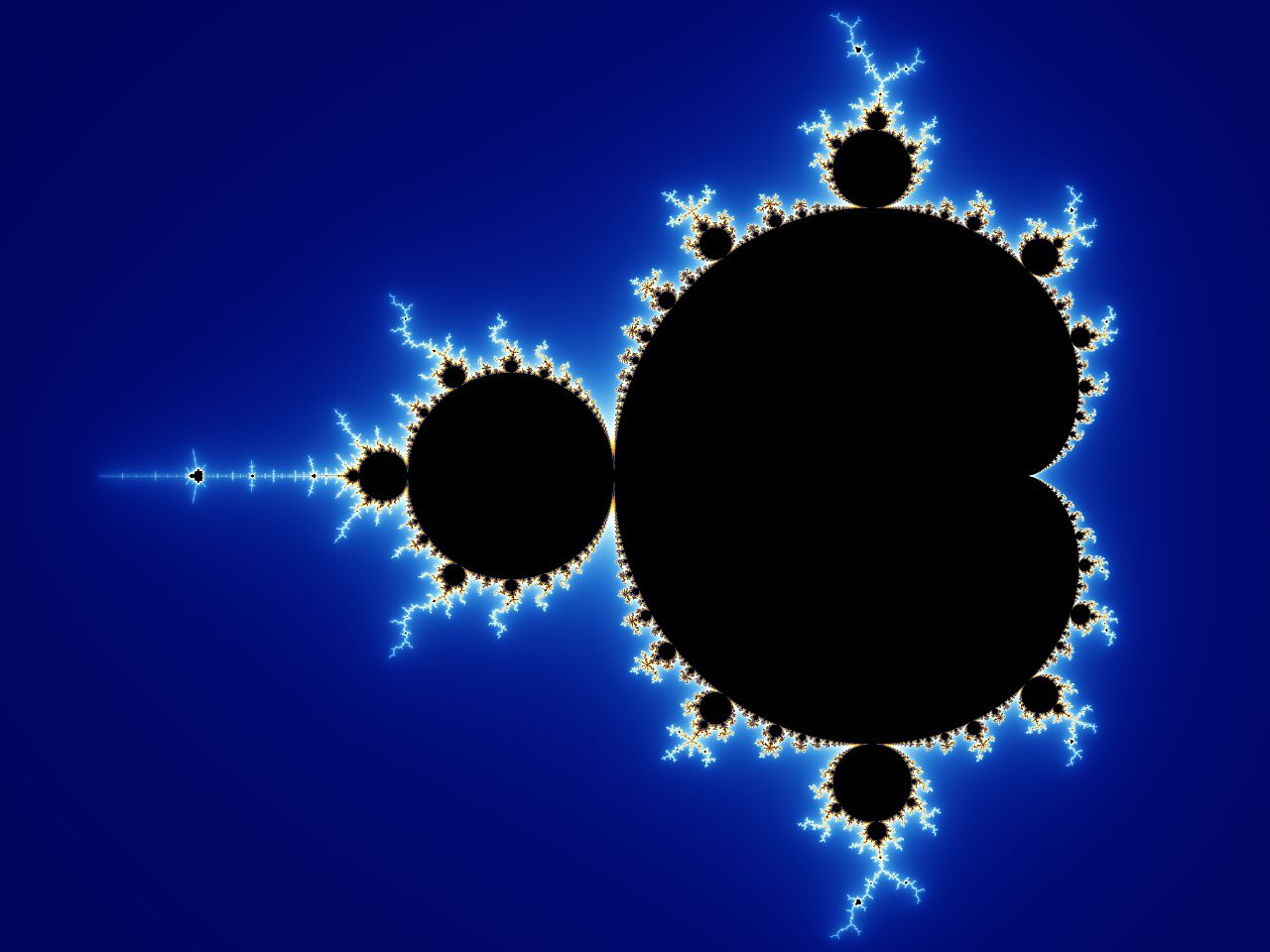
Pure mathematics
The Realm of Abstract Structures and Proof
Pure mathematics is the branch of mathematics dedicated to the study of abstract concepts, structures, and theories, driven by intellectual curiosity rather than immediate practical application. It is concerned with the inherent beauty, elegance, and logical consistency of mathematical ideas themselves. Mathematicians in this field engage in the rigorous process of defining concepts, formulating conjectures, and constructing formal proofs to establish mathematical truths.
This pursuit often leads to the discovery of deep, underlying patterns and relationships that may not be apparent in the physical world. The methodology is characterized by its reliance on axioms, definitions, and logical inference, creating a self-contained system of knowledge that is both profound and expansive. It is the engine of theoretical advancement, pushing the boundaries of human understanding.
A Tapestry Woven Through Millennia
The origins of pure mathematics can be traced back to ancient civilizations, with significant contributions from Babylonian and Egyptian mathematicians. However, it was in ancient Greece that a systematic, axiomatic approach began to take shape, most notably with Euclid's 'Elements,' which established geometry as a deductive science. During the Islamic Golden Age, mathematicians like Al-Khwarizmi made crucial advancements in algebra.
The Renaissance and the subsequent Scientific Revolution saw an explosion of new ideas, with figures like Fermat, Descartes, Newton, and Leibniz developing calculus, analytic geometry, and foundational concepts in number theory and probability. The 19th and 20th centuries witnessed the formalization of many areas, with mathematicians like Gauss, Riemann, Hilbert, and Gödel exploring abstract algebra, topology, and the foundations of mathematics, leading to profound insights into the nature of mathematical truth and consistency.
The Unseen Architect
While pure mathematics may seem detached from everyday life, its influence is pervasive and foundational. It provides the essential theoretical framework upon which applied mathematics, science, and engineering are built. Concepts initially explored for their intrinsic interest, such as group theory, abstract algebra, and topology, have become indispensable tools in fields ranging from quantum mechanics and particle physics to cryptography, computer science (algorithms, data structures), economics, and even art and music theory.
The development of number theory, for instance, has directly led to modern encryption techniques that secure online transactions. Pure mathematics is not merely an academic pursuit; it is the bedrock of innovation, enabling breakthroughs that shape our technological landscape and deepen our understanding of the universe.
The Art of Proof
The core activity in pure mathematics is the construction of proofs. Mathematicians begin with a set of axioms – fundamental statements accepted as true without proof – and definitions. From these, they use the rules of formal logic to deduce new statements, known as theorems.
This process can involve various techniques, including direct proof, proof by contradiction, mathematical induction, and combinatorial arguments. Key areas of study include:
- Set Theory: The foundational study of collections of objects, providing a language for almost all of mathematics.
- Abstract Algebra: The study of algebraic structures like groups, rings, and fields, which generalize familiar arithmetic operations.
- Real and Complex Analysis: The rigorous study of functions, limits, continuity, and calculus, extending to complex numbers.
- Topology: The study of properties of space that are preserved under continuous deformations, like stretching or bending, but not tearing.
- Number Theory: The study of integers, including prime numbers, divisibility, and Diophantine equations.
Frontiers of Discovery
Contemporary pure mathematics is a vast and dynamic field, constantly pushing the boundaries of knowledge. Researchers are exploring highly abstract areas with profound implications. For example, the Langlands program seeks to unify seemingly disparate areas of mathematics, such as number theory and representation theory, through deep connections.
Algebraic geometry continues to develop sophisticated tools to study geometric shapes defined by polynomial equations. The study of dynamical systems and chaos theory investigates the behavior of complex systems over time, with applications in physics and biology. Furthermore, the quest for understanding the fundamental nature of mathematical truth, as highlighted by Gödel's incompleteness theorems, remains an active area of philosophical and logical inquiry.
These frontiers represent the cutting edge of abstract thought, promising future breakthroughs.
Go deeper
Frequently Asked Questions
What is pure mathematics?+
Why do mathematicians study pure math instead of making things like toys?+
How do mathematicians prove something in pure math?+
Where did pure mathematics begin?+
How can pure math help us in real life?+
Based on content from Wikipedia · Licensed under CC BY-SA 4.0