

Proceratosaurus
Images

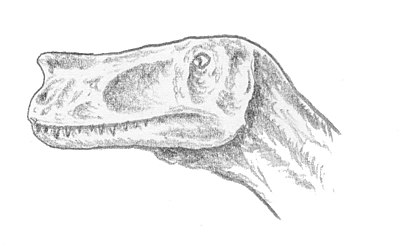
Proceratosaurus bradleyi Skull Reconstruction (alt)




Morphology and Paleoecological Niche
Proceratosaurus, meaning 'horned lizard', is a genus of theropod dinosaur that inhabited England during the Middle Jurassic epoch, specifically the Bathonian stage. The holotype specimen, consisting of a remarkably well-preserved skull and mandible, provides crucial morphological data. The skull length is approximately 26.9 cm, suggesting an overall body length of around 3 meters.
A defining characteristic is its cranial crest, originating at the premaxilla-nasal suture, a feature that distinguished it from contemporary theropods and led to its initial misclassification. The dentition is heterodont, with D-shaped teeth anteriorly in the maxilla and flattened, serrated teeth posteriorly, indicating a specialized diet. As a carnivore, Proceratosaurus likely occupied a niche preying on smaller vertebrates within the subtropical island archipelago that comprised Britain during this period.
Its presence contributes to our understanding of the diverse predatory fauna of the Jurassic period, predating many of the more famous large theropods.
Phylogenetic Significance
The phylogenetic placement of Proceratosaurus is of immense scientific interest. It is classified within Coelurosauria, a diverse clade of theropod dinosaurs that includes birds, tyrannosaurids, and dromaeosaurids. More specifically, Proceratosaurus is a member of the family Proceratosauridae and is considered one of the earliest known representatives of both Coelurosauria and the superfamily Tyrannosauroidea.
This makes it a critical transitional fossil, offering insights into the evolutionary trajectory that would eventually lead to the apex predators like Tyrannosaurus Rex millions of years later. The crest of Proceratosaurus, though distinct, shares similarities with the crests of other early coelurosaurs like Guanlong, suggesting that display structures were an early evolutionary development within this lineage. Its discovery challenges earlier assumptions about the origins and diversification of tyrannosauroid dinosaurs.
The Genesis of a Genus
The taxonomic journey of Proceratosaurus is a testament to the evolving nature of scientific understanding. First described by Friedrich von Huene in 1910 as Megalosaurus bradleyi, it was named in honor of William Bradley, who discovered the specimen. The initial classification within Megalosaurus, a genus that historically served as a taxonomic catch-all for Jurassic theropods, was understandable given the limited comparative data available at the time.
However, subsequent research, particularly by Alan J. Charig in 1926, revealed sufficient unique anatomical features, most notably the cranial crest, to warrant its elevation to its own genus, Proceratosaurus. This reclassification was partly influenced by a perceived resemblance to Ceratosaurus, another horned theropod, though this specific comparison was later deemed erroneous.
This process highlights the rigorous peer review and re-evaluation inherent in paleontology.
Paleogeography and Paleoenvironment
Proceratosaurus lived in a dramatically different world than modern England. During the Bathonian age, Britain was not a single landmass but part of a subtropical island archipelago within the vast Tethys Ocean. Southern Britain, where Proceratosaurus fossils have been found within the Great Oolite Group (specifically the White Limestone or Forest Marble Formations), experienced a seasonally dry climate.
This environment supported a unique assemblage of dinosaurs, including the large theropod Megalosaurus bucklandii, the colossal sauropod Cetiosaurus, and various ornithischians such as stegosaurs and ankylosaurs. The presence of Proceratosaurus within this insular ecosystem provides valuable data on biogeography and the adaptive radiation of theropods in isolated environments, offering a glimpse into the complex ecological dynamics of the Jurassic period.
The Function of the Crest
The prominent cranial crest of Proceratosaurus is a subject of considerable scientific interest, primarily concerning its functional significance. While its exact purpose remains speculative, the prevailing hypothesis is that it served a role in intraspecific communication, most likely for display. Such crests in theropods are often linked to sexual selection, used to attract mates or to signal dominance within a species.
The crest's position and likely coloration would have made it a conspicuous feature, visible from a distance. Compared to the nasal horn of Ceratosaurus, Proceratosaurus's crest was likely more elaborate and possibly larger relative to its skull size, suggesting a strong evolutionary pressure for visual signaling within its lineage. This feature underscores the diverse evolutionary strategies employed by dinosaurs for social interaction and reproduction.
See also
Frequently Asked Questions
What does the name Proceratosaurus mean?+
Where did Proceratosaurus live and when?+
What was special about Proceratosaurus's skull?+
How big was Proceratosaurus compared to a human?+
Why is Proceratosaurus important for learning about dinosaurs like T‑Rex?+
Based on content from Wikipedia · Licensed under CC BY-SA 4.0