

Platinum: The Shiny Treasure
Images
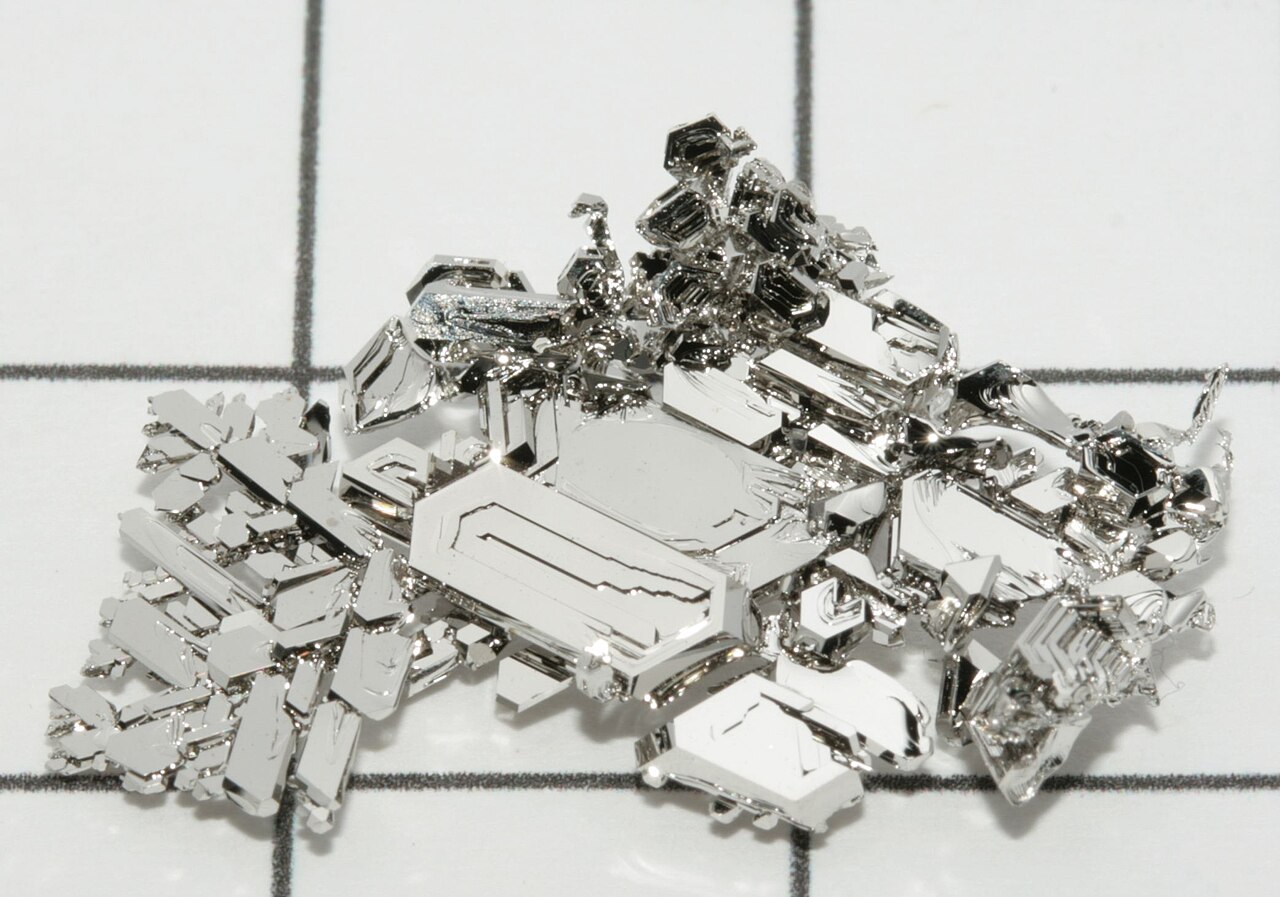
Platinum
The Genesis and Properties of a Precious Element
Platinum, designated by the symbol Pt and possessing atomic number 78, stands as a testament to elemental resilience. It is a dense, highly malleable, and ductile transition metal characterized by its lustrous, silverish-white appearance. Its defining characteristic is its extreme unreactivity, classifying it as a 'noble metal.' This inertness means it resists corrosion and oxidation, even under intense heat, a property that sets it apart from most other metals.
Platinum belongs to the platinum group of elements, a collection of rare metals known for their similar chemical properties. Its scarcity in Earth's crust, with an average abundance of merely 5 micrograms per kilogram, contributes significantly to its high value and status as a major precious metal commodity. Annual global production barely reaches a few hundred metric tons, underscoring its limited availability.
A Journey Through Time
The history of platinum is intertwined with ancient civilizations and later scientific exploration. Indigenous peoples in pre-Columbian South America were the first to utilize platinum, finding it in alluvial sands and fashioning it into artifacts. They recognized its unique workability and appearance, predating European awareness by centuries.
In Europe, platinum was first mentioned in writings during the 16th century, but its true nature remained enigmatic. It was often mistaken for silver or considered an impure alloy. It wasn't until the mid-18th century, following reports by Spanish naval officers like Antonio de Ulloa in 1748, that the scientific community began to systematically investigate this peculiar metal, gradually unraveling its distinct chemical and physical properties and paving the way for its eventual recognition and application.
Platinum's Pivotal Role in Modern Technology and Industry
Platinum's exceptional properties make it indispensable across a spectrum of advanced technological and industrial applications. Its most prominent contemporary use is within catalytic converters in automobiles. Here, platinum acts as a catalyst, facilitating chemical reactions that convert toxic exhaust gases, such as carbon monoxide and nitrogen oxides, into less harmful substances like carbon dioxide and nitrogen, thereby playing a critical role in air pollution control.
Beyond automotive applications, platinum is crucial in laboratory equipment, electrical contacts, and electrodes due to its resistance to chemical attack and stable conductivity. In the glass industry, platinum's non-wetting characteristic is vital for manipulating molten glass without contamination, enabling the production of high-quality optical materials and containers.
From Investment Assets to Life-Saving Therapeutics
The significance of platinum extends beyond its industrial utility into realms of economic value and human health. As a precious metal, it is a highly valued commodity and investment, often sought for jewelry due to its durability, resistance to tarnish, and hypoallergenic qualities. However, platinum's impact on human well-being is perhaps most profound in the medical field.
Certain platinum-based compounds, notably cisplatin, oxaliplatin, and carboplatin, are cornerstone drugs in modern oncology. These chemotherapy agents function by cross-linking DNA within cancer cells, inhibiting their replication and inducing apoptosis. The development of these platinum-based drugs has revolutionized the treatment of various cancers, demonstrating the metal's critical role in advancing healthcare and improving patient outcomes.
The Science Behind Platinum's Prowess
Platinum's remarkable behavior stems from its electron configuration and position in the periodic table. As a Group 10 transition metal, its valence electrons are relatively stable, contributing to its low reactivity. The strong metallic bonds in platinum also account for its high melting point (1768.3 °C or 3214.9 °F) and density (21.45 g/cm³).
Its catalytic activity is attributed to its ability to adsorb reactant molecules onto its surface, weakening their bonds and facilitating new chemical reactions without being consumed itself. This surface phenomenon is key to its function in catalytic converters and other chemical processes. The development of platinum resistance thermometers (PRTs) leverages platinum's predictable change in electrical resistance with temperature, allowing for highly accurate temperature measurements across a wide range.
Go deeper
Frequently Asked Questions
What is platinum and why is it called a noble metal?+
How does platinum help cars stay clean?+
Where did people first find platinum?+
Why is platinum used in jewelry?+
How does platinum help doctors fight cancer?+
Based on content from Wikipedia · Licensed under CC BY-SA 4.0