

Picardy
Images

Picardy Symbol Stone





The Fluidity of Picardy's Territorial Definition
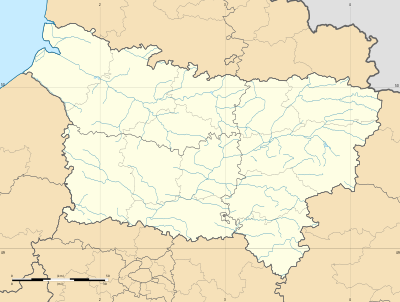
Picardy represents a complex historical and cultural territory in northern France, characterized by its expansive chalk plains and a history marked by shifting administrative and ethnic boundaries. Unlike more rigidly defined feudal entities such as duchies or counties, Picardy's territorial extent fluctuated significantly over centuries, influenced by the region's strategic importance and political instability. Its first official recognition dates to the 13th century through the 'nation' of Picardy at the University of Paris, a testament to its emerging distinctiveness.
By the 14th century, it was integrated into French administration. Early geographical descriptions from the late Middle Ages included bishoprics like Amiens and Arras, and later encompassed towns such as Saint-Quentin and Douai. The division into Upper and Lower Picardy reflected its proximity to the powerful Île-de-France and the Flemish regions, respectively.
This historical ambiguity means that understanding Picardy requires appreciating its multifaceted definitions, from medieval provinces to modern administrative constructs.
Linguistic Identity as a Defining Force
The concept of an 'ethnic Picardy,' championed by 20th-century historians and geographers like Robert Fossier and Albert Demangeon, posits that the true essence of Picardy lies in its linguistic distinctiveness. The Picard language, a Romance language related to French, served as a primary marker of identity, extending the perceived boundaries of Picardy to areas where the dialect was spoken, even including towns like Senlis and Soissons. This linguistic border, often defined against the Flemish language to the north, pushed the conceptual limits of Picardy towards Calais and Tournai.
Demangeon further identified a distinct 'Picard plain,' a vast chalk landscape stretching from Beauvais to Arras and beyond, providing a tangible geographical basis for the region's identity. This interplay between language and landscape offers a richer understanding of Picardy than purely administrative definitions.
Administrative Evolution and Modern Integration
The administrative journey of Picardy saw significant changes, particularly in the 20th century. From 1972 to 2015, a distinct administrative region named Picardy was established, consolidating the departments of Somme, Oise, and Aisne. This modern region largely encompassed the historical Picardy as defined during the ancien régime, simplifying governance and regional planning.
However, this administrative entity ceased to exist as a separate region on January 1, 2016, when it was merged with Nord-Pas-de-Calais to form the new super-region of Hauts-de-France. This integration reflects a broader trend in France towards larger, more economically powerful administrative units. While the official region is gone, the historical and cultural identity of Picardy persists within the departments that constitute it, and parts of its linguistic heritage extend into Belgium.
Socio-Economic Fabric and Educational Legacy
Historically, Picardy's economy was largely agrarian, benefiting from the fertile 'Picard plain' which supported extensive farming, particularly cereal production. Its strategic location also facilitated trade routes. The region's towns developed as centers for crafts, commerce, and later, industry.
The educational legacy of Picardy is notable, beginning with its early recognition at the University of Paris, which fostered intellectual exchange. Today, within the Hauts-de-France region, the former Picardy departments continue to contribute to the broader economy through agriculture, manufacturing, and tourism, attracted by its historical sites and natural landscapes. Educational institutions within these departments uphold the region's commitment to learning, building upon centuries of intellectual tradition and adapting to the demands of the modern global economy.
See also
Based on content from Wikipedia · Licensed under CC BY-SA 4.0