

Peter Fonda
Images

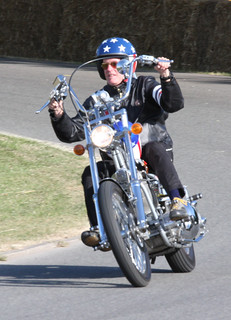
Peter Fonda riding Captain America




The Genesis of a Rebel Persona
Peter Fonda's journey in Hollywood was marked by a deliberate cultivation of a rebellious image, a persona that perfectly aligned with the burgeoning counterculture of the 1960s. His early stage work, including an award-winning performance in 'Blood, Sweat and Stanley Poole,' demonstrated a solid theatrical foundation. However, it was his transition to film that truly defined his impact.
Fonda became inextricably linked with the anti-establishment ethos of the era, most notably through his pivotal role in and co-authorship of 'Easy Rider' (1969). This seminal film, a raw and unflinching depiction of two bikers traversing the American landscape, captured the zeitgeist of a generation questioning societal norms and seeking freedom. The film's critical and commercial success, coupled with Fonda's Oscar nomination for Best Original Screenplay, not only validated his artistic vision but also positioned him as a leading figure of the New Hollywood movement.
He further cemented his directorial ambitions with 'The Hired Hand' (1971), a revisionist Western that showcased his evolving cinematic sensibilities and willingness to explore complex themes beyond the conventional genre.
Navigating Hollywood
Following the seismic impact of 'Easy Rider,' Peter Fonda navigated the evolving landscape of Hollywood with a diverse range of roles. The 1970s saw him solidify his presence as an action star, appearing in films like 'Dirty Mary, Crazy Larry' (1974) and the science fiction sequel 'Futureworld' (1976). These roles showcased his charisma and ability to command the screen in more commercial ventures, demonstrating a pragmatic approach to his career.
However, Fonda's artistic depth truly shone through in his later years. His performance in the 1997 drama 'Ulee's Gold' marked a significant critical resurgence. Portraying a Floridian beekeeper, Fonda delivered a nuanced and deeply moving performance that earned him widespread acclaim, including an Academy Award nomination for Best Actor and a Golden Globe Award.
This resurgence was not a fleeting moment; he continued to deliver powerful performances, earning another Golden Globe for his role in 'The Passion of Ayn Rand' (1999). His enduring talent and ability to reinvent himself were recognized with a star on the Hollywood Walk of Fame in 2003, a testament to his lasting contributions.
The Enduring Fonda Legacy
Peter Fonda was an integral part of one of American cinema's most revered acting families. As the son of Henry Fonda, a towering figure of classic Hollywood known for his integrity and understated performances, Peter inherited a rich cinematic legacy. He grew up immersed in the world of filmmaking, absorbing the craft from one of its masters.
His sister, Jane Fonda, achieved her own iconic status, becoming a celebrated actress and a prominent activist, further solidifying the family's profound influence on the arts and culture. Peter not only carried the torch but also expanded upon it, demonstrating a unique artistic path. He also contributed to the continuation of this legacy through his daughter, Bridget Fonda, who carved out her own successful acting career.
The Fonda name became synonymous with dedication to the craft, intellectual engagement with roles, and a distinctive presence on screen, with Peter playing a vital role in shaping and perpetuating this esteemed family tradition across multiple generations.
The Cultural Resonance of 'Easy Rider' and the New Hollywood Era
'Easy Rider' transcends its classification as merely a film; it stands as a cultural touchstone that profoundly influenced the trajectory of American cinema. Peter Fonda, alongside co-writer and director Dennis Hopper, envisioned a narrative that tapped into the anxieties and aspirations of a generation grappling with social upheaval and a desire for authentic experience. The film's independent spirit, its raw cinematography, and its candid portrayal of counterculture lifestyles directly challenged the conventions of the studio system.
Its unexpected commercial success demonstrated a burgeoning audience appetite for more daring, personal, and socially relevant storytelling. This breakthrough is widely credited with catalyzing the 'New Hollywood' era, a period characterized by greater artistic freedom for filmmakers and a shift towards more complex, character-driven narratives. Fonda's vision and performance in 'Easy Rider' not only defined his career but also played an instrumental role in reshaping the very language of American filmmaking, leaving an indelible mark that continues to inspire filmmakers and resonate with audiences today.
Beyond the Screen
Peter Fonda's career and public persona were deeply intertwined with themes of freedom, identity, and the search for meaning. 'Easy Rider' itself is a powerful allegory for the pursuit of personal liberty, even in the face of societal resistance. Fonda often embodied characters who were outsiders, rebels, or individuals grappling with their place in the world. This exploration of the individual versus the system resonated with audiences and reflected broader cultural shifts.
His willingness to take on challenging roles and explore complex characters showcased a commitment to artistic integrity. Furthermore, his enduring presence in Hollywood, from his counterculture icon status to his later critically acclaimed performances, speaks to a remarkable resilience and adaptability. The Fonda legacy is not just about acting awards or box office success; it is about a sustained contribution to cinematic art, a willingness to push boundaries, and a lasting impact on how stories are told and perceived in American culture.
His work continues to be studied and appreciated for its artistic merit and its reflection of the American experience.
Go deeper
Based on content from Wikipedia · Licensed under CC BY-SA 4.0