

Petaluma and Santa Rosa Railroad
Images
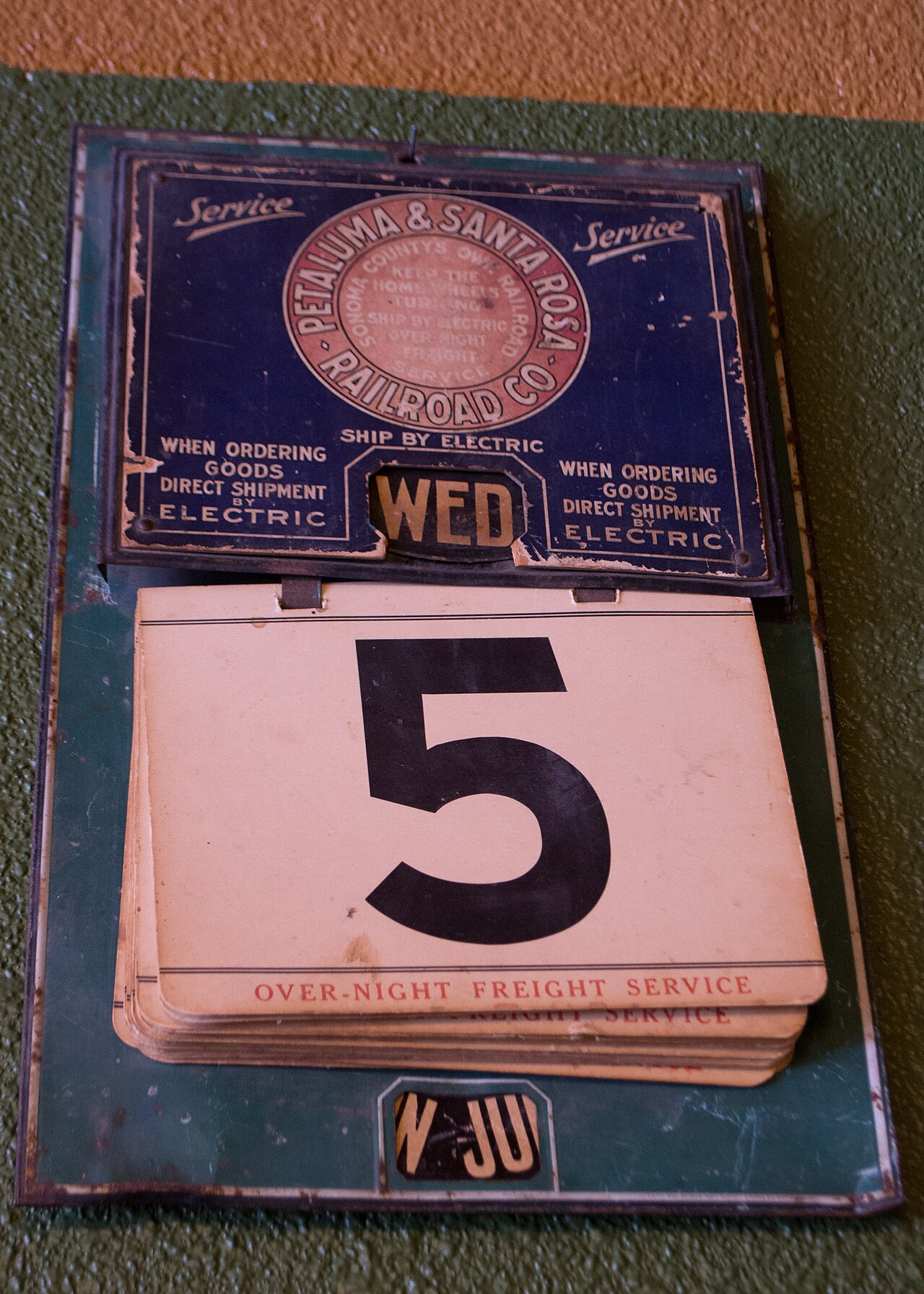
Petaluma and Santa Rosa Railroad Co. Calendar


The Genesis and Strategic Importance of the 'Golden Gate Railway'
The Petaluma and Santa Rosa Railroad, affectionately known as the 'Golden Gate Railway,' emerged in 1904 as a critical piece of infrastructure designed to capitalize on Sonoma County's burgeoning agricultural output. Its strategic route was conceived to bridge the gap between the fertile farming regions surrounding Petaluma, renowned for its dairy and poultry industries, and the major transportation and consumer markets of San Francisco. This interurban line was not merely a passenger service; it was a sophisticated logistics network.
By providing efficient, reliable, and relatively rapid transport for perishable goods like eggs and butter, the railroad directly stimulated economic growth, enabling local producers to compete effectively and expand their operations. Its existence fostered a symbiotic relationship between rural producers and urban consumers, solidifying the region's agricultural identity and contributing significantly to its prosperity during its operational lifespan. The railroad's development was a deliberate response to the need for enhanced connectivity in a rapidly industrializing America.
Mechanics of Steam and Electricity in Interurban Operation
The operational framework of the Petaluma and Santa Rosa Railroad presented an interesting technological hybrid for its era. While classified as an electric interurban railway, its locomotives were initially powered by steam. This meant that a steam engine, generating power through the combustion of fuel to heat water and produce high-pressure steam, was the primary motive force.
This steam would drive pistons connected to the drive wheels, propelling the train. The 'electric' aspect likely referred to the infrastructure for potential future electrification or the use of electric power for auxiliary systems, though the core propulsion relied on steam. Managing this system required a dedicated crew, including an engineer to control the steam pressure and engine, and a fireman to maintain the firebox.
This reliance on steam, while effective, also meant significant operational costs related to fuel, water, and maintenance compared to later purely electric systems, highlighting the transitional nature of railway technology at the turn of the 20th century.
Socio-Economic Ripple Effects of the Railroad
The Petaluma and Santa Rosa Railroad exerted a profound and multifaceted influence on the socio-economic fabric of Sonoma County. Economically, it was transformative. For agricultural producers, the railroad provided an unprecedented level of market access, drastically reducing transit times and spoilage rates for their high-value commodities.
This facilitated specialization and increased profitability, cementing Petaluma's reputation as the 'Egg Basket of the World.' Beyond commerce, the railroad acted as a social connector. It enabled residents to travel between Petaluma and Santa Rosa for work, leisure, and family visits, fostering a stronger sense of regional community. It also provided access to broader opportunities and services available in larger towns.
The railroad's presence stimulated development along its route, influencing land use patterns and population distribution. Its eventual cessation of service marked a significant shift, underscoring its integral role in the region's development for nearly three decades.
The Inevitable Decline
The operational lifespan of the Petaluma and Santa Rosa Railroad, from its inception in 1904 to its closure in 1932, mirrors a broader historical trend in American transportation. For its nearly thirty years of service, it represented the pinnacle of efficient regional transit. However, the early 20th century witnessed the rapid ascent of automotive technology.
The proliferation of automobiles, trucks, and improved road networks offered a level of flexibility and door-to-door convenience that fixed rail lines could not match. Trucks could directly deliver goods from farm to store, bypassing the need for rail transshipment, and personal vehicles offered unparalleled freedom of movement for passengers. These advancements gradually eroded the economic viability and necessity of many interurban railways.
By the 1930s, the cost of maintaining rail infrastructure, coupled with declining ridership and freight volumes, made continued operation unsustainable. The Petaluma and Santa Rosa Railroad's closure in 1932 was a direct consequence of this technological paradigm shift, marking the end of an era dominated by rail and the dawn of the automotive age.
See also
Frequently Asked Questions
What was the Petaluma and Santa Rosa Railroad also called?+
Why did the railroad help farmers in Petaluma?+
How did the railroad move its trains?+
What did the railroad do for people who lived in the towns?+
Why did the railroad stop running?+
Based on content from Wikipedia · Licensed under CC BY-SA 4.0