

People's Action Party
Images

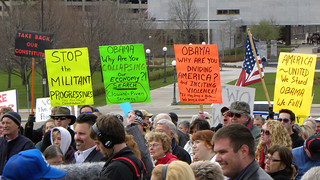
Michele Bachmann at the Tea Party Express rally in Minnesota




Ideological Genesis and Strategic Realignment
The People's Action Party (PAP) emerged in 1954, initially aligning with center-left ideologies common in post-colonial movements, advocating for social justice and economic reform. However, its trajectory dramatically shifted following its electoral triumph in 1959. Under the pragmatic leadership of Lee Kuan Yew, the party underwent a deliberate ideological repositioning towards the center.
This strategic pivot was solidified in 1961 with the expulsion of the party's leftist faction, a move that purged internal dissent and allowed for a more cohesive, pragmatic approach to governance. Throughout the 1960s and beyond, this evolution continued, firmly establishing the PAP's identity as a center-right force. This ideological flexibility proved instrumental in navigating Singapore's complex political and economic landscape during its formative years, enabling the party to adapt to changing circumstances while maintaining a consistent vision for national progress.
Consolidating Power
Singapore's separation from Malaysia and subsequent independence in 1965 created a unique political environment. The boycott of the 1968 general election by most opposition parties, excluding the Workers' Party, resulted in the PAP securing all parliamentary seats. This unprecedented outcome allowed the PAP to consolidate its political dominance and implement its development agenda without significant parliamentary opposition.
The party strategically intertwined its influence with key national institutions, including the National Trade Union Congress (NTUC) and the civil service. This integration ensured that the PAP's policies and directives were effectively executed across the nation, reinforcing its control and shaping the trajectory of Singapore's socio-economic development. This period laid the groundwork for the party's sustained electoral success and its deep entrenchment in the nation's governance structures.
The PAP's Governance Philosophy
Positioned on the center-right, the PAP espouses a philosophy that harmoniously blends social conservatism with economic liberalism. Its economic policies generally champion free-market principles, characterized by low taxation, minimal tariffs, controlled government expenditure relative to GDP, and a focus on economic freedom. Yet, this is tempered by a willingness to engage in strategic state intervention, reflecting elements of welfarism.
A distinctive feature of the PAP's economic model is its robust support for state-owned enterprises, locally termed Government-Linked Corporations (GLCs). These entities, initially established in response to the economic vacuum left by the British military withdrawal in 1971, have been pivotal in driving Singapore's export-oriented industrialization, fostering economic growth, and creating employment. Socially, the PAP promotes communitarian values and civic nationalism, with a cornerstone policy focused on national cohesion through the integration of Singapore's diverse ethnic groups into a unified national identity.
Enduring Hegemony and Constitutional Influence
The PAP's political dominance in Singapore is unparalleled, marked by its continuous governance for over 66 years, making it the longest-serving uninterrupted ruling party in contemporary multi-party democracies. While the 1981 Anson Constituency by-election, won by the Workers' Party, ended a period of sole parliamentary representation, it did not diminish the PAP's overall electoral strength. The party has consistently secured over 60 percent of the popular vote and more than 80 percent of parliamentary seats in subsequent general elections, achieving landslide victories.
This sustained electoral success has granted the PAP an unbroken two-thirds parliamentary supermajority, empowering it to amend the Constitution at will. This enduring political hegemony has allowed the PAP to profoundly shape Singapore's legal framework, national institutions, and societal norms, solidifying its role as the primary architect of the nation's development.
See also
Frequently Asked Questions
What is the People's Action Party (PAP)?+
When did the PAP start and how did its ideas change?+
Why did the PAP win all the seats in the 1968 election?+
How does the PAP help Singapore grow its economy?+
What does the PAP do to keep everyone in Singapore happy together?+
Based on content from Wikipedia · Licensed under CC BY-SA 4.0