

Paste (food)
Images
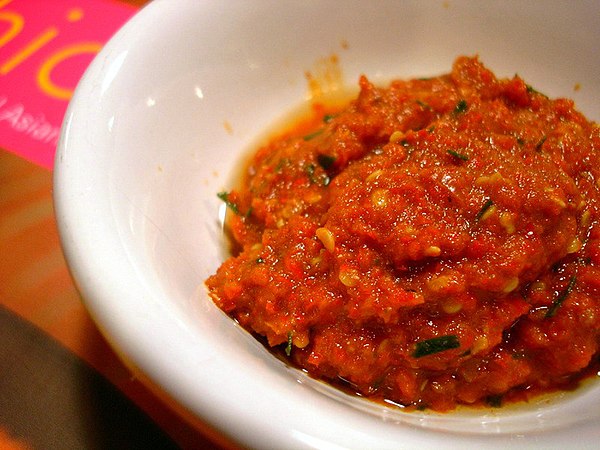
Paste (food)
The Physicochemical Nature of Food Pastes
Food pastes represent a fascinating category of food textures, defined as semi-liquid colloidal suspensions, emulsions, or aggregations. This means they exist in a state that is neither fully solid nor fully liquid, often characterized by a high viscosity. The structure arises from the dispersion of solid particles within a liquid phase (suspension) or the stable mixing of immiscible liquids (emulsion).
This textural property is crucial for their functionality, allowing them to be spreadable, bind ingredients, or provide a smooth mouthfeel. Many pastes are engineered for intense flavor delivery, often achieved through the concentration of spices, aromatics, or fruit components. Their preparation frequently involves processes like grinding, blending, or cooking, which alter the physical and chemical properties of the ingredients.
The ability to prepare pastes well in advance and preserve them for future use highlights their historical and ongoing importance in food systems, reducing preparation time and ensuring flavor availability.
Historical Trajectory
The creation of food pastes is deeply rooted in the earliest forms of food processing. Before the advent of mechanical aids, manual grinding and pounding were the primary methods for transforming raw ingredients into usable pastes. This was essential for making grains more digestible, creating nutrient-rich spreads, and developing early forms of preserved foods. Dough, a fundamental paste made from flour and water, represents one of the most significant early innovations, enabling the development of baking and a stable food source.
As civilizations advanced, so did the techniques for paste production, with the introduction of mortars, pestles, and eventually mills. The development of specific cultural pastes, such as the complex spice blends in curry pastes or the nut-based pastes in the Middle East, reflects regional agricultural resources and culinary traditions. Modern food science has further refined paste production through advanced machinery and understanding of food chemistry, allowing for greater control over texture, stability, and shelf-life, while also enabling the creation of specialized pastes for dietary needs.
The Multifaceted Culinary and Societal Impact of Pastes
Food pastes are indispensable across a vast spectrum of culinary applications and societal functions. They serve as potent flavor enhancers, with ingredients like chili, garlic, ginger, and herbs concentrated to deliver intense sensory experiences, as seen in global curry pastes. Beyond flavor, pastes are critical for food accessibility and nutrition.
They are the ideal form for infant nutrition, providing easily digestible and palatable sustenance. Similarly, for elderly individuals or those with dysphagia, pastes offer a safe and enjoyable way to consume a balanced diet, often with the option to incorporate more robust flavors to compensate for diminished taste sensitivity. In professional kitchens, pastes like roux and beurre manié are foundational elements for sauce construction, providing viscosity and body.
Even common condiments like ketchup and prepared mustard are pastes that bridge the gap between direct consumption and ingredient use, underscoring their versatility and pervasive presence in global diets.
Mechanisms of Paste Formation and Stability
The formation and stability of food pastes are governed by principles of food physics and chemistry. In suspensions, particle size, shape, and surface properties, along with the viscosity of the continuous phase, determine how well particles remain dispersed. For instance, in fruit preserves, pectin acts as a gelling agent, creating a network that traps water and fruit solids.
Emulsions, like mayonnaise or some nut butters, rely on emulsifiers (natural or added) to stabilize the mixture of oil and water phases, preventing separation. Processes like homogenization and high-pressure processing can further enhance paste stability and texture. The Maillard reaction and caramelization during cooking can also contribute to the flavor and color development in certain pastes, such as in the preparation of a roux, where the interaction of flour and fat creates complex flavor compounds and a smooth thickening agent.
Understanding these mechanisms allows for the precise engineering of pastes for specific culinary outcomes and shelf-life requirements.
A Global Lexicon of Paste Applications
The world of food pastes is incredibly diverse, reflecting global culinary traditions and ingredient availability. Fruit preserves, such as jams, jellies, and marmalades, are sweet pastes created by cooking fruit with sugar, relying on pectin for gelling. Curry pastes, originating from South and Southeast Asia, are complex blends of spices, herbs, chilies, and aromatics, forming the flavor base for countless dishes.
Nut pastes, like peanut butter, tahini (sesame paste), and almond butter, are rich in protein and healthy fats, used as spreads, in sauces, and as baking ingredients. Purées, made from cooked and blended fruits, vegetables, or legumes, are versatile pastes used in baby food, soups, and side dishes. Even seemingly simple items like ketchup and prepared mustard are sophisticated pastes that function as both standalone condiments and integral components in marinades, dressings, and sauces, demonstrating the ubiquitous nature and adaptability of this food form.
See also
Frequently Asked Questions
What is a food paste?+
Why do people make pastes instead of eating the ingredients separately?+
How can I make a paste at home?+
Where did pastes come from in history?+
Are pastes good for babies and older people?+
Based on content from Wikipedia · Licensed under CC BY-SA 4.0