

The P-process: Making Rare Elements!
Images
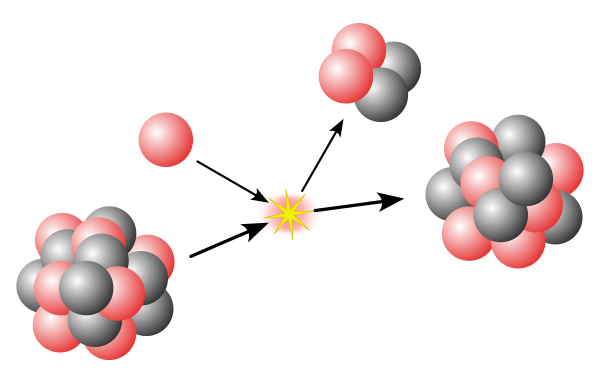
P-process


The Enigma of P-process Nucleosynthesis
The P-process represents a significant challenge in astrophysical nucleosynthesis, accounting for the production of approximately 35 stable isotopes that are heavier than iron and are not formed through the s-process (slow neutron capture) or r-process (rapid neutron capture). These isotopes, known as p-nuclei, are characterized by their proton-rich nature relative to the more abundant s- and r-process isotopes of the same element.
Their scarcity in the solar system, compared to other heavy elements, points to specific and extreme astrophysical environments required for their synthesis. The precise sites and mechanisms of the P-process have been a subject of intense research, with various stellar scenarios proposed and debated within the scientific community.
Candidate Sites
The prevailing theory for P-process nucleosynthesis points to Type Ia supernovae as the primary cosmic factories. These explosions, thought to occur when a white dwarf star accretes sufficient mass from a companion to exceed the Chandrasekhar limit, generate the extreme temperatures and densities necessary for the P-process. During the explosion, photodisintegration reactions and rapid neutron captures occur, leading to the formation of proton-rich nuclei.
However, observational evidence and theoretical models have also explored other potential sites. Some studies suggest that the merger of neutron stars, particularly those with a significant neutron-rich ejecta, could also contribute to the production of certain p-nuclei. Additionally, core-collapse supernovae of massive stars, under specific conditions, have been considered as possible contributors, though the exact mechanisms remain under investigation.
The Astrophysical Significance of P-nuclei
The P-process, despite producing relatively rare elements, holds considerable astrophysical significance. The abundance patterns of p-nuclei in meteorites and stellar spectra provide crucial constraints on stellar evolution and nucleosynthesis models. Studying these patterns allows astronomers to test and refine our understanding of the conditions within supernovae and other energetic cosmic events.
Furthermore, some p-nuclei, such as molybdenum-92 and tellurium-128, have been identified as having roles in biological processes, albeit in trace amounts. Their presence on Earth, therefore, is a direct consequence of these powerful stellar events, linking the microscopic world of atomic nuclei to the macroscopic evolution of the universe and the origins of life.
Mechanisms and Challenges in P-process Modeling
The P-process is characterized by a complex network of nuclear reactions involving proton captures, photodisintegrations, and beta decays. Unlike the s- and r-processes, where neutron capture is dominant, the P-process occurs in environments where photodisintegration (the breaking apart of nuclei by high-energy photons) plays a crucial role in preventing the formation of stable, neutron-rich isotopes. The rapid capture of neutrons, coupled with the high probability of beta decay in proton-rich nuclei, leads to the synthesis of the observed p-nuclei.
A major challenge in modeling the P-process is the lack of precise experimental data for many of the short-lived, neutron-deficient isotopes involved, as well as the precise conditions within the explosive environments. This necessitates reliance on theoretical nuclear physics calculations and astrophysical simulations to interpret observational data.
Observational Evidence and Future Directions
Observational evidence for the P-process comes from analyzing the isotopic abundances of heavy elements in various astronomical objects. Spectroscopic analysis of stars, particularly those with unusual elemental compositions, and the study of meteoritic presolar grains offer insights into the nucleosynthetic history of the solar system and beyond. For instance, the detection of specific p-nuclei in the ejecta of supernovae remnants provides direct confirmation of their origin.
Future research aims to improve the accuracy of nuclear reaction rates for the P-process, refine astrophysical models of supernovae and neutron star mergers, and conduct more detailed isotopic abundance studies. Advanced telescopes and laboratory experiments are crucial for unraveling the remaining mysteries of this vital, yet elusive, cosmic process.
See also
Frequently Asked Questions
What is the P-process?+
Where does the P-process happen?+
Why are p-nuclei rare in the solar system?+
How does the P-process make p-nuclei?+
Do p-nuclei help life on Earth?+
Based on content from Wikipedia · Licensed under CC BY-SA 4.0