

Osmium
Images
Osmium
Osmium
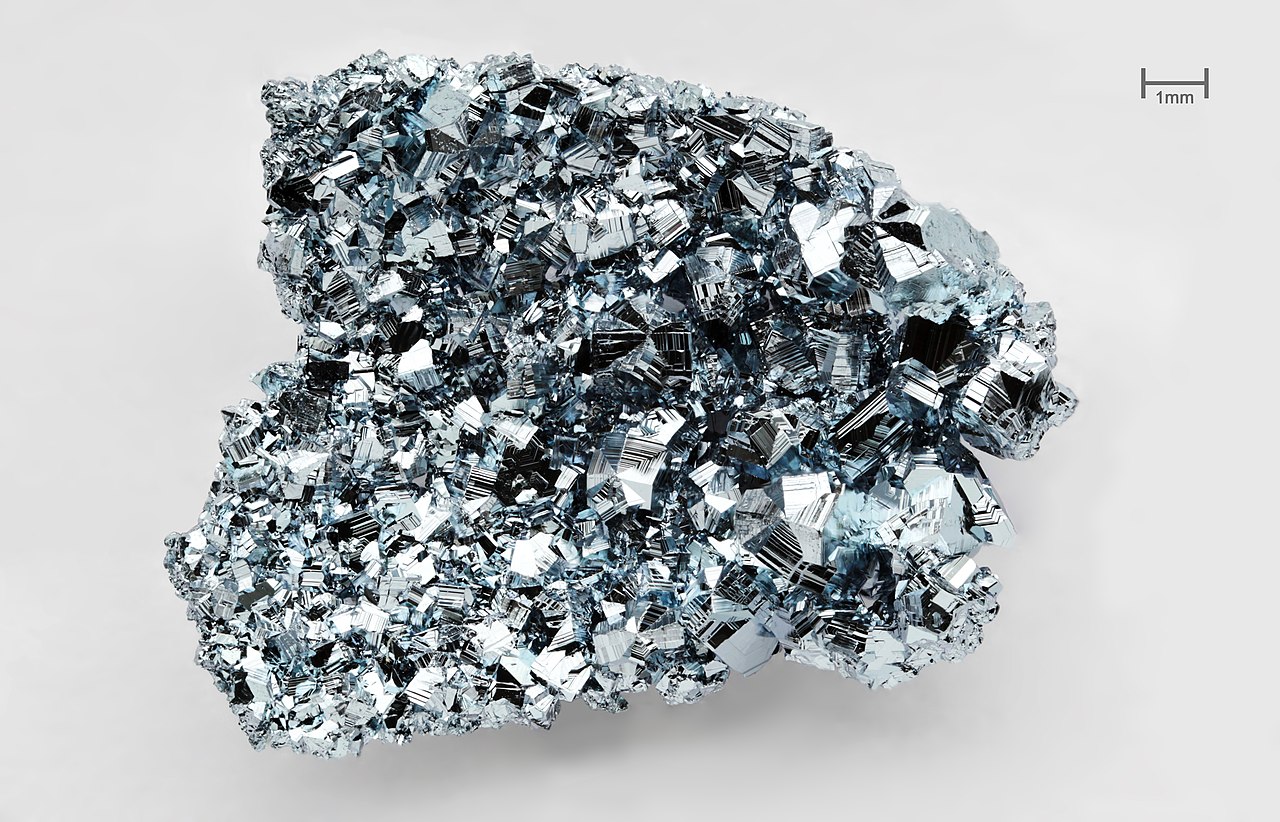
Osmium (Os, atomic number 76) stands as a remarkable member of the platinum group metals, distinguished by its extreme physical properties. It is a hard, brittle, bluish-white transition metal characterized by its exceptionally high density, measuring 22.59 g/cm³. This density is the highest among all stable elements, surpassing even iridium, its closest competitor.
To contextualize this, a cubic meter of Osmium would weigh approximately 22.6 metric tons, equivalent to the weight of about 15 average-sized cars. This extraordinary packing of mass into volume is a direct consequence of its atomic structure and the strong metallic bonding characteristic of heavy transition metals. Osmium's rarity further enhances its value; its estimated abundance in Earth's crust is a mere 50 parts per trillion (ppt), making it one of the least common elements.
This scarcity means that large quantities are economically unfeasible to extract, confining its use to highly specialized applications where its unique properties are indispensable.
The Genesis of Osmium
The discovery of Osmium is intertwined with the scientific exploration of platinum ores in the early 19th century. In 1803, English chemist Smithson Tennant, alongside colleagues like William Hyde Wollaston, was investigating the insoluble residues left after dissolving platinum in aqua regia. Through meticulous chemical analysis, they identified several new elements, including Osmium and Iridium.
Tennant is credited with isolating Osmium. The element's name, derived from the ancient Greek word 'osmē' (meaning 'smell'), was chosen due to the pungent and distinctive odor of its volatile oxide, osmium tetroxide (OsO4). This characteristic smell served as a crucial identifier during its discovery.
The challenging nature of separating Osmium from other platinum-group metals, owing to their similar chemical behaviors and high melting points, meant that its properties were understood gradually over many decades, requiring advanced metallurgical and chemical techniques.
The Significance of Extreme Density and Hardness
Osmium's profound significance in materials science stems directly from its extreme density and exceptional hardness. These properties translate into unparalleled resistance to wear and corrosion, making it a material of choice for applications demanding extreme durability. While pure Osmium is too brittle for most practical uses, it forms highly valuable alloys, particularly with platinum and iridium.
These alloys exhibit enhanced mechanical strength and wear resistance, far exceeding that of their constituent metals. The high density contributes to the robustness and longevity of components made from these alloys. In industries where precision and reliability are critical, such as in scientific instrumentation or specialized electrical engineering, the use of Osmium alloys ensures that parts can withstand rigorous conditions and maintain their integrity over extended periods, thereby reducing maintenance and replacement costs.
Osmium's Niche Roles
The applications of Osmium, though limited by its rarity and cost, are critical in specific high-performance sectors. A well-known use is in the tipping of high-quality fountain pen nibs. The extreme hardness of Osmium alloys ensures that the nib resists abrasion from paper, providing a smooth and consistent writing experience for decades.
This application leverages Osmium's ability to maintain its shape and integrity under constant friction. Furthermore, Osmium alloys are employed in electrical contacts for specialized equipment, such as in high-reliability switches and connectors where resistance to arcing and wear is paramount. Its inertness also makes it suitable for certain catalytic processes, although its toxicity and cost often limit this.
The development of these niche applications highlights Osmium's role as a critical, albeit rare, component in advanced technological solutions where performance and longevity are non-negotiable.
Go deeper
Frequently Asked Questions
What is Osmium and why is it special?+
Why is Osmium so rare?+
How did scientists discover Osmium?+
What are some uses of Osmium?+
Why can't we use Osmium for everyday objects?+
Based on content from Wikipedia · Licensed under CC BY-SA 4.0