

Orange County, California
Images

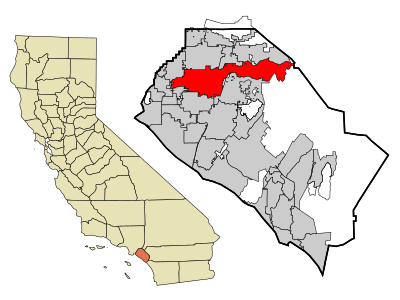
Orange County California Incorporated and Unincorporated areas Placentia Highlighted


The Transformation of the O.C. Landscape
Orange County, officially the County of Orange, represents a compelling case study in the evolution of Southern California's landscape. Situated within the Greater Los Angeles area, it has transitioned from an agrarian economy, historically dominated by citrus groves, into one of the most populous and economically significant suburban counties in the United States. With a population exceeding 3.1 million, it ranks third in California and sixth nationally.
Despite its high population density, second only to San Francisco County in California, Orange County has managed to retain significant natural areas. This juxtaposition of dense suburban development and preserved natural habitats creates a unique ecological environment. The county's infrastructure, including major freeways like the I-5, facilitates connectivity but also shapes the distribution of both human populations and wildlife corridors.
Coastal Ecosystems
The county's extensive 40-mile coastline is a critical ecological zone. Cities like Seal Beach, Huntington Beach, Newport Beach, and Laguna Beach are not only popular tourist destinations but also vital habitats. The intertidal zones, rocky shores, and sandy beaches support a rich array of marine invertebrates, fish, and seabirds. Endangered species like the California Gnatcatcher are found in the coastal sage scrub habitats adjacent to the beaches.
Marine mammals, including various species of whales, dolphins, and seals, frequent the waters offshore, utilizing the area for feeding and migration. The Ocean Institute in Dana Point serves as a hub for marine research and education, highlighting the importance of these coastal ecosystems.
Inland Natural Landmarks and Biodiversity
Beyond the coast, Orange County encompasses significant inland natural areas that are crucial for biodiversity. The Irvine Ranch Natural Landmarks, a network of protected open space, includes diverse habitats such as coastal sage scrub, chaparral, grasslands, and oak woodlands. These areas provide essential refuges for native flora and fauna, including mule deer, coyotes, and a variety of reptiles and birds.
The presence of these inland ecosystems is vital for maintaining ecological connectivity, allowing wildlife to move between coastal and mountainous regions. The conservation efforts in these areas are critical for preserving the county's natural heritage against the pressures of urban expansion.
Conservation Challenges and Opportunities
Orange County faces ongoing challenges in balancing its substantial human population and economic activity with the imperative of environmental conservation. Urban sprawl, habitat fragmentation, and the impacts of climate change pose significant threats to its natural resources. However, the county also presents numerous opportunities for conservation. The establishment of protected areas like Crystal Cove Historic District and the Irvine Ranch Natural Landmarks demonstrates a commitment to preservation.
Furthermore, institutions like the University of California, Irvine (UCI) play a role in research and education related to ecology and conservation. The continued success of wildlife in Orange County hinges on effective land-use planning, habitat restoration, and public engagement in conservation initiatives.
The Interplay of Recreation and Ecology
Orange County is renowned for its recreational opportunities, from world-famous theme parks like Disneyland Resort to its extensive network of beaches and piers. This human-centric development, however, is intricately linked with the county's ecological fabric. While attractions like Huntington Beach Pier offer human enjoyment, the surrounding waters and coastline are active ecosystems.
Similarly, the Irvine Regional Park, home to the Orange County Zoo, is a managed environment that educates the public about local wildlife while also serving as a habitat. Understanding this interplay is key to appreciating Orange County's unique character-a place where human leisure and natural processes coexist, often in close proximity, necessitating careful management to ensure the long-term health of both.
See also
Frequently Asked Questions
What is Orange County known for?+
Why did Orange County change from farming to a big city?+
Where can you see whales and dolphins in Orange County?+
What kinds of natural habitats are in Orange County?+
How does Orange County protect wildlife?+
Based on content from Wikipedia · Licensed under CC BY-SA 4.0