

Guessing Who Will Be in Charge: UK Election Polls!
Images

Opinion polling for the next United Kingdom general election


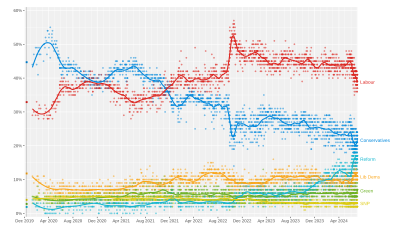
The Predictive Landscape
Opinion polling for the next United Kingdom general election represents a sophisticated attempt to forecast electoral outcomes by systematically measuring public sentiment. These polls are conducted by various organizations, employing diverse methodologies to gauge voter intentions. They are not merely academic exercises; they actively influence media narratives, campaign strategies, and even voter perceptions.
The data generated provides a snapshot of the political climate, highlighting shifts in public mood and the relative strengths of different parties. Understanding these polls is key to comprehending the dynamics of modern democratic processes and the complex interplay between public opinion and political power. The very existence of these polls shapes how campaigns are run and how the public engages with the electoral process.
Evolution of Electorate Gauging
The practice of attempting to predict election results has a long and evolving history. Early forms of polling were often rudimentary, relying on informal methods like straw polls at public gatherings. As statistical science advanced and communication technologies proliferated, polling methodologies became more rigorous.
The establishment of bodies like the British Polling Council (BPC) has been instrumental in fostering transparency and accountability within the industry. The BPC mandates disclosure rules, ensuring that the public and media can scrutinize the methods used by polling firms. This evolution reflects a continuous effort to refine techniques for capturing a representative sample of the electorate, moving from simple observation to complex statistical modeling and data analysis, aiming for greater accuracy and reliability in forecasting.
The Significance of the Poll
The importance of opinion polls extends far beyond simple prediction. They act as a powerful tool in shaping public perception and influencing political strategy. For political parties, poll results can dictate resource allocation, campaign messaging, and even policy development.
A consistently poor showing in the polls might lead a party to re-evaluate its platform, while strong results can embolden its leadership. For the media, polls provide a narrative framework for election coverage, often focusing on the 'horse race' aspect of who is leading. For voters, polls can create a sense of momentum or inevitability, potentially influencing turnout and voting decisions.
This dynamic interaction highlights how polls are not just passive reflections of opinion but active participants in the electoral process itself.
Methodological Nuances
The accuracy of opinion polls hinges on robust methodological design. Pollsters must carefully construct their samples to be representative of the voting population, considering factors such as age, gender, socioeconomic status, and geographic location. Techniques range from traditional random-digit dialing for telephone surveys to sophisticated online panels and even analysis of social media sentiment.
The wording of questions is also critical; subtle biases can significantly skew results. Furthermore, pollsters must account for undecided voters and potential 'shy' voters who may be reluctant to reveal their true intentions. The BPC's disclosure rules require firms to detail their methodology, sample size, and margin of error, enabling critical evaluation of the data's reliability and validity.
The Temporal Constraint
The timing of the next UK general election is governed by the Dissolution and Calling of Parliament Act 2022, which stipulates that Parliament automatically dissolves five years after its first meeting, unless dissolved earlier by the Prime Minister. This means the latest possible date for the election is 15 August 2029. Polling activity is continuous, but its relevance can shift as the election approaches.
Early polls offer broad trends, while those conducted closer to polling day are generally considered more indicative of the likely outcome. The 25-working-day window between dissolution and polling day allows for a concentrated period of final campaigning and last-minute polling, though the impact of these final polls can be debated due to potential volatility in voter sentiment.
See also
Frequently Asked Questions
What are election polls and why are they important in the UK?+
How do pollsters make sure the results are fair and accurate?+
Who checks that poll companies are honest and follow good rules?+
Can the results of a poll change how people vote?+
What were early ways of guessing election results before modern polls?+
Based on content from Wikipedia · Licensed under CC BY-SA 4.0