

Natural Arch: Nature's Awesome Bridges!
Images

Natural arch developed in chalk & impure chalk (Smoky Hill Chalk Member, Niobrara Formation, Upper Cretaceous; Monument Rocks, Kansas, USA) 30




The Genesis of Arches
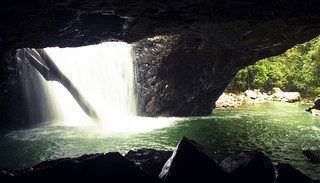
Natural arches, also known as rock arches or, less commonly, rock bridges, are striking geological landforms characterized by a naturally formed opening beneath a rock structure. Their genesis is a testament to the power of cumulative erosional processes acting over vast geological timescales. Typically, arches form from narrow rock fins, coastal cliffs, or isolated sea stacks composed of sedimentary rocks like sandstone or limestone, which possess distinct layers of varying hardness.
The formation mechanism hinges on differential erosion, where weaker rock strata are preferentially removed while more resistant caprock remains. Initially, weathering and erosion, driven by water (rivers, rain, sea spray) and wind, exploit weaknesses such as joints, bedding planes, or faults in the rock. This leads to the development of rock shelters or alcoves on opposite sides of the formation.
As these alcoves enlarge and deepen, they eventually meet beneath the overlying caprock. The continued erosion of the caprock, though slower, is crucial for the arch's formation and eventual demise. The erosional processes are highly selective, targeting softer materials and widening cracks more rapidly than the more durable caprock.
However, the caprock itself is not immune to erosion; its gradual wearing away dictates the lifespan of the arch, ultimately leading to collapse. The distinction between an arch and a bridge is often semantic, with the Natural Arch and Bridge Society classifying bridges as water-formed arches, while other definitions link bridges to arches spanning erosional valleys.
Chronicles in Stone
Natural arches serve as invaluable archives of Earth's history, offering insights into past environmental conditions and geological evolution. Their formation is intrinsically linked to geological time scales, requiring millions of years for the slow, persistent work of erosion to sculpt these magnificent structures. The very existence of an arch indicates a period of relative stability in erosional forces, allowing for the development of the opening, followed by the ongoing process that will eventually lead to its destruction.
Studying the composition of the rock, the patterns of erosion, and the surrounding landscape allows geologists to reconstruct paleoenvironments, understand past climate regimes, and date geological events. For instance, the type of rock and the erosional agents involved can reveal information about ancient river systems, coastal dynamics, or weathering patterns. Furthermore, the study of arches contributes to our understanding of geomorphology, the science of landform development.
The processes that create arches are fundamental to how landscapes are shaped globally. The eventual collapse of an arch is also a significant geological event, contributing to sediment deposition and altering the local topography, providing further clues about Earth's dynamic nature.
Giants of the Earth
The scale of natural arches can be truly awe-inspiring, with some spanning hundreds of meters and standing as monumental testaments to geological artistry. The Xianren Bridge in southern China holds the record as the largest natural arch on Earth by a significant margin. Its impressive span measures approximately 122 ± 5 meters (400 ± 15 feet).
This colossal opening is not merely a geological curiosity but a significant landmark that draws scientific interest and admiration. To contextualize its size, imagine fitting over ten standard-sized school buses end-to-end beneath its span. This immense structure is a product of prolonged erosion acting on the local rock strata.
Beyond Xianren Bridge, numerous other remarkable arches exist globally, each with unique dimensions and geological contexts. Examples include Landscape Arch in Arches National Park, Utah, known for its extreme slenderness, and Durdle Door on the Jurassic Coast in England, a striking sea arch. The study and documentation of these large-scale formations are crucial for comparative geology, allowing researchers to analyze variations in erosional processes and rock resistance across different environments.
The Enduring Importance
Natural arches possess multifaceted significance that extends beyond their aesthetic appeal. Scientifically, they are critical natural laboratories for studying geomorphological processes, erosion dynamics, and rock mechanics. Their formation and eventual degradation provide empirical data for validating geological models and understanding landscape evolution over deep time.
They serve as indicators of geological stability and the efficacy of erosional agents. Ecologically, arches and their surrounding habitats can support unique microclimates and specialized flora and fauna, contributing to biodiversity. They often form part of larger protected areas, highlighting the importance of conservation efforts for geological heritage sites.
Culturally, natural arches have held profound meaning for human societies throughout history, featuring in indigenous mythologies, folklore, and spiritual practices. They serve as powerful symbols of nature's grandeur and resilience. In modern times, they are significant tourist attractions, driving economic activity and fostering a connection between people and the natural world.
The preservation of these fragile formations is paramount, requiring careful management to balance accessibility with conservation to ensure their survival for future generations.
See also
Based on content from Wikipedia · Licensed under CC BY-SA 4.0