

Oman's Awesome Emblem!
Images
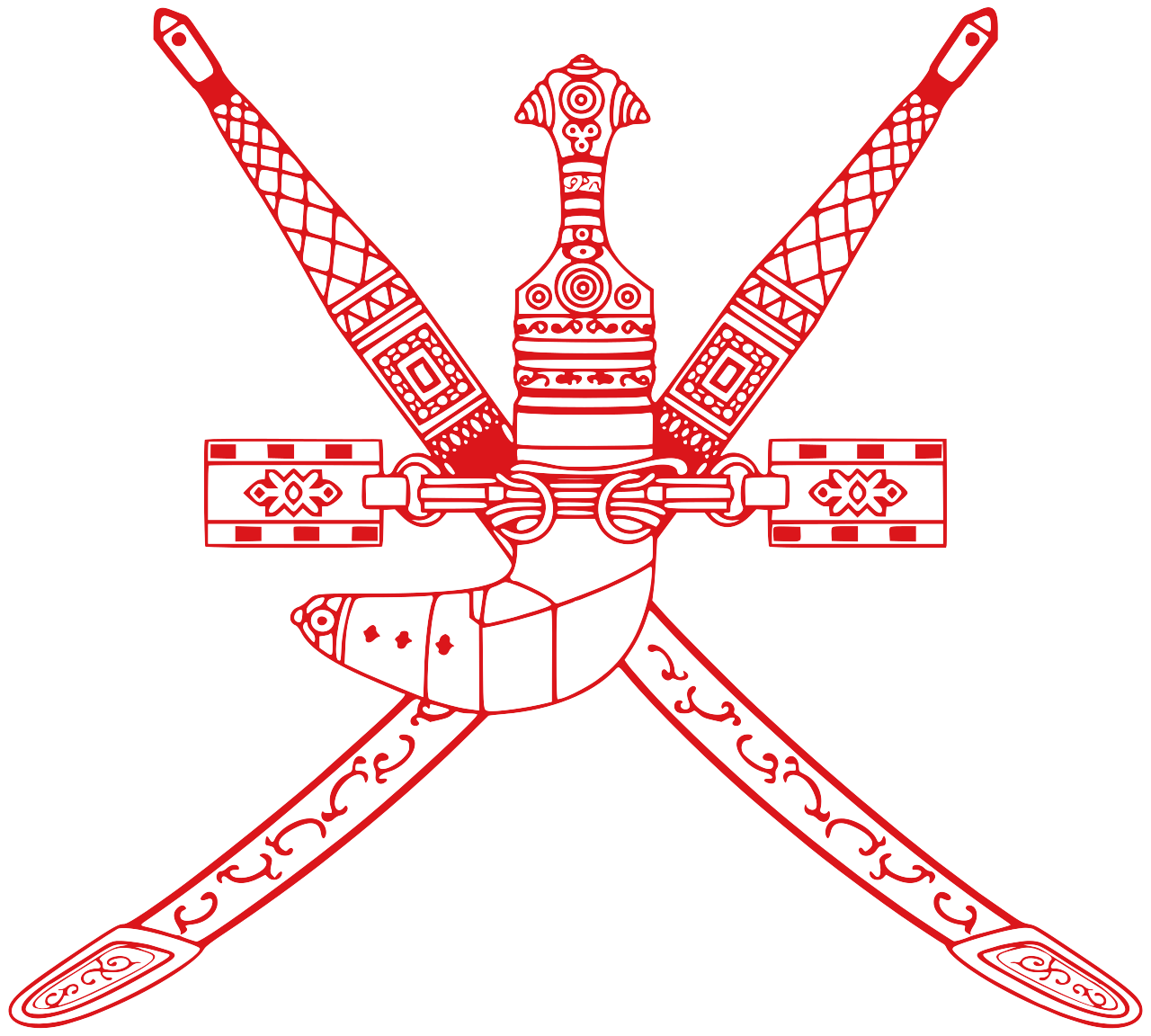
National emblem of Oman (Official)


Genesis and Evolution
The national emblem of Oman, colloquially known as the Khanjar Bo Sayfain, possesses a rich lineage that traces back to the 18th century. Initially conceived not as a national symbol, but as the personal insignia of the Omani royal family, its adoption marked a period of consolidation and assertion of dynastic power. The Khanjar, a quintessential Omani dagger, and the crossed swords, represent martial prowess and the historical defense of the Sultanate.
As Oman's political landscape evolved and its sovereignty became more firmly established, the need for a unifying national symbol grew. The Khanjar Bo Sayfain, already imbued with historical significance and representing core Omani values of bravery and honor, was a natural and potent choice to transition from a dynastic badge to the official emblem of the Sultanate of Oman. This transition signifies a deliberate act of national branding, aligning the historical legacy of the ruling family with the collective identity of the nation.
Deconstructing the Iconography
The visual components of the Omani national emblem are deeply symbolic, each element contributing to a complex narrative of national identity. The Khanjar, a curved dagger with a distinctive hilt, is far more than a mere weapon; it is a cultural artifact, a symbol of status, honor, and masculine virtue deeply ingrained in Omani society. Its presence within its sheath suggests controlled power and readiness.
The superimposed crossed swords are potent symbols of military strength, historical defense, and the unwavering resolve to protect the nation's borders and its people. Together, the Khanjar and swords create a powerful visual lexicon that speaks to Oman's historical resilience, its proud heritage, and its commitment to sovereignty. The emblem serves as a constant, tangible reminder of the values that have shaped Oman and continue to underpin its national ethos, resonating with both internal pride and external recognition.
The Emblem's Pervasive Presence and Function
The national emblem of Oman is strategically deployed across various facets of national life, functioning as a ubiquitous marker of state authority and national identity. Its most prominent and recognizable application is on the Flag of Oman, where it occupies the canton, serving as an immediate and unmistakable identifier for the nation on the global stage. Beyond vexillology, the emblem is integral to the official apparatus of the state.
It is imprinted on government documents, currency, official seals, and displayed on public buildings, reinforcing its role as a symbol of governmental legitimacy and national sovereignty. This consistent and widespread visibility ensures that the emblem functions not only as a historical artifact but as a living symbol, continuously reinforcing Omani cultural heritage and national pride among its citizens and projecting a clear image to the international community.
Cultural Resonance and Modern Relevance
The enduring relevance of the Khanjar Bo Sayfain in modern Oman lies in its deep connection to the nation's cultural heritage and its historical narrative. In a rapidly globalizing world, national emblems serve as crucial anchors of identity, reminding citizens of their unique history and shared values. For Oman, the emblem encapsulates centuries of tradition, bravery, and the distinct cultural practices associated with the Khanjar.
It represents a continuity of identity that transcends political changes and economic development. The emblem's continued prominence signifies a national pride in its unique heritage, a deliberate choice to honor its past while navigating the complexities of the present. It acts as a powerful symbol of national unity and distinctiveness in an increasingly interconnected world.
See also
Frequently Asked Questions
What does Oman's emblem look like?+
Why does Oman use a dagger and swords in its emblem?+
When did Oman start using the Khanjar Bo Sayfain as its national emblem?+
Where can you see Oman's emblem?+
How does the emblem help Omani people feel proud?+
Based on content from Wikipedia · Licensed under CC BY-SA 4.0