

Nakalipithecus: The Ancient Ape of Kenya!
Images

Ape phylogeny


The Discovery of Nakalipithecus
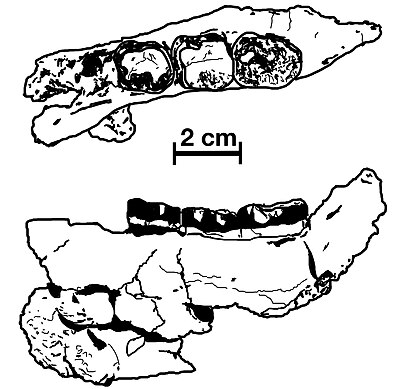
The discovery of Nakalipithecus nakayamai, colloquially known as the Nakali ape, provides invaluable insights into the diversity of great apes during the Late Miocene epoch, approximately 9.9 to 9.8 million years ago. Unearthed in Nakali, Kenya, the fossil material consists of a right jawbone bearing three molars and eleven additional isolated teeth. This assemblage is significant not only for its age but also for the specific morphological characteristics it exhibits.
These features, particularly the relatively short canines, thin enamel, and flattened molars, differentiate Nakalipithecus from many other known hominoids, suggesting a unique evolutionary trajectory and ecological niche. The find underscores Africa's pivotal role as a center for primate evolution, offering tangible evidence of the complex tapestry of ape life that existed millions of years before the emergence of early hominins.
Inferring Diet and Habitat from Dental Morphology
The dental morphology of Nakalipithecus offers compelling clues about its diet and preferred habitat. The relatively thin enamel on its teeth suggests that it did not consume extremely hard or abrasive foods that would require thick, robust enamel for grinding. Conversely, the flatter molars are indicative of a diet that likely involved processing softer plant materials.
This interpretation is further supported by the paleoenvironmental reconstruction of its habitat as a sclerophyllous woodland. Such environments are characterized by vegetation with tough, leathery leaves, often adapted to periods of drought. Nakalipithecus would have been adapted to forage on these resilient plants, utilizing its specific dental adaptations for efficient mastication. This specialized diet likely played a role in its survival and evolutionary success within its particular ecological setting.
Sex Determination and Comparative Anatomy
A particularly interesting aspect of the Nakalipithecus fossil discovery is the inference regarding the sex of the individual represented by the jawbone. The size of the teeth, especially the molars, is comparable to those found in modern female gorillas and orangutans. This comparative anatomy is a common method used in paleoanthropology to estimate the sex of fossil specimens when direct indicators are absent.
The observed dental dimensions suggest that the Nakali ape likely exhibited significant sexual dimorphism, a trait common among many primate species, including extant great apes. Understanding these dimorphic patterns is crucial for reconstructing social structures and reproductive strategies of extinct species, providing a more complete picture of their biology and behavior.
Nakalipithecus's Place in the Hominoid Family Tree
The significance of Nakalipithecus nakayamai extends to its potential position within the broader hominoid evolutionary tree. While its exact phylogenetic placement is still debated among scientists, it represents a crucial data point for understanding the diversification of apes in Africa during the Miocene. Its existence challenges earlier assumptions about ape distribution and evolution during this period.
As a potential ancestor or close relative to later hominoids, including the lineage leading to humans, Nakalipithecus helps fill critical gaps in our understanding of primate origins. Continued research and discovery of related fossils are essential for refining our knowledge of the complex evolutionary pathways that led to the great apes and humans we see today.
Broader Implications for Paleoanthropology
The study of Nakalipithecus has far-reaching implications for the field of paleoanthropology. It highlights the importance of African fossil sites in unraveling the deep history of primates. The specific adaptations observed in Nakalipithecus, such as its dental morphology and inferred habitat preference, provide valuable data for understanding how ancient apes responded to environmental changes and competed for resources.
Furthermore, its existence suggests a greater diversity of ape lineages in Africa during the Miocene than previously recognized, prompting a re-evaluation of existing evolutionary models. By comparing Nakalipithecus with other contemporary and ancestral ape fossils, researchers can develop more robust phylogenetic hypotheses and gain a clearer picture of the selective pressures that shaped primate evolution over millions of years, ultimately contributing to our understanding of human origins.
See also
Frequently Asked Questions
What is Nakalipithecus?+
When did Nakalipithecus live?+
Where were the Nakalipithecus fossils found?+
What did Nakalipithecus eat?+
How do scientists know the sex of the Nakalipithecus fossil?+
Based on content from Wikipedia · Licensed under CC BY-SA 4.0