

Your Amazing Muscles!
Images

<div class='fn'> Didactic model of a sheep muscular system</div>


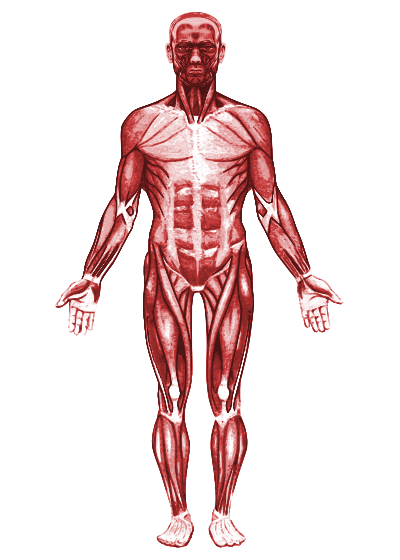

Anatomical Diversity and Functional Specialization
The human muscular system is an intricate organ system comprising three distinct muscle tissue types: skeletal, smooth, and cardiac. Skeletal muscles, comprising the bulk of the body's muscle mass, are voluntary striated muscles responsible for locomotion, posture, and facial expressions. Their structure, characterized by sarcomeres, allows for powerful and precise contractions.
Smooth muscles, found in the walls of hollow organs such as the digestive tract, blood vessels, and uterus, are involuntary non-striated muscles that regulate internal processes like peristalsis and blood pressure. Cardiac muscle, unique to the heart, is an involuntary striated muscle that rhythmically contracts to pump blood, demonstrating remarkable fatigue resistance. This specialization allows for a wide range of physiological functions, from gross motor skills to subtle internal regulatory mechanisms.
Neuromuscular Control and Biomechanical Principles
The coordinated action of skeletal muscles is orchestrated by the nervous system. Motor neurons transmit electrical impulses from the central nervous system to muscle fibers at the neuromuscular junction, triggering a cascade of events leading to muscle contraction. This intricate feedback loop allows for precise control over movement, force generation, and muscle recruitment.
Biomechanically, muscles function as biological actuators, generating force by shortening (concentric contraction), lengthening (eccentric contraction), or maintaining a constant length (isometric contraction). They work in conjunction with the skeletal system, acting as levers to produce movement around joints. Understanding these principles is crucial for fields ranging from sports science to rehabilitation medicine, explaining how forces are transmitted and movements are executed.
Homeostatic Roles and Systemic Integration
Beyond locomotion, the muscular system plays a critical role in maintaining homeostasis. Skeletal muscle contractions generate heat, contributing significantly to thermoregulation. The continuous activity of smooth muscles in blood vessels helps regulate blood pressure and flow, essential for nutrient and oxygen delivery. Furthermore, the muscular system is inextricably linked with other bodily systems.
Its integration with the skeletal system forms the musculoskeletal framework, providing support and enabling movement. The nervous system provides the control signals, while the circulatory system supplies the necessary oxygen and nutrients and removes metabolic waste. This systemic interdependence highlights the holistic nature of human physiology.
Clinical Relevance and Future Directions
Disruptions to the muscular system can lead to a wide array of debilitating conditions, from muscular dystrophies and myasthenia gravis to strains and tears. Understanding the underlying pathophysiology is paramount for effective diagnosis and treatment. Advances in regenerative medicine, gene therapy, and bioengineering are opening new avenues for treating muscle-related diseases and injuries.
Furthermore, the study of muscle physiology continues to inform strategies for enhancing athletic performance, preventing age-related muscle loss (sarcopenia), and developing more effective rehabilitation protocols. The ongoing research into muscle function underscores its profound impact on overall health, mobility, and quality of life.
Evolutionary Perspectives and Comparative Anatomy
The evolution of the muscular system across different species showcases remarkable adaptations driven by diverse environmental pressures and lifestyles. From the streamlined musculature of aquatic animals for efficient propulsion to the powerful limbs of terrestrial vertebrates for locomotion and support, muscle morphology and function are finely tuned to specific ecological niches. Comparative anatomy reveals homologous muscle groups and developmental pathways, providing insights into evolutionary relationships.
The study of muscle development, innervation, and adaptation in various organisms offers a broader understanding of the fundamental principles governing muscle biology and its role in the success of the animal kingdom.
See also
Frequently Asked Questions
What are the three types of muscle in our body?+
How do muscles make us run and jump?+
Why does my heart keep beating all the time?+
How do muscles help keep us warm?+
What happens if a muscle gets hurt or weak?+
Based on content from Wikipedia · Licensed under CC BY-SA 4.0