

Muammar Gaddafi
Images
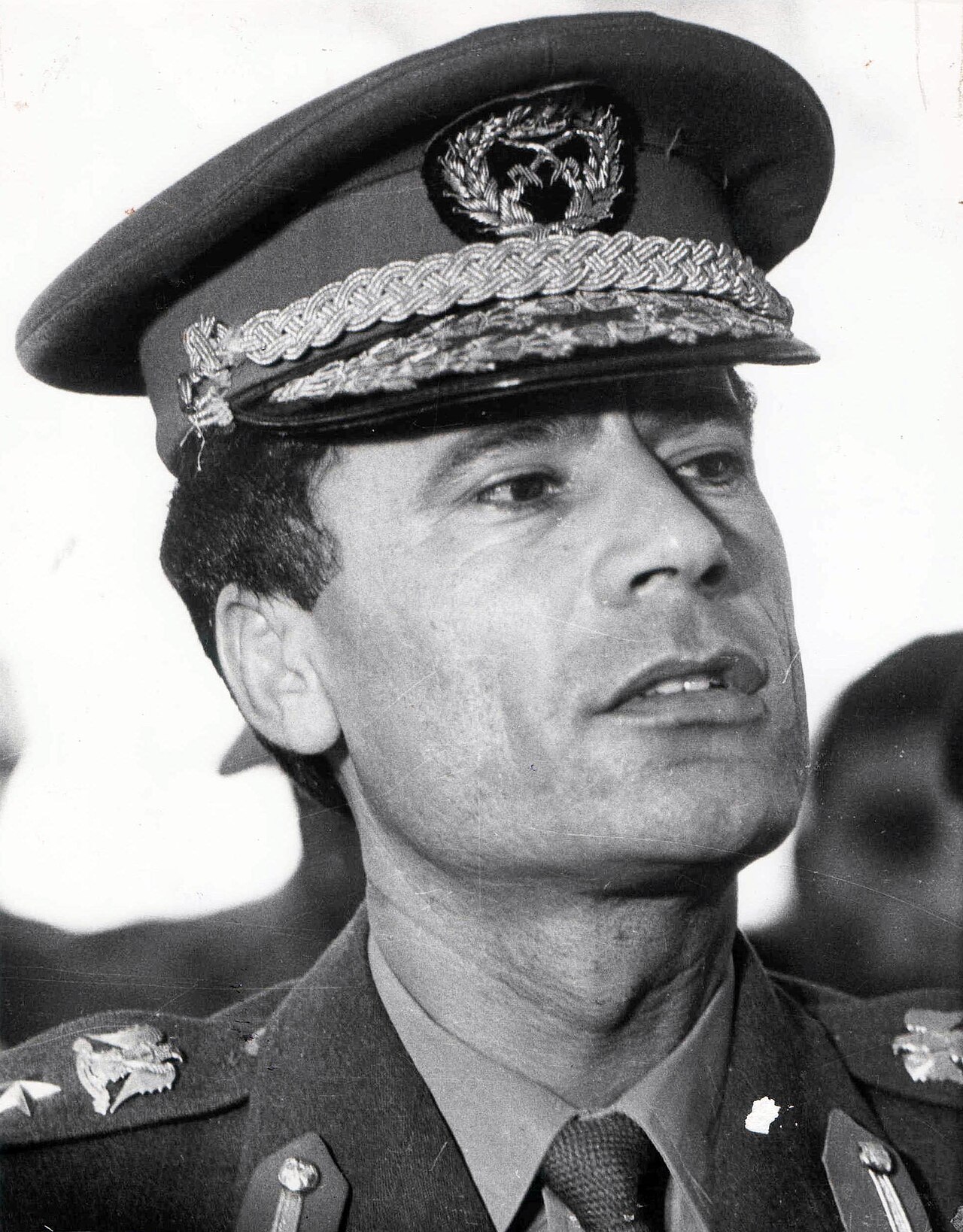
Muammar Gaddafi
The Genesis of a Revolutionary
Muammar Muhammad Abu Minyar al-Gaddafi was born around 1942 near Sirte, Libya, into a poor Bedouin Arab family. His formative years were shaped by Arab nationalism, a sentiment he developed while attending school and later the Royal Military Academy in Benghazi. This ideology fueled his ambition to reshape Libya.
In 1969, at the age of 27, Gaddafi orchestrated a bloodless military coup, deposing King Idris and ending the monarchy. He established the Revolutionary Command Council, ushering in a new era for Libya. His initial actions focused on asserting national sovereignty: expelling the Italian population, dismantling Western military bases, and nationalizing the oil industry.
This move was pivotal, as oil revenues would become the engine of his ambitious social and economic policies for decades to come.
The 'Third International Theory' and the 'State of the Masses'
Gaddafi's political philosophy evolved significantly over his rule. Initially embracing Arab nationalism and Arab socialism, he later developed his unique 'Third International Theory,' detailed in his influential book, 'The Green Book.' This theory posited a radical form of direct democracy, advocating for governance through 'Basic People's Congresses' where citizens would directly participate in decision-making. In 1977, he officially transformed Libya into the Great Socialist People's Libyan Arab Jamahiriya, translating to 'state of the masses.' While presented as a grassroots system, Gaddafi retained ultimate authority, particularly through his control of the military and revolutionary committees tasked with suppressing dissent.
He also implemented Islamic modernism, integrating Sharia law into the legal framework while pursuing Islamic socialist economic policies.
Foreign Policy
Gaddafi's foreign policy was often assertive and controversial. He initially championed pan-Arab unity, seeking to forge closer ties with other Arab nations, though these efforts met with limited success. The 1970s and 1980s saw Libya become increasingly isolated on the world stage due to its support for various foreign militant groups and alleged involvement in international terrorist incidents, most notably the bombings of Pan Am Flight 103 and UTA Flight 772.
This led to severe international sanctions and military confrontations, including the 1986 U.S. bombing of Libya. In later years, Gaddafi shifted his focus towards pan-Africanism, promoting African unity and economic cooperation, and served as Chairperson of the African Union from 2009 to 2010. He also sought rapprochement with Western nations, attempting to reintegrate Libya into the global community.
The Arab Spring and the Violent End of an Era
The wave of protests known as the Arab Spring in 2011 reached Libya, fueled by long-standing grievances over corruption, unemployment, and authoritarian rule. What began as peaceful demonstrations quickly escalated into a full-scale civil war between Gaddafi's loyalists and rebel forces. The international community, including NATO, intervened militarily, supporting the opposition.
After months of intense fighting, Gaddafi's regime collapsed. He retreated to his hometown of Sirte, where he was eventually captured and killed by rebel fighters on October 20, 2011. His death marked the end of a 42-year rule that left an indelible and complex legacy on Libya and the wider region, characterized by both significant development and widespread human rights abuses.
Go deeper
Frequently Asked Questions
Who was Muammar Gaddafi and when did he rule Libya?+
How did Gaddafi come to power?+
What was the "Green Book" and why was it important?+
Why did other countries attack Libya in the 1980s?+
How did the Arab Spring affect Gaddafi's rule?+
Based on content from Wikipedia · Licensed under CC BY-SA 4.0