

Moscow Oblast
Images

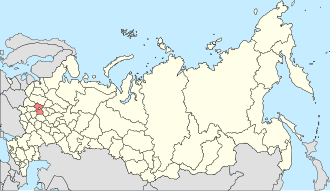
Outline Map of Moscow Oblast



Geographic and Demographic Significance
Moscow Oblast, situated in the heart of European Russia, is a federal subject defined by its unique geographical relationship with the federal city of Moscow. It forms a sprawling metropolitan area that encircles the capital, yet remains administratively distinct. With an area of 44,300 square kilometers, it is a substantial territory, but its true significance lies in its population density. Home to over 8.5 million residents, it ranks as the second most populous federal subject in Russia, indicating a high concentration of human activity and development.
This demographic weight underscores its role as a major center for commerce, culture, and daily life for a vast number of people. The Oblast's location between latitudes 54° and 57° N and longitudes 35° and 41° E places it strategically within European Russia, facilitating connections with numerous neighboring regions.
Economic Engine and Industrial Landscape
The economy of Moscow Oblast is robust and highly diversified, driven by a strong industrial base. Key sectors include metallurgy, oil refining, and mechanical engineering, which form the backbone of its manufacturing output. These industries are complemented by significant contributions from the food, energy, and chemical sectors, creating a complex and interconnected economic ecosystem.
The Oblast's industrial prowess is not merely about production volume; it is also about technological advancement and employment generation. Its proximity to Moscow provides access to a skilled workforce, extensive transportation networks, and a large consumer market, further bolstering its economic dynamism. This concentration of industry makes Moscow Oblast a critical component of Russia's national economy, contributing significantly to its GDP and industrial capacity.
Administrative Complexity and Governance
The administrative structure of Moscow Oblast presents an interesting case study in regional governance. Unlike many federal subjects with a singular, designated capital city, the Oblast's public authorities are distributed across multiple locations. Key governmental bodies, including the Moscow Oblast Duma (the regional legislature) and various local government administrations, are situated in both the federal city of Moscow and in Krasnogorsk.
This dual-center approach reflects the intricate relationship between the Oblast and the capital city it surrounds. It necessitates sophisticated coordination and communication strategies to ensure effective governance and service delivery to its vast population, highlighting the unique challenges and opportunities of managing a region so closely intertwined with a major global metropolis.
Historical Development and Regional Identity
While the provided source focuses on contemporary aspects, the historical development of Moscow Oblast is intrinsically linked to the rise of Moscow itself. Over centuries, the lands surrounding the capital evolved from agricultural territories and defensive perimeters into centers of industry and population. This evolution was shaped by Russia's imperial expansion, industrial revolutions, and Soviet-era planning.
The region absorbed populations and industries, developing its own distinct identity while remaining deeply connected to the fortunes of Moscow. The current administrative setup, with distributed authorities, can be seen as a modern adaptation to this long history of growth and integration, balancing the needs of a large, industrialized region with its unique relationship to the nation's primary political and cultural center.
Education and Human Capital Development
Moscow Oblast plays a vital role in Russia's educational landscape, hosting a multitude of educational institutions that cater to a diverse student population. Beyond the standard K-12 schooling, the region boasts numerous universities, institutes, and technical colleges offering specialized programs in fields crucial to its industrial and economic base. These institutions are instrumental in cultivating a highly skilled workforce, driving innovation, and supporting research and development.
The presence of these centers of learning not only serves the immediate needs of the Oblast's industries but also contributes to Russia's broader intellectual capital. Graduates from these institutions often find opportunities within the Oblast's dynamic economy or contribute to national initiatives, underscoring the region's importance in human capital development.
Go deeper
Frequently Asked Questions
What is Moscow Oblast and how is it related to Moscow city?+
How many people live in Moscow Oblast?+
What kinds of factories or industries are in Moscow Oblast?+
Where is Moscow Oblast located?+
Why does Moscow Oblast have government offices in both Moscow and Krasnogorsk?+
Based on content from Wikipedia · Licensed under CC BY-SA 4.0