

Monagas
Images

Bandera de Piar (Monagas)





Geopolitical and Environmental Context of Monagas
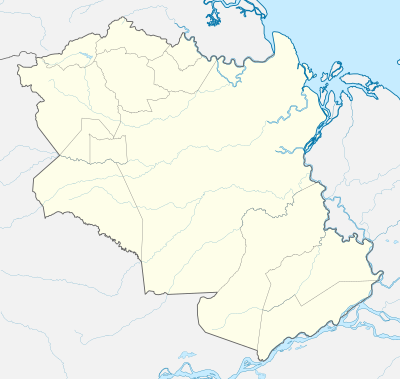
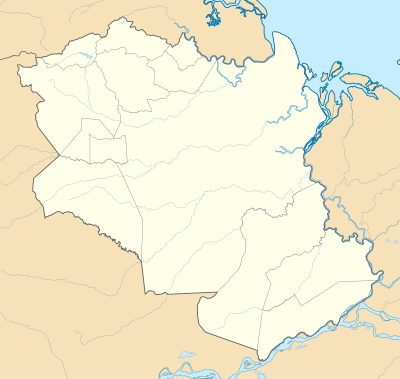
Monagas State occupies a substantial territory within Venezuela, covering 28,900 square kilometers, making it one of the larger administrative divisions. Its geographical positioning is critical, acting as a nexus with multiple Venezuelan states: Sucre to the north, Anzoátegui to the west and south, Bolívar to the south, and Delta Amacuro to the south and east. The northeastern boundary is defined by the Paria Gulf, offering coastal access and potential maritime economic activities.
This extensive network of borders suggests significant inter-state trade and cultural exchange, as well as potential logistical challenges and opportunities. The sheer size of Monagas implies a diverse range of ecosystems and potential natural resources, though specific details are not provided in the source. Its location within Venezuela, a country rich in natural resources, hints at the state's potential role in national resource management and economic development.
Understanding these geographical relationships is fundamental to grasping Monagas's place within the broader Venezuelan context, influencing everything from transportation networks to regional planning.
The Monagas Legacy
The nomenclature of Monagas State is deeply intertwined with the political history of Venezuela, specifically honoring the Monagas brothers, José Tadeo Monagas and José Gregorio Monagas. Both men ascended to the presidency, leaving indelible marks on the nation's trajectory. José Tadeo Monagas, a native son of Monagas, embodies a direct lineage between the state and its leadership.
His brother, José Gregorio Monagas, though from neighboring Anzoátegui, further solidifies the family's prominence in Venezuelan governance. This naming convention serves not merely as an identifier but as a historical marker, underscoring the region's contribution to national leadership and political development. The capital city, Maturín, functions as the administrative nucleus, channeling the state's governance and serving as a focal point for its identity.
The historical weight of the Monagas name imbues the state with a sense of historical significance and a legacy of public service that continues to shape its regional identity.
Demographic Landscape and Sociocultural Fabric
As of the 2011 census, Monagas State was home to 905,443 inhabitants, indicating a significant population density and a vibrant human landscape. The primary language spoken is Spanish, reflecting Venezuela's colonial history and its dominant linguistic heritage. The capital, Maturín, serves as the primary urban center, likely concentrating economic activity, governmental functions, and cultural institutions.
The substantial population suggests a diverse workforce and a complex social structure, with various communities contributing to the state's unique cultural tapestry. The large geographical area of Monagas implies that its population is distributed across different environments, potentially including urban, semi-urban, and rural settings, each with its own distinct way of life. Understanding these demographic characteristics is essential for comprehending the social dynamics, labor market, and cultural expressions that define Monagas.
The state's population is a key factor in its economic potential and its role within Venezuela's national identity.
Economic Drivers and Potential of Monagas
While the provided source material does not explicitly detail the economic activities of Monagas, its geographical context and neighboring states offer strong indicators of its economic drivers. Venezuela is globally recognized for its vast petroleum reserves, and states like Anzoátegui and Monagas are often central to the nation's oil and gas industry. It is highly probable that the extraction, refining, and export of hydrocarbons form a significant pillar of Monagas's economy.
Beyond oil, the state's considerable land area suggests potential for robust agricultural and livestock sectors, contributing to food security and potentially export markets. Furthermore, its location and proximity to other resource-rich states like Bolívar (known for mining) might indicate related economic activities or supply chain integration. The capital, Maturín, would undoubtedly be a hub for commerce, finance, and services supporting these primary industries.
The economic vitality of Monagas is crucial not only for its residents but also for Venezuela's national economic output, making it a region of considerable strategic importance.
Governance and Administrative Structure
Monagas State operates within Venezuela's federal system, functioning as one of the 23 constituent states. The state is governed by a structure that includes a capital city, Maturín, which serves as the administrative and political center. As a state, Monagas likely has its own governor, legislative assembly, and judicial system, operating under the framework of the Venezuelan Constitution.
The state's government is responsible for managing public services, infrastructure development, resource allocation, and maintaining law and order within its territory. Its borders with multiple other states and its coastal access via the Paria Gulf necessitate coordination with neighboring regional governments and national authorities, particularly concerning trade, transportation, and environmental management. The governance of Monagas plays a vital role in implementing national policies at the regional level and in addressing the specific needs and challenges of its population and economy.
See also
Frequently Asked Questions
What is Monagas?+
Where is Monagas located?+
Who are the Monagas brothers?+
How many people live in Monagas?+
What language do people speak in Monagas?+
Based on content from Wikipedia · Licensed under CC BY-SA 4.0