

Mobility scooter
Images
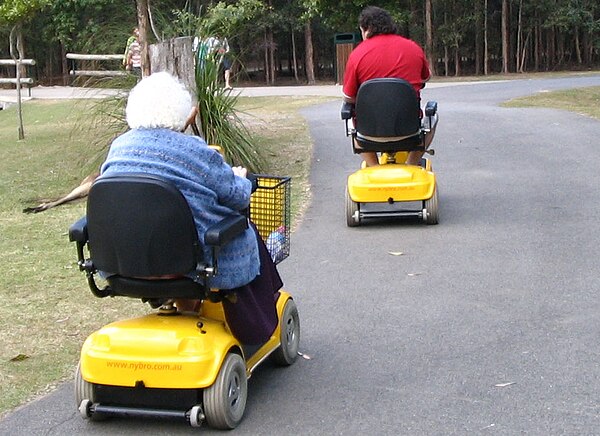
Mobility scooter
The Anatomy and Purpose of a Mobility Scooter
A mobility scooter is an electric personal transporter, fundamentally designed as a mobility aid for individuals experiencing physical impairments. While often serving as an auxiliary to powered wheelchairs, its configuration distinctly resembles that of a motorscooter, featuring a seat, handlebars for steering, and an electric motor. Functioning as a form of micromobility, these devices are crucial for enabling users to navigate their environment with greater ease and autonomy.
They are particularly beneficial for those who have difficulty walking or standing for extended periods but may not require the full support of a power wheelchair for all activities. The design prioritizes user-friendliness and maneuverability, making them a practical choice for a wide array of daily tasks and personal travel needs, bridging the gap between walking and more complex mobility devices.
Evolutionary Roots
The development of mobility scooters is intrinsically linked to the broader evolution of assistive technologies and the increasing understanding of personal mobility needs. While a singular 'invention' moment is elusive, their emergence as a distinct category of personal transporter gained traction with advancements in electric motor efficiency and battery technology throughout the latter half of the 20th century. They represent a practical application of these technologies to address the limitations faced by individuals with diverse physical conditions, ranging from spinal injuries to neurological disorders.
Unlike traditional wheelchairs, mobility scooters offered a more intuitive, scooter-like interface and often a more cost-effective solution, facilitating their adoption by a wider demographic seeking enhanced independence and mobility.
The Profound Impact
The significance of mobility scooters extends far beyond mere transportation; they are powerful enablers of social inclusion, personal autonomy, and improved quality of life. For individuals whose mobility is compromised, these scooters provide the means to engage more fully with their communities, maintain social connections, and pursue personal interests. This enhanced mobility combats isolation and fosters a sense of empowerment, allowing users to manage daily routines, access services, and participate in recreational activities without undue physical strain.
By reducing barriers to movement, mobility scooters contribute to greater independence, self-reliance, and overall well-being, underscoring their vital role in modern accessibility solutions.
Engineering the Ride
At its core, a mobility scooter operates on a simple yet effective electric propulsion system. A rechargeable battery pack serves as the energy source, delivering power to an electric motor. This motor drives the wheels, enabling the scooter to move. Speed is typically regulated via a throttle control, often integrated into the handlebars, allowing for variable acceleration.
Steering is achieved by turning the handlebars, which pivot the front wheel(s) or adjust the direction of powered wheels. Many models are designed for portability, featuring tiller adjustment, foldable seats, and sometimes even the ability to be disassembled into lighter components for transport in a vehicle. This engineering focus on user control and adaptability makes them a practical choice for diverse mobility requirements.
Mobility Scooters in the Modern Landscape
Mobility scooters are ubiquitous in contemporary society, serving a wide spectrum of users and environments. They are commonly observed in retail settings, public transportation hubs, and recreational areas, facilitating independent navigation. Their utility extends to individuals who may not be able to drive a car due to medical reasons, providing a crucial alternative for personal mobility.
The choice between a mobility scooter and a power wheelchair often hinges on factors such as cost, the user's specific physical capabilities, and the intended use environment. While generally more affordable and potentially easier to handle on varied terrain than some power wheelchairs, considerations like battery range, weight capacity, and maneuverability in confined spaces are paramount in selecting the appropriate model. Their integration into urban planning and public spaces continues to evolve, aiming for greater accessibility.
See also
Frequently Asked Questions
What is a mobility scooter?+
How does a mobility scooter move?+
Why do people use mobility scooters instead of wheelchairs?+
Where can people use a mobility scooter?+
How can a mobility scooter help people feel better?+
Based on content from Wikipedia · Licensed under CC BY-SA 4.0