

Mickey Rourke
Images

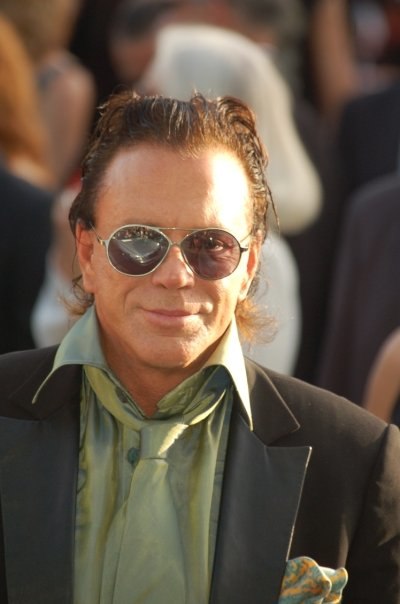
Mickey Rourke and Rick Flair


Ascension and Acclaim
Philip Andre Rourke Jr. emerged in the late 1970s and quickly established himself as a formidable talent in Hollywood. His early roles in films like Steven Spielberg's '1941' and Michael Cimino's 'Heaven's Gate' hinted at his potential, but it was his performance in Barry Levinson's 'Diner' (1982) that truly catapulted him to stardom. This role earned him the National Society of Film Critics Award for Best Actor and marked him as a rising star.
The 1980s saw Rourke solidify his status as a leading man, captivating audiences with his intense, often brooding portrayals in films such as 'Rumble Fish' (1983), 'The Pope of Greenwich Village' (1984), 'Year of the Dragon' (1985), and the iconic erotic thriller '9½ Weeks' (1986). His ability to embody complex, morally ambiguous characters with a raw, visceral energy set him apart from his contemporaries. He was celebrated for his authenticity and willingness to explore darker, more challenging roles, contributing to a significant portion of his films' commercial success, which collectively grossed over $1.9 billion worldwide.
The Unconventional Interlude
By the early 1990s, Rourke, having experienced some critical and commercial setbacks, made a radical departure from his acting career. Drawing on his youthful passion for boxing, he transitioned to professional boxing. This was not merely a hobby but a serious pursuit, with Rourke competing in multiple bouts between 1991 and 1994. This period of his life showcased an extraordinary level of physical and mental discipline, a stark contrast to the often-glamorous world of filmmaking.
His foray into boxing demonstrated a profound commitment to pushing his own boundaries and exploring different avenues of self-expression. This unconventional chapter, while a departure from acting, undoubtedly informed his later performances with a deeper understanding of struggle, resilience, and the human condition.
The Triumphant Return
Following his retirement from boxing in 1994, Rourke gradually re-entered the acting world, taking on a series of supporting roles in films like 'The Rainmaker' (1997), 'Buffalo '66' (1998), and 'Sin City' (2005). It was his lead role in Darren Aronofsky's 'The Wrestler' (2008) that marked a monumental comeback. Rourke delivered a performance of profound emotional depth and vulnerability as Randy 'The Ram' Robinson, an aging professional wrestler grappling with his past and his future.
This role garnered him universal critical acclaim, earning him the Golden Globe Award and the BAFTA Award for Best Actor, and a highly coveted Academy Award nomination. 'The Wrestler' was not just a film; it was a powerful testament to Rourke's enduring talent and his capacity for profound artistic expression, re-establishing him as a major force in cinema.
Enduring Impact and Evolving Career Trajectory
Mickey Rourke's career is a compelling narrative of artistic evolution and resilience. After his celebrated comeback, he continued to appear in commercially successful films such as 'Iron Man 2' (2010) and 'The Expendables' (2010), demonstrating his continued appeal in blockbuster cinema. However, he has also increasingly gravitated towards independent films and direct-to-video productions, showcasing a continued commitment to diverse storytelling and character-driven projects.
His willingness to take on challenging roles and his unique life experiences have imbued his performances with a distinctive authenticity. Rourke's journey serves as a powerful example of navigating the often-turbulent waters of the entertainment industry, highlighting the importance of passion, perseverance, and the courage to reinvent oneself.
Key Elements of Rourke's Cinematic Presence
Mickey Rourke's impact on cinema stems from a combination of raw talent, physical presence, and a willingness to explore the darker aspects of human nature. His early career was defined by a rebellious charisma and an ability to convey intense emotion with minimal dialogue. His time as a boxer undoubtedly added a layer of physical gravitas and a lived understanding of struggle that enriched his later performances.
The critical success of 'The Wrestler' underscored his capacity for profound vulnerability and empathetic portrayal, proving that his acting prowess remained potent. While his career has seen significant shifts, Rourke's dedication to his craft and his unique artistic path continue to make him a fascinating and respected figure in the film industry, influencing discussions on career longevity and artistic reinvention.
See also
Based on content from Wikipedia · Licensed under CC BY-SA 4.0