

Masaccio
Images
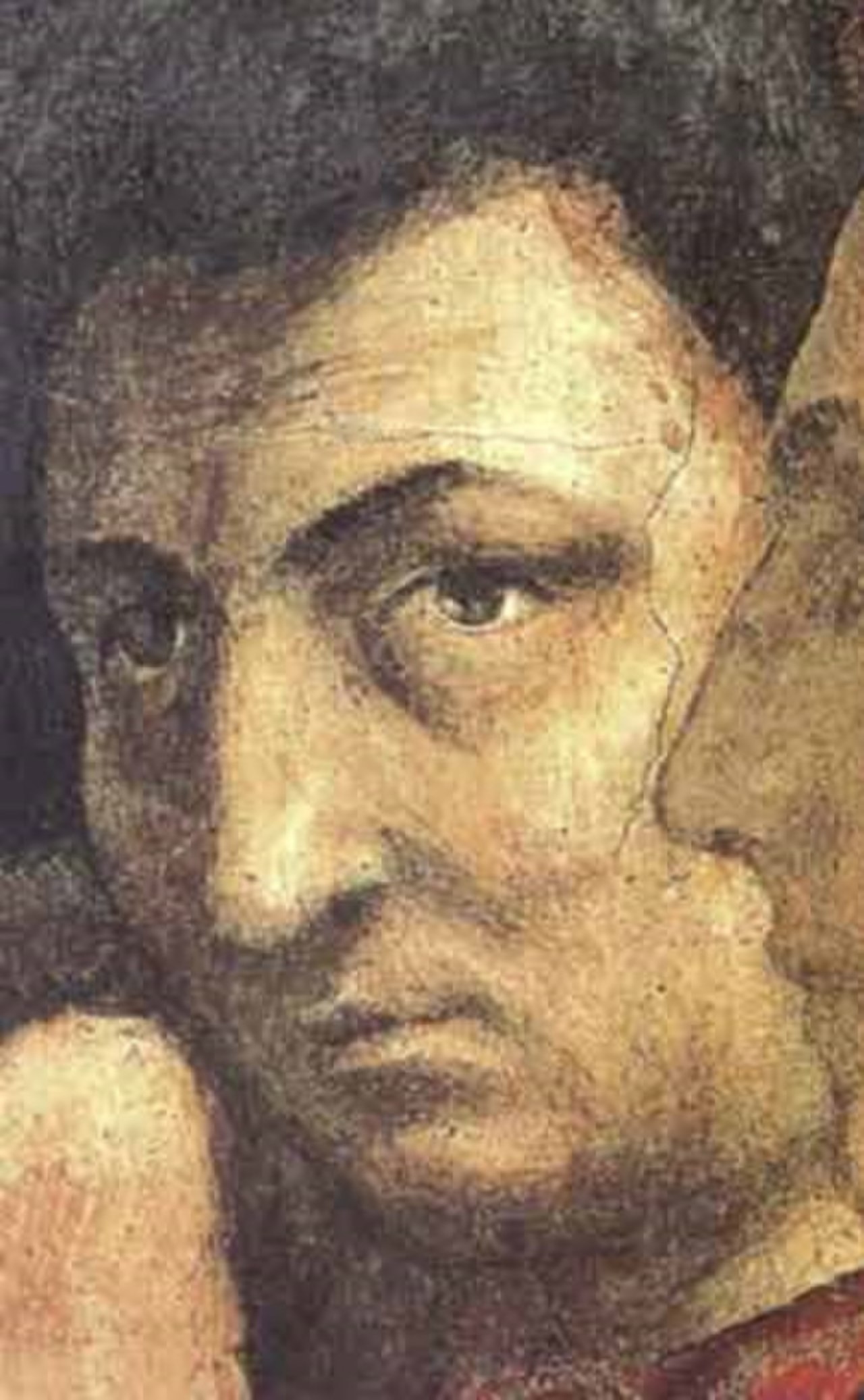
Masaccio
Tommaso di Ser Giovanni
Born Tommaso di Ser Giovanni di Simone in Florence on December 21, 1401, the artist who would become known as Masaccio emerged as a pivotal figure in the transition from the International Gothic style to the Early Italian Renaissance. His moniker, Masaccio, a somewhat derisive nickname translating to 'clumsy' or 'messy Tom,' ironically belied the precision and profound impact of his artistic innovations. This appellation may have also served to differentiate him from his collaborator, Masolino ('little Tom').
Masaccio's genius lay in his ability to transcend the decorative elegance of his predecessors, such as Gentile da Fabriano, and forge a new path toward naturalism. He was not merely imitating nature; he was reconstructing it on the canvas with an unprecedented sense of volume, weight, and spatial coherence, earning him recognition as the foremost painter of his generation by contemporaries like Giorgio Vasari.
The Geometry of Vision
Masaccio's most significant contribution to the evolution of painting was his sophisticated understanding and application of linear perspective. While not the sole inventor, he was among the first to integrate it systematically into his works, creating convincing illusions of three-dimensional space on a two-dimensional surface. His use of the vanishing point, where parallel lines converge, and foreshortening, depicting objects or figures at an angle to the viewer, lent his compositions a dramatic realism previously unseen.
Complementing this spatial innovation was his masterful handling of chiaroscuro. By strategically employing strong contrasts between light and shadow, Masaccio imbued his figures with a tangible solidity and volumetric presence. This interplay of light and dark not only defined form but also conveyed emotional weight and psychological depth, moving beyond the stylized, ethereal figures of Gothic art to portray human beings with a newfound physicality and presence.
A Fleeting Masterpiece
The career of Masaccio was tragically brief, concluding with his death in the summer of 1428 at the age of twenty-six. Despite its brevity, his artistic output was immensely influential, acting as a catalyst for the High Renaissance. His frescoes, particularly those in the Brancacci Chapel, became a pilgrimage site for aspiring artists who studied his techniques. Filippo Brunelleschi's poignant remark, 'We have suffered a great loss,' upon hearing of Masaccio's death, attests to the high esteem in which he was held and the perceived magnitude of his artistic contribution.
Masaccio's departure from the elaborate ornamentation and flattened forms of the International Gothic style towards a more direct, naturalistic representation marked a paradigm shift. He demonstrated that painting could be a powerful tool for exploring human experience and the physical world with accuracy and emotional resonance.
Enduring Resonance
Masaccio's innovations were not confined to the 15th century; their impact resonates through the centuries and informs our modern visual culture. His pioneering use of perspective and realism established a foundational grammar for Western art, influencing countless artists and movements. The principles he explored are still fundamental to disciplines ranging from architectural rendering and graphic design to cinematography and video game development, all of which rely on creating believable spatial environments.
By prioritizing the accurate depiction of form, light, and space, Masaccio fundamentally altered the viewer's relationship with the artwork, transforming it from an object of contemplation into an immersive experience. His work challenged the very definition of what painting could achieve, paving the way for a more humanistic and empirical approach to art that continues to shape how we see and interpret the world around us.
Go deeper
Based on content from Wikipedia · Licensed under CC BY-SA 4.0