

Majority: The Biggest Group!
Images
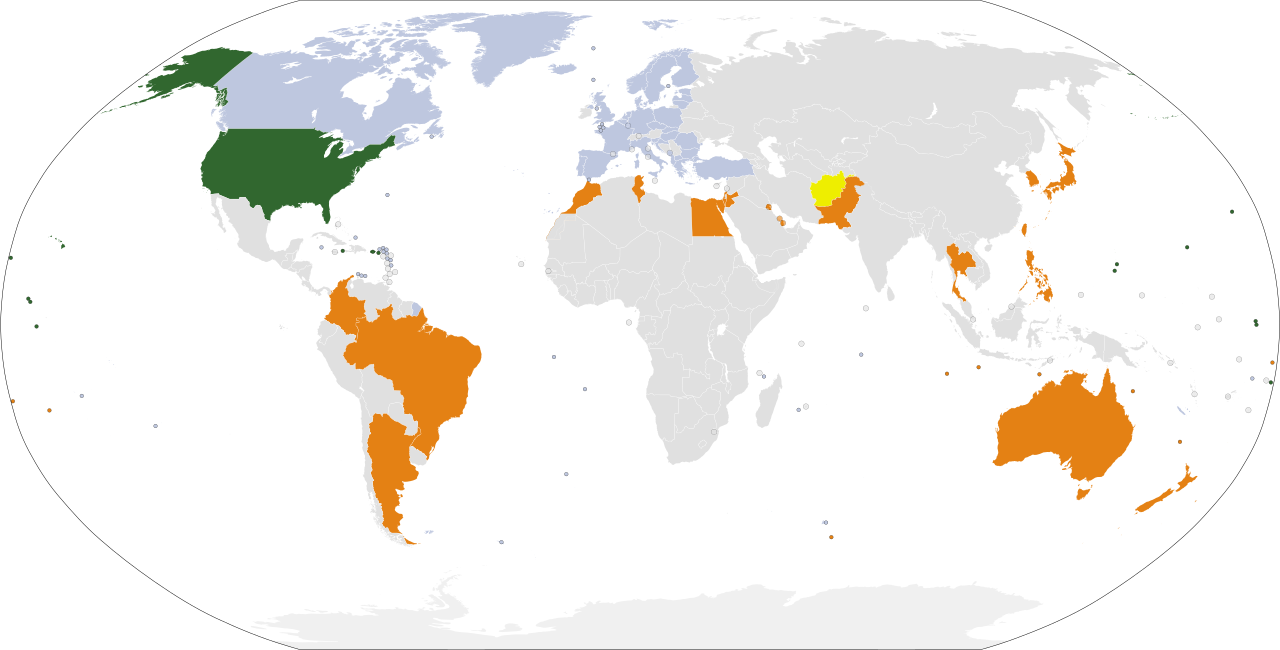
American major non-NATO allies


![[Explored 2022-08-02] Great spotted woodpecker, Dendrocopos major, Större hackspett](https://live.staticflickr.com/65535/52256387725_10382b15a4_n.jpg)





The Mathematical Foundation of Majority
In mathematics, a majority refers to a subset of a set that comprises more than half of its elements. If a set S has n elements, a subset M is considered a majority if its cardinality |M| > n/2. For instance, in a set of 31 individuals, a majority requires at least 16 individuals, as 16 is greater than 31/2 (which equals 15.5).
This simple mathematical principle underpins numerous applications, from statistical analysis to algorithmic design. It provides a clear, quantifiable threshold for determining dominance or consensus within a group. The concept is foundational for understanding proportions and is a building block for more complex statistical measures and decision-making frameworks.
Its clarity ensures that when 'majority' is invoked, there is an unambiguous numerical standard being met.
Historical Trajectory
The concept of majority rule has deep historical roots, evolving from informal tribal councils to structured parliamentary systems. Early forms of decision-making often relied on consensus, but as groups grew, majority voting emerged as a practical method for resolving disputes and making collective choices. Ancient Greek democracies and Roman Republic assemblies utilized various forms of majority voting to pass legislation and elect officials.
Over centuries, this principle was codified and refined, becoming a cornerstone of representative democracy. The development of secret ballots and standardized electoral processes in the modern era further solidified the majority principle, aiming to ensure fairness and prevent coercion. Its enduring presence highlights its perceived effectiveness in legitimizing governance and ensuring broad, though not universal, acceptance of decisions.
The Indispensable Role of Majority in Societal Structures
The significance of majority rule in contemporary society is profound, serving as a primary mechanism for democratic legitimacy and stability. In political systems, electoral victories are often determined by a majority of votes, granting the winner a mandate to govern. This principle extends to legislative bodies, where bills typically require a majority vote to pass, ensuring that laws reflect the will of the majority of representatives.
Beyond politics, majority decisions are crucial in corporate governance, judicial systems (e.g., jury verdicts), and even in community organizations. The concept fosters a sense of collective ownership and reduces the likelihood of decisions being made by a vocal but unrepresentative minority. While not always perfect, majority rule is widely accepted as a pragmatic approach to achieving broad consensus and maintaining social order.
Distinguishing Majority from Plurality
A critical distinction in political science and statistics is between majority and plurality. A majority requires more than 50% of the total votes, ensuring that the winning option is preferred by over half the electorate. In contrast, a plurality, also known as a relative majority, simply means receiving more votes than any other single option, regardless of whether it surpasses the 50% threshold.
For example, in a three-candidate race where the vote shares are 40%, 35%, and 25%, the 40% candidate wins a plurality but not a majority. This difference is crucial because plurality winners may not have the support of most voters, potentially leading to governance challenges and public dissatisfaction. Understanding this nuance is vital for accurately interpreting election outcomes and assessing the representativeness of elected officials.
Beyond Simple Counting
While the definition of majority is straightforward, its application can be complex, and it faces valid criticisms. In some contexts, a simple majority might not be sufficient, leading to concepts like supermajorities (e.g., two-thirds) required for significant decisions like constitutional amendments or overriding vetoes. This is to ensure that crucial changes have broader consensus.
Conversely, strict majority rule can sometimes marginalize minority groups whose concerns might be overlooked if they consistently fall on the losing side. Debates in political philosophy often center on balancing the power of the majority with the protection of minority rights. Furthermore, the effectiveness of majority rule can depend on factors like voter turnout and the fairness of the electoral system.
Despite these challenges, majority remains a fundamental principle for collective decision-making.
Go deeper
Frequently Asked Questions
What does "majority" mean?+
How many people are needed for a majority in a group of 31?+
Why do we use majority rule in voting?+
What is the difference between majority and plurality?+
Where did majority rule start?+
Based on content from Wikipedia · Licensed under CC BY-SA 4.0