

Madison Square Garden
Images
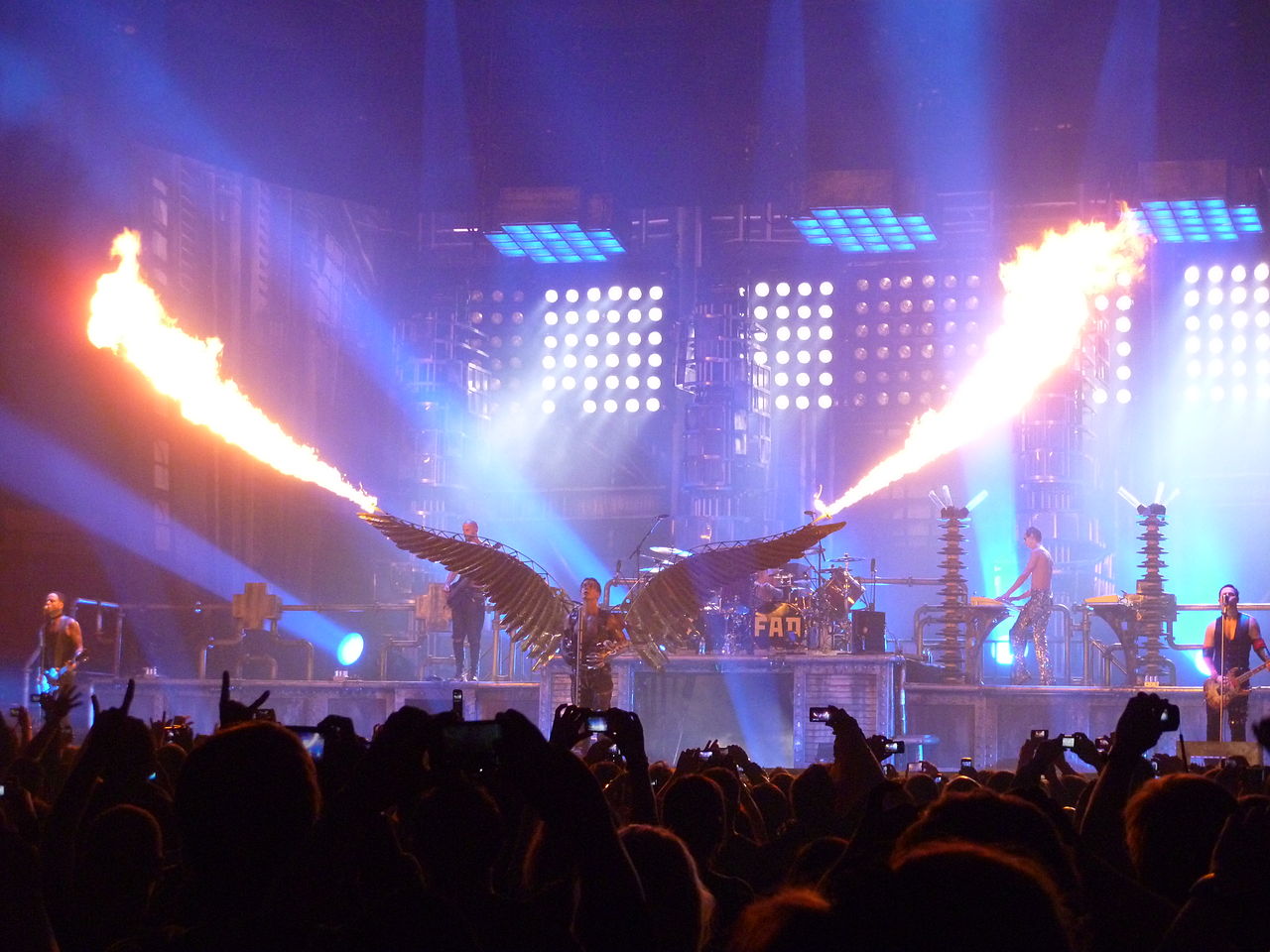
Rammstein Live at Madison Square Garden


![A large crowd gathers [at Madison Square Garden?] during the 1933 New York Dressmakers Strike. A sign in the background reads: '...Makers Union ILGWU.'](https://live.staticflickr.com/5168/5279081507_a350696480_n.jpg)
![ILGWU leaders address a crowded hall [Madison Square Garden?]. The banner above the podium reads: 'On with the Strike -- On to Victory!'](https://live.staticflickr.com/5129/5279691132_a7db74af24_n.jpg)


Geographical Nexus
Madison Square Garden (MSG) is strategically situated in the bustling core of Midtown Manhattan, New York City, occupying the air rights above Pennsylvania Station. Its precise location spans from 31st to 33rd streets, between Seventh and Eighth Avenues. This central placement is not accidental; it situates MSG within a dense urban fabric, surrounded by iconic skyscrapers, major retail centers like Macy's at Herald Square, and vibrant cultural enclaves such as Koreatown.
The arena's integration with Pennsylvania Station, a critical transit hub, ensures unparalleled accessibility for millions of visitors annually. This geographical advantage solidifies MSG's role as a pivotal point of convergence for entertainment seekers, sports enthusiasts, and tourists alike, making it an indispensable component of New York's urban landscape and a globally recognized symbol of the city's dynamism.
A Legacy of Four Gardens
The current Madison Square Garden, opened in 1968, is the fourth iteration of a venue bearing that historic name, reflecting a continuous evolution of entertainment spaces in New York City. The original two venues, established in 1879 and 1890, were situated at Madison Square, a prominent public space at the time, located at East 26th Street and Madison Avenue. The third incarnation relocated further uptown to Eighth Avenue and 50th Street in 1925.
The present-day MSG, built on the footprint of the demolished Pennsylvania Station, represents a significant architectural and engineering feat. Its opening marked a new era for indoor arenas, and its status as the oldest major sporting facility in the New York metropolitan area underscores its enduring presence and adaptability through decades of urban development and changing entertainment trends.
The Cultural Crucible
Madison Square Garden functions as a profound cultural crucible, hosting a diverse spectrum of professional sports and world-class entertainment. It is the revered home of the New York Rangers of the National Hockey League (NHL) and the New York Knicks of the National Basketball Association (NBA), teams that have etched their names into sports history within its walls.
Furthermore, MSG has been a platform for countless legendary musical performances, drawing global artists and their fans, solidifying its reputation as one of the world's busiest music arenas. Beyond these staples, it regularly stages major boxing matches, mixed martial arts events, professional wrestling spectacles, ice shows, and even circuses. This broad range of programming ensures MSG remains a dynamic epicenter of cultural activity, reflecting and shaping the entertainment landscape of New York City and beyond.
Economic Engine and Architectural Investment
Madison Square Garden represents a significant economic investment and a powerful engine for local commerce. The total construction cost, including substantial renovations in 1991 and 2013, is estimated at approximately US$1.1 billion, positioning it among the most expensive arena venues ever constructed. This massive financial undertaking highlights its perceived long-term value and importance to the city's economy.
As part of the Pennsylvania Plaza complex, it contributes to a vibrant commercial ecosystem. Its consistent ranking as one of the busiest music arenas globally, coupled with its role as a premier venue for major sporting events, generates substantial revenue through ticket sales, concessions, merchandise, and associated tourism, underscoring its vital economic role in New York City.
Educational Significance
Madison Square Garden offers a compelling case study for understanding urban development, architectural innovation, and large-scale venue management. Its existence atop a major transportation hub illustrates creative solutions to space constraints in dense urban environments. The ongoing process of renovation and modernization demonstrates the continuous effort required to maintain a world-class facility and adapt to evolving technological and audience expectations.
Studying MSG provides insights into the complex logistics of hosting diverse events, from major sporting championships to international concerts, and the economic impact such venues have on surrounding communities. Furthermore, its history as the fourth 'Garden' highlights the transient nature of urban landmarks and the importance of preserving historical legacies while embracing progress. For students of urban planning, sports management, or even architectural history, MSG presents a rich, real-world laboratory.
Go deeper
Frequently Asked Questions
Where is Madison Square Garden located?+
What sports teams play at Madison Square Garden?+
When did the current Madison Square Garden open?+
How many times has Madison Square Garden been rebuilt?+
How much did it cost to build Madison Square Garden?+
Based on content from Wikipedia · Licensed under CC BY-SA 4.0