

List of home computers by video hardware
Images
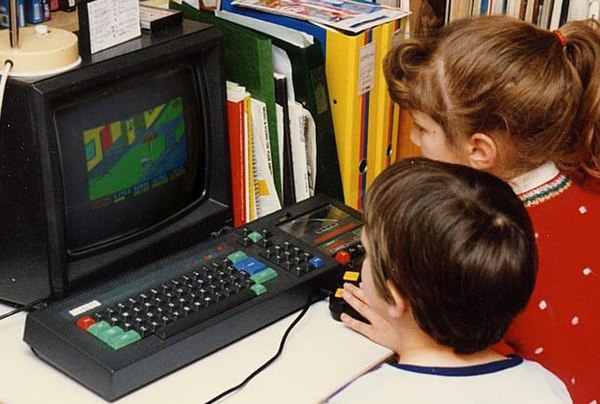
List of home computers by video hardware
The Genesis of Home Computing Visuals (1977-Early 1980s)
The advent of the home computer in 1977 marked a paradigm shift, moving computing power from specialized environments into domestic spaces. Crucially, this transition was enabled by advancements in video hardware, which allowed these machines to interface with consumer televisions or dedicated monitors. Early systems like the TRS-80 and Atari 8-bit computers featured relatively simple video controllers.
The Atari, for instance, utilized custom chips (ANTIC and GTIA) that offered more flexibility than typical microprocessors alone, enabling hardware sprites and varied display modes. These early efforts focused on providing basic graphical capabilities, moving beyond the text-only interfaces of earlier machines like the IBM 5100 or early terminals, and laying the foundation for more sophisticated visual experiences that would define the next decade of personal computing. The distinction between a 'home computer' and a 'personal computer' often hinged on these graphical and multimedia capabilities.
The Golden Age of Home Computer Graphics (Mid-Late 1980s)
The mid-to-late 1980s witnessed an intense period of innovation and competition in home computer video hardware. Machines like the Commodore 64, with its VIC-II chip, became legendary for their sprite capabilities, hardware scrolling, and color depth, which were instrumental in the success of its vast game library. The Sinclair ZX Spectrum, while more constrained, offered a unique color clash system that developers creatively exploited.
The MSX standard, adopted by various manufacturers, provided a consistent platform with capable graphics chips. The Amstrad CPC series also offered distinct graphical modes. These systems, while varying in technical specifications, collectively pushed the boundaries of what was considered achievable on affordable home machines, directly influencing the visual language of early video games and interactive media.
Architectural Innovations
The sophistication of home computer video hardware evolved significantly. Instead of relying solely on basic video display controllers, many systems incorporated dedicated graphics co-processors or custom chipsets. The Amiga, a prime example, featured a suite of custom chips (Agnus, Denise, Paula) that handled graphics, sound, and I/O, offloading these tasks from the main CPU.
This allowed for features like hardware sprites, blitter objects for rapid graphical manipulation, hardware scrolling, and a wide color palette (up to 4096 colors in HAM mode), enabling advanced animation and visual effects that were unprecedented for its time. Similarly, the Atari ST featured its own custom graphics hardware, though generally considered less advanced than the Amiga's. These architectures demonstrated a move towards specialized hardware acceleration, a concept fundamental to modern computing.
The PC vs. Home Computer Visual Divide
During the peak of the home computer era, personal computers (PCs) often lagged in visual capabilities. Early PCs relied on simpler video cards like the MDA (text-only), CGA (limited colors, low resolution), or EGA. It wasn't until the introduction of the VGA standard in 1987 that PCs began to truly compete with the graphical prowess of machines like the Amiga and Atari ST.
VGA offered significantly higher resolutions and a much larger color palette. This distinction highlights how home computers, driven by the gaming and entertainment markets, often prioritized advanced graphics and multimedia features, whereas PCs initially focused more on business applications and expandability through add-on cards, eventually catching up and surpassing home computers with standards like VGA and later, the Graphics Processing Unit (GPU).
Enduring Impact and Modern Relevance
The video hardware innovations pioneered in home computers have had a lasting legacy. Concepts like hardware sprites, blitting, and dedicated graphics acceleration, which were cutting-edge in the 1980s, are now fundamental to modern GPUs. The drive to create more immersive and visually rich experiences on home machines directly fueled the evolution of graphics technology.
Many of the visual paradigms established during this era, from character design in games to the use of color and animation, continue to influence digital media. Understanding the technical achievements of these early systems provides crucial context for the development of modern computing, illustrating how early limitations spurred creative engineering that shaped the digital world we inhabit today.
See also
Frequently Asked Questions
What made home computers in the 1970s show pictures on TVs and monitors?+
Why did the Atari 8-bit computers have special chips called ANTIC and GTIA?+
How did the Commodore 64 become famous for its games?+
What is a hardware sprite and why was it important?+
When did PCs start to match the graphics of home computers like the Amiga?+
Based on content from Wikipedia · Licensed under CC BY-SA 4.0