

Lily Wu
Images

Lily Wu (cropped)


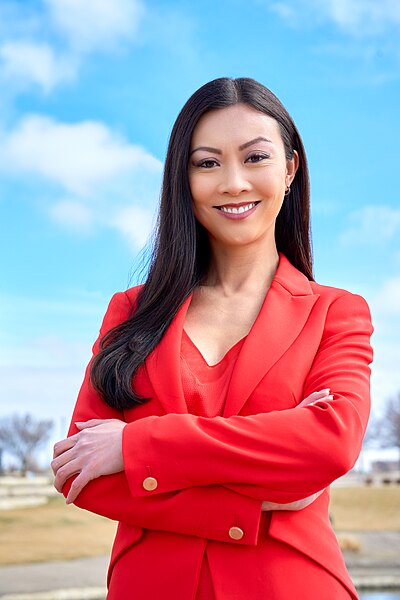


From Media Narrator to Civic Architect
Lily Wu's trajectory from a television news anchor to the 103rd mayor of Wichita, Kansas, represents a significant shift from observing and reporting on societal events to actively shaping them. Born in 1984, her prior career in broadcast journalism likely equipped her with a keen understanding of public discourse, community concerns, and the power of effective communication. This background provides a unique lens through which she approaches her mayoral duties, potentially fostering a more transparent and accessible form of governance.
Her transition into politics in 2024 signifies a deliberate move to leverage her public profile and communication skills for direct civic impact, aiming to influence policy and community development from a leadership position rather than through commentary.
Challenging Norms
Lily Wu's election is a landmark event, breaking significant ground in American political representation. She is the first Asian American to serve as mayor of any city in Kansas, a state with a growing but historically underrepresented Asian population in its highest offices. This achievement is crucial for fostering a sense of inclusion and demonstrating that leadership roles are attainable for individuals from all ethnic backgrounds.
Equally noteworthy is her affiliation with the Libertarian Party. She is the sole Libertarian mayor among the 100 largest cities in the United States. This distinction highlights her commitment to a political philosophy that prioritizes individual liberty, limited government, and free-market principles, offering a distinct alternative to the dominant two-party system and potentially influencing policy debates on a national scale.
The Libertarian Mandate in a Major American City
As a Libertarian mayor, Lily Wu operates within a political framework that emphasizes individual autonomy and minimal state interference. This ideology suggests a focus on policies that reduce bureaucratic hurdles, promote economic deregulation, and empower citizens to make their own choices. For Wichita, this could translate into initiatives aimed at fostering entrepreneurship, streamlining city services, and potentially re-evaluating the scope of municipal authority.
Her leadership challenges conventional approaches to urban management, which often rely on extensive government programs and regulations. The success of her tenure will be a test case for the viability of Libertarian principles in governing a large, diverse urban population and could provide valuable insights for other municipalities considering similar political directions.
Impact and Future Implications for Wichita and Beyond
Lily Wu's mayorship in Wichita is more than just a local event; it carries broader implications for political representation and governance models in the United States. Her dual status as a pioneering Asian American leader and a Libertarian mayor of a major city positions her as a figure who can inspire diverse communities and advocate for alternative political ideologies. Her administration's actions will be closely observed to see how her unique background and political philosophy translate into tangible improvements for Wichita's residents.
The outcomes of her leadership could influence future electoral trends, encourage greater diversity in political office, and demonstrate the potential for non-traditional political parties to gain traction in significant urban centers.
Key Facts and Connections
Lily Wu's career is defined by her pioneering status and her distinct political identity. Born in 1984, she entered public service after a career in television news. Her election as the 103rd mayor of Wichita in 2024 marks her as the first Asian American mayor in Kansas.
Furthermore, she is the only Libertarian mayor among the 100 largest cities in the U.S. This combination of demographic and ideological distinction makes her a significant figure in contemporary American politics. Her previous role as a news anchor provides a unique foundation for her public service, suggesting a strong emphasis on communication and transparency.
Her political affiliation with the Libertarian Party indicates a commitment to principles of individual liberty and limited government, which will likely shape her policy decisions and governance approach in Wichita.
See also
Frequently Asked Questions
Who is Lily Wu?+
How did Lily Wu become mayor?+
What party does Lily Wu belong to?+
Why is Lily Wu important for people in Kansas?+
What kind of rules might Lily Wu want to change in Wichita?+
Based on content from Wikipedia · Licensed under CC BY-SA 4.0