

Lighting: Let There Be Light!
Images

Lighting


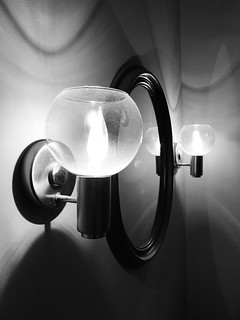

From Fire to the Electric Age
Human civilization's progress has been inextricably linked to the development of artificial light. For millennia, humanity relied on rudimentary sources: the flickering flame of fire, animal fats in primitive lamps, and later, refined oils and candles. These provided essential light for survival, allowing for activities beyond daylight hours, fostering early forms of community gathering, and enabling the development of crafts and early industries.
The transition to electricity marked a paradigm shift. While Humphry Davy demonstrated an electric arc lamp in 1802, it was too bright and impractical for widespread use. The true revolution arrived with the incandescent light bulb.
Numerous inventors contributed, but Thomas Edison's system, patented in 1879, combined a durable filament, a vacuum-sealed bulb, and a complete electrical distribution network. This innovation didn't just provide light; it enabled the electrification of homes and cities, fundamentally reshaping urban landscapes, work schedules, and social behaviors, effectively conquering the limitations of natural darkness.
The Physics of Light Production
The generation of artificial light relies on diverse physical principles. Incandescent lighting operates on the principle of black-body radiation: heating a resistive filament (typically tungsten) to a high temperature causes it to emit electromagnetic radiation across a spectrum, including visible light. However, a significant portion of the energy is lost as heat, leading to low luminous efficacy.
Fluorescent lighting utilizes gas discharge. An electric current passes through a low-pressure gas (like mercury vapor), exciting the gas atoms to emit ultraviolet (UV) radiation. This UV light then strikes a phosphor coating on the inside of the tube, causing the coating to fluoresce and emit visible light.
This method is more energy-efficient than incandescent. Light Emitting Diodes (LEDs) represent a more recent and highly efficient advancement. They are semiconductor devices that emit light through electroluminescence.
When an electric current flows through a semiconductor material, electrons recombine with electron holes, releasing energy in the form of photons (light). The color of the light depends on the semiconductor material used. LEDs offer superior energy efficiency, longevity, and controllability compared to older technologies.
Illumination's Indispensable Role in Society
Artificial lighting is a cornerstone of modern civilization, impacting nearly every facet of human activity. Economically, it extends working hours, enabling 24/7 operations in industries from manufacturing to logistics, and facilitating global commerce. Socially, it has transformed leisure, allowing for evening entertainment, cultural events, and extended family time. Public lighting enhances safety and security in urban environments, reducing crime and improving traffic flow.
In healthcare, precise and powerful lighting is critical for diagnostics and surgical procedures. Furthermore, lighting influences human physiology and psychology; controlled lighting can improve mood, alertness, and sleep quality, while poor lighting can contribute to eye strain and fatigue. The development of energy-efficient lighting technologies like LEDs also has significant environmental implications, reducing electricity demand and associated greenhouse gas emissions.
Innovations and Future Frontiers in Lighting
The field of lighting is continuously evolving. Beyond the efficiency gains of LEDs, smart lighting systems are integrating connectivity and intelligence. These systems allow for remote control via smartphones or voice assistants, dynamic color tuning, and integration with other smart home devices.
They can adjust lighting based on occupancy, time of day, or even ambient natural light levels, optimizing both energy use and user experience. Research is also exploring novel light sources and applications. Bioluminescence, the light produced by living organisms, continues to inspire scientists, with potential applications in sustainable lighting and medical imaging. The development of tunable spectrum lighting aims to precisely control the wavelengths of light emitted, offering benefits for plant growth, human circadian rhythms, and even therapeutic applications.
The future of lighting promises not just brighter spaces, but smarter, more responsive, and more integrated environments.
Go deeper
Frequently Asked Questions
What is the difference between an incandescent bulb and a fluorescent lamp?+
How did Thomas Edison help make lights easier to use at home?+
Why are LED lights better for the planet than old bulbs?+
How does light help people stay safe at night in cities?+
How does artificial light affect our sleep and mood?+
Based on content from Wikipedia · Licensed under CC BY-SA 4.0