

Lever
Images
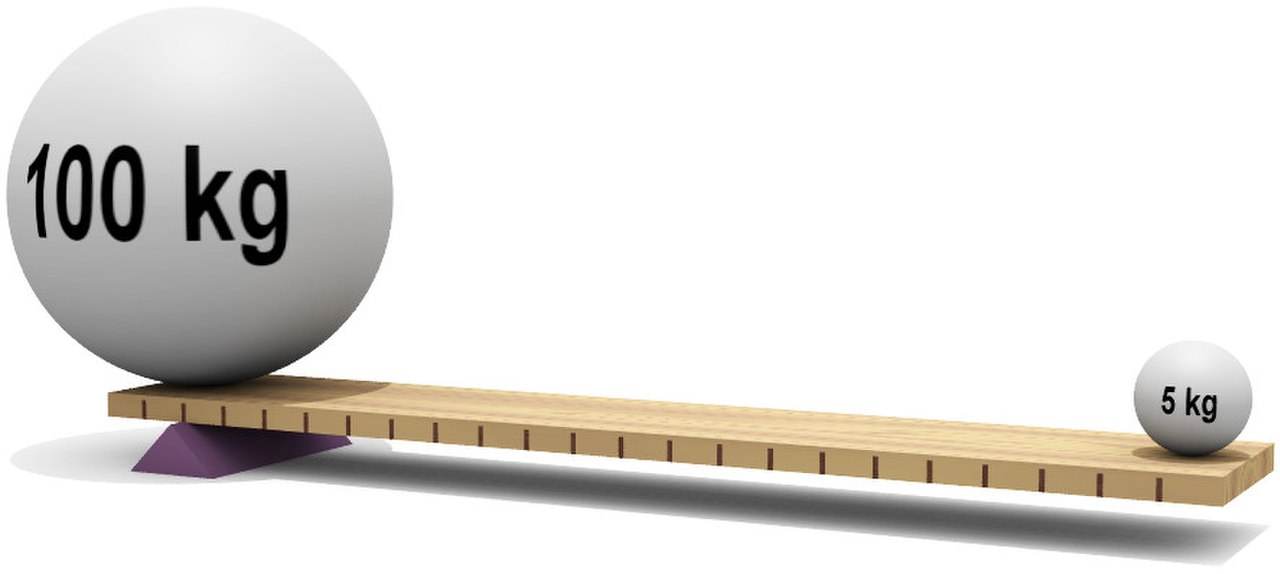
Lever


![Levering's Roasted Coffee [front]](https://live.staticflickr.com/7399/10312196405_af40865612_n.jpg)

![Richard Haley Lever - Chelsea, England [c.1900-10]](https://live.staticflickr.com/4124/5056174239_14ea5c1622_n.jpg)


The Physics of Force Amplification
Levers are fundamental simple machines that operate on the principle of torque, which is the rotational equivalent of force. A lever consists of a rigid bar that pivots around a fixed point, the fulcrum. When an effort force is applied at one point on the bar, it generates a torque that can overcome the torque exerted by a load at another point.
The key to a lever's utility lies in its ability to provide mechanical advantage, meaning it can multiply the input force. This advantage is determined by the relative distances of the effort and the load from the fulcrum. The formula for mechanical advantage (MA) is typically expressed as the ratio of the effort arm (distance from fulcrum to effort) to the load arm (distance from fulcrum to load).
A MA greater than 1 means the lever amplifies force, allowing a smaller effort to move a larger load. Conversely, a MA less than 1 means the lever amplifies speed or distance, useful for tasks requiring rapid movement over a larger range.
From Antiquity to Archimedes
The concept of the lever is so intuitive that its use predates formal documentation. Archaeological evidence suggests its application in prehistoric toolmaking and early construction. However, it was the ancient Greeks who first systematically studied and theorized about levers. Archimedes, a brilliant mathematician and inventor of the 3rd century BC, is credited with providing the earliest known mathematical description of levers, articulating the principle of equilibrium where the torques on either side of the fulcrum are equal.
His famous (though likely apocryphal) quote, 'Give me a lever long enough and a fulcrum on which to place it, and I shall move the world,' encapsulates the profound understanding of its power. This theoretical foundation allowed for the sophisticated application of levers in ancient engineering feats, such as lifting massive stones for pyramids and temples, moving heavy statues, and developing early siege engines, laying the groundwork for future mechanical advancements.
The Ubiquitous Lever
The lever's influence permeates nearly every facet of modern life and technology. In everyday contexts, door handles, scissors, pliers, bottle openers, and even the human musculoskeletal system (bones acting as levers, muscles as effort) demonstrate lever principles. Industrially, levers are integral components of complex machinery, from excavators and cranes that lift immense weights to the intricate mechanisms within manufacturing plants.
In the medical field, surgical instruments like forceps and scalpels are designed as levers to provide surgeons with enhanced precision and control. Even in computing, the read/write heads in hard drives utilize micro-levers. The efficiency and versatility of levers continue to make them a cornerstone of engineering design, enabling us to perform tasks with greater ease, precision, and power, underscoring their enduring relevance.
Classifying Levers
Levers are systematically classified into three distinct classes based on the relative positions of the fulcrum, the effort (input force), and the load (output force). Class 1 levers have the fulcrum positioned between the effort and the load (e.g., a seesaw, crowbar). They can provide a mechanical advantage greater than, equal to, or less than one, depending on the lengths of the effort and load arms. Class 2 levers have the load positioned between the fulcrum and the effort (e.g., a wheelbarrow, nutcracker).
These levers always provide a mechanical advantage greater than one, meaning the effort force is less than the load force. Class 3 levers have the effort positioned between the fulcrum and the load (e.g., tweezers, fishing rod). These levers always have a mechanical advantage less than one, sacrificing force amplification for increased speed and range of motion at the load end.
Understanding these classifications is crucial for designing efficient mechanical systems.
Go deeper
Frequently Asked Questions
What is a lever?+
How does a lever make lifting heavy things easier?+
Who first studied levers and what did they discover?+
What everyday objects use levers?+
What are the three classes of levers?+
Based on content from Wikipedia · Licensed under CC BY-SA 4.0