

Launch Complex 39 Press Site
Images

Launch Complex 39 Press Site




Genesis of Lunar Ambition
Launch Complex 39, situated on Merritt Island, Florida, was conceived and constructed in the early 1960s as the linchpin of NASA's monumental Apollo program. Its primary objective was to facilitate the launch of the colossal Saturn V rocket, a feat of engineering unparalleled at the time, designed to carry humans to the Moon. The complex comprises two primary launch pads, 39A and 39B, and the immense Vehicle Assembly Building (VAB).
The VAB, a structure of staggering proportions, allowed for the vertical integration of the multi-stage Saturn V, a critical design choice for such a massive vehicle. The operational philosophy involved moving the fully assembled rocket and its Mobile Launcher Platform via the Crawler Transporter, a slow but essential process that minimized stress on the rocket. The successful launches of the Apollo missions, culminating in the lunar landings, cemented Launch Complex 39's place in history as the departure point for humanity's first steps beyond Earth.
The Space Shuttle's Home
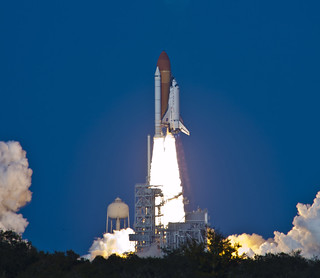
Following the conclusion of the Apollo program, Launch Complex 39 underwent significant modifications to accommodate the Space Shuttle. This transition marked a new phase in space exploration, focusing on reusability. The launch pads were reconfigured to support the Shuttle's unique launch configuration, including its two Solid Rocket Boosters (SRBs) and external fuel tank.
The VAB continued to serve as the assembly point, though the process differed from the Saturn V. The Space Shuttle program, spanning three decades, launched numerous missions from Launch Complex 39, enabling the construction of the International Space Station (ISS), deploying scientific satellites, and conducting vital research in orbit. The complex's infrastructure proved remarkably adaptable, showcasing its enduring design and engineering principles.
Enduring Significance and Technological Legacy
The importance of Launch Complex 39 cannot be overstated. It is not merely a launch site; it is a symbol of human ingenuity, scientific endeavor, and national aspiration. The technological innovations developed for its construction and operation, from the Crawler Transporter to advanced launch control systems, have had far-reaching impacts on engineering and project management.
The data and scientific discoveries made possible by missions launched from this complex have profoundly expanded our understanding of the universe and our place within it. Furthermore, the Apollo program's success inspired generations of scientists, engineers, and explorers, fostering a culture of innovation that continues to drive space exploration forward. The complex represents a tangible link to humanity's greatest achievements in space.
Evolution for the Future
In the post-Space Shuttle era, Launch Complex 39 has entered a new chapter, adapting to the burgeoning field of commercial spaceflight. NASA has leased launch pad 39A to SpaceX, which has further modernized the facility to support its Falcon 9 and Falcon Heavy rockets. This transition signifies a shift towards a more diversified and accessible space economy.
The historic pads are now launching commercial cargo and crew missions to the ISS, as well as private satellite deployments. Plans are also in place for future missions, including NASA's Artemis program, which aims to return humans to the Moon and eventually send them to Mars. Launch Complex 39, therefore, remains a vital and dynamic hub, poised to facilitate the next wave of human exploration and commercial activity in space, carrying forward its legacy of groundbreaking achievements.
See also
Frequently Asked Questions
What is the Launch Complex 39 Press Site?+
Where is the Press Site located at Launch Complex 39?+
Why is the Press Site important for space launches?+
How do reporters visit the Press Site at Launch Complex 39?+
When can the Press Site be used for launches?+
Based on content from Wikipedia · Licensed under CC BY-SA 4.0