

Kunsthistorisches Museum
Images

0092 - Wien - Kunsthistorisches Museum - Gaius Julius Caesar




The Genesis of a National Treasure
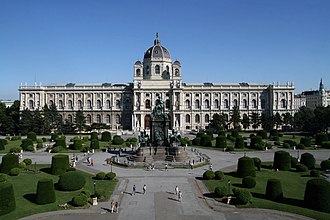
The Kunsthistorisches Museum, a cornerstone of Vienna's cultural landscape, was conceived not merely as a repository for art, but as a grand statement of imperial power and a public offering of cultural wealth. Commissioned by Emperor Franz Joseph I, its construction, completed around 1891, coincided with that of the Natural History Museum, creating a symmetrical architectural dialogue across Maria-Theresien-Platz. Designed by the esteemed architects Gottfried Semper and Baron Karl von Hasenauer, the museum embodies the Ringstraße's opulent architectural ethos.
Its Renaissance Revival facade, constructed from sandstone and punctuated by expansive arched windows, is crowned by a striking octagonal dome, a defining feature of the Viennese skyline. The dual purpose of the museum – to safeguard the formidable Habsburg collections and to democratize access to them – marked a significant shift in the role of imperial patronage and public institutions.
An Interior Symphony of Art and Architecture
The interior of the Kunsthistorisches Museum is a testament to the lavish tastes of the Austro-Hungarian Empire and the artistic ambitions of its creators. The building's opulence is immediately apparent, with interiors lavishly decorated using marble, intricate stucco ornamentation, and abundant gold leaf. These elements are not merely decorative; they serve to elevate the experience of viewing the art, creating an environment that is both grand and immersive.
The central staircase, in particular, is a masterpiece of collaborative art, featuring significant murals by prominent artists of the era, including Gustav Klimt, Ernst Klimt, Franz Matsch, Hans Makart, and Mihály Munkácsy. This integration of architectural design and fine art underscores the museum's role as a comprehensive artistic statement, designed to awe and educate visitors about the breadth of human creative achievement.
The Enduring Significance of Imperial Collections
The Kunsthistorisches Museum's primary significance lies in its custodianship of the former imperial collections of the Habsburg dynasty. These collections represent centuries of acquisitive patronage, reflecting the dynasty's vast political influence, extensive trade networks, and discerning artistic tastes. The museum provides an unparalleled window into European art history, encompassing masterpieces from antiquity through to the Baroque period.
Its holdings are crucial for art historical research, offering scholars primary source material for studying artistic techniques, iconographic traditions, and the socio-political contexts in which artworks were created and collected. Beyond its academic value, the museum serves as a vital cultural anchor for Vienna and Austria, attracting international visitors and contributing significantly to the nation's cultural identity and tourism economy.
Navigating the Vast Holdings
While the provided source focuses on the building and its historical context, the Kunsthistorisches Museum is renowned for its diverse and world-class collections. These typically include extensive galleries of Old Master paintings, featuring works by artists such as Bruegel, Raphael, Rembrandt, and Vermeer. The museum also houses significant collections of Egyptian and Near Eastern antiquities, Greek and Roman antiquities, and decorative arts, including armor and musical instruments.
The sheer breadth and depth of these collections mean that the museum functions as a comprehensive survey of art and material culture across millennia and geographical regions, making it an indispensable institution for understanding the trajectory of human artistic expression and historical development.
Go deeper
Frequently Asked Questions
What is the Kunsthistorisches Museum?+
When was the museum finished?+
Who designed the museum?+
What kind of art can you see inside?+
Why is the museum special?+
Based on content from Wikipedia · Licensed under CC BY-SA 4.0