

Katana
Images
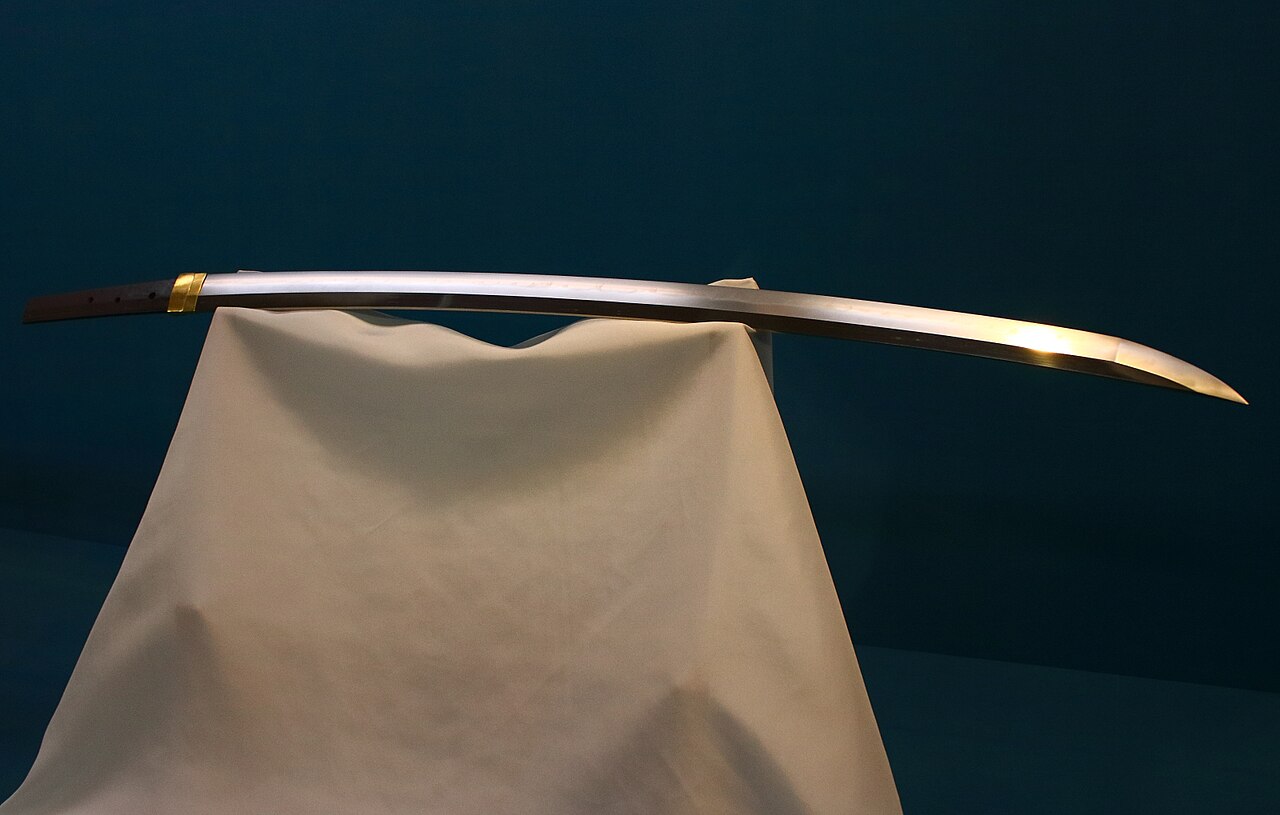
Katana
The Genesis and Evolution of the Katana
The katana, as we recognize it today, is the product of centuries of Japanese sword-making evolution. Its origins can be traced back to the Heian period (794-1185), with earlier Japanese swords being straighter and more double-edged, influenced by Chinese and Korean designs. As samurai warfare developed, particularly during the turbulent Sengoku period (1467-1615), the need for a more effective battlefield weapon led to the katana's distinctive curved, single-edged form.
This design facilitated a more efficient cutting motion, allowing warriors to draw and strike in a single, fluid movement. The development of specialized steel, known as tamahagane, and sophisticated forging techniques were crucial in creating a blade that was both incredibly sharp and resilient. The katana became not merely a weapon but a symbol of the samurai class, embodying their martial prowess, discipline, and aesthetic sensibilities.
Metallurgical Marvel
The legendary sharpness and durability of the katana are rooted in its complex metallurgical composition and forging process. Swordsmiths utilized tamahagane, a high-carbon steel produced in a traditional clay furnace called a tatara. This steel was then meticulously folded and hammered thousands of times, a process known as kitae.
This folding refined the steel, distributing carbon evenly, removing impurities, and creating distinct layers that gave the blade its characteristic grain pattern, or hada. Crucially, the katana employed differential hardening, a technique where the edge was quenched rapidly in water to create a very hard martensitic steel, while the spine was cooled more slowly, resulting in a softer, more flexible pearlitic steel. This contrast in hardness, achieved through the application of a clay mixture (tsuchikomi) before quenching, prevented the blade from shattering while maintaining an exceptionally keen edge.
This intricate balance of hardness and flexibility is the hallmark of a masterfully crafted katana.
The Daisho
The katana was rarely carried alone; it was typically part of a pair known as the daisho, which included the shorter wakizashi. This pairing was more than just a practical choice; it was a profound symbol of the samurai's status and authority. The katana, with its length (typically over 60 cm), was the primary battlefield weapon, designed for open combat and powerful, sweeping cuts.
The wakizashi, shorter and more agile, served as a backup weapon for close-quarters fighting, indoor combat, or as a tool for ritual suicide, seppuku. The daisho represented the samurai's dual role as both a warrior and a protector of order. The ability to wield both swords effectively was a testament to a samurai's extensive training and mastery of various martial arts, including kenjutsu (swordsmanship) and iaijutsu (the art of drawing the sword).
The Katana's Enduring Cultural and Martial Legacy
Although the Meiji Restoration in 1868 led to the abolition of the samurai class and the banning of swords in public (Haitorei Edict), the katana's cultural and martial legacy has persisted. It has become an iconic representation of Japanese culture, deeply ingrained in art, literature, and popular media. In the realm of martial arts, disciplines like Kendo, Iaido, and Kenjutsu continue to preserve and evolve the techniques and philosophies associated with the katana.
Modern swordsmiths still practice traditional methods, creating functional art pieces that are highly sought after. The katana's enduring appeal lies not only in its historical significance as a weapon but also in its embodiment of principles such as discipline, respect, precision, and the pursuit of perfection – values that continue to resonate globally.
Go deeper
Frequently Asked Questions
What is a katana?+
Why does a katana have a curved shape?+
How is a katana made so sharp and strong?+
What is a daisho and why did samurai carry two swords?+
When did people stop using katanas as weapons?+
Based on content from Wikipedia · Licensed under CC BY-SA 4.0