

Karl Popper: The Idea Detective!
Images
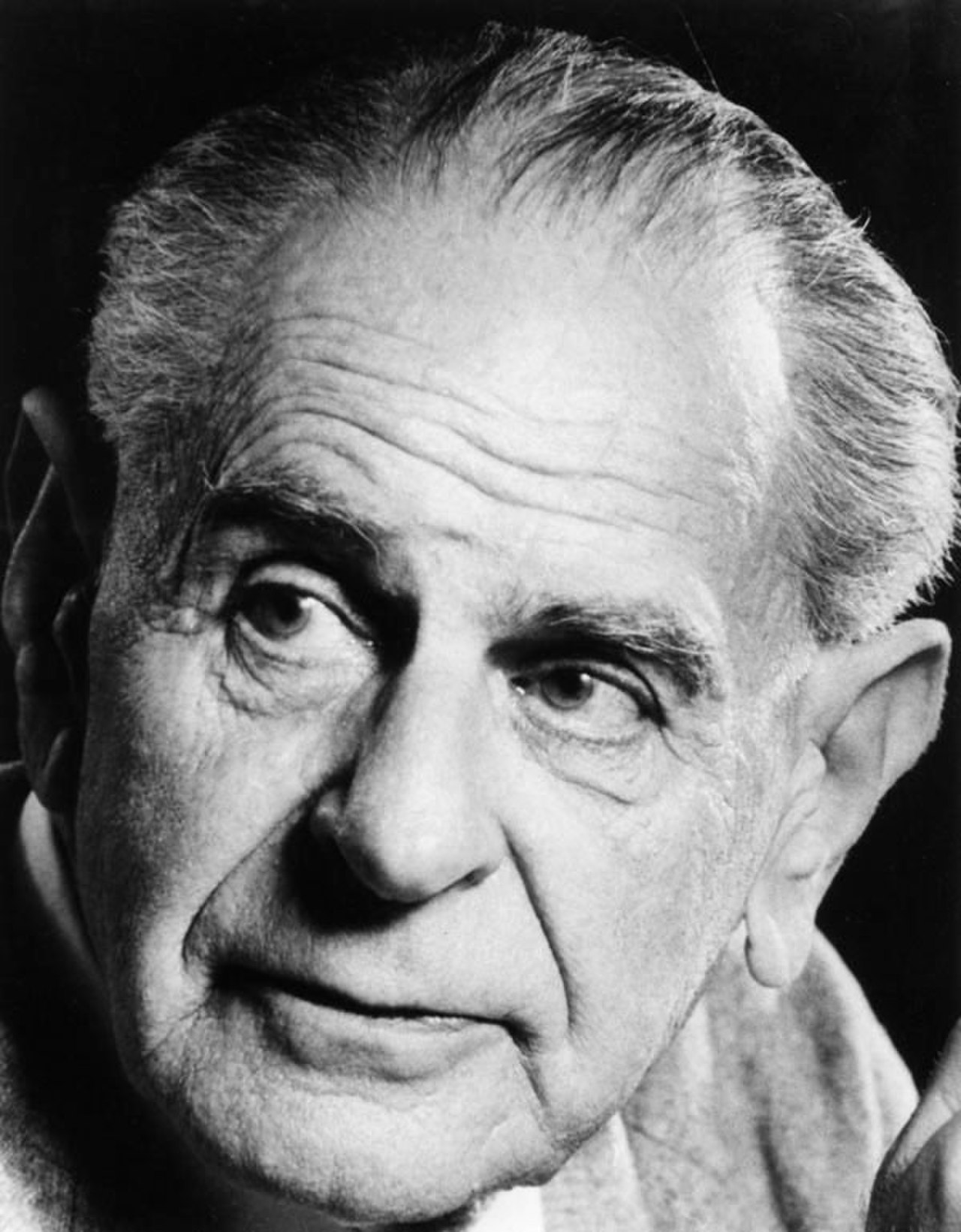
Karl Popper
The Genesis of Critical Thought
Born in Vienna on July 28, 1902, Karl Raimund Popper emerged from a vibrant intellectual milieu that deeply influenced his philosophical trajectory. His early life was marked by a profound engagement with the scientific and philosophical currents of his time, including Marxism, psychoanalysis, and the logical positivism of the Vienna Circle. However, Popper developed a critical stance, famously recounting his disillusionment with theories that seemed to explain everything, thus explaining nothing.
He argued that true scientific theories must be testable and potentially refutable, a stark contrast to theories that could accommodate any observation. This led him to formulate his groundbreaking criterion of falsifiability, which would become the bedrock of his philosophy of science. He later emigrated to New Zealand and then to Britain, where he held significant academic positions, most notably founding the Department of Philosophy, Logic and Scientific Method at the London School of Economics, solidifying his influence on 20th-century thought before his death on September 17, 1994.
The Engine of Scientific Progress
Popper fundamentally challenged the prevailing inductivist view of the scientific method. He argued that science does not progress by accumulating observations to confirm a hypothesis, but rather by proposing bold conjectures and then rigorously attempting to falsify them. According to Popper, a theory is scientific only if it is falsifiable; that is, if there exists some conceivable observation that could prove it false.
This criterion served as a demarcation between science and non-science (or pseudoscience). For Popper, theories like Einstein's theory of relativity were scientific because they made specific, risky predictions that could, in principle, be proven wrong. Conversely, theories like Marxism or Freudian psychoanalysis, which he argued could explain any historical event or human behavior retrospectively, were not scientific because they were not falsifiable.
This emphasis on critical testing and refutation, rather than confirmation, revolutionized how we understand scientific inquiry and knowledge acquisition.
The Open Society
In his seminal work 'The Open Society and Its Enemies,' Popper launched a powerful critique of totalitarian ideologies, including historicism, which he saw as a dangerous belief in inevitable historical laws. He vigorously defended liberal democracy, characterizing it as the 'open society'-a society that allows for critical discussion, dissent, and gradual reform. He contrasted this with the 'closed society,' which is characterized by rigid dogma, suppression of criticism, and a belief in absolute truth, often embodied in utopian political projects.
Popper argued that the best political systems are those that allow for the peaceful removal of rulers and the correction of errors through open debate and democratic processes. His advocacy for critical rationalism extended beyond science into the political realm, championing a pluralistic and tolerant society where diverse viewpoints can coexist and be openly challenged.
The Enduring Legacy of Critical Rationalism
Karl Popper's intellectual legacy is vast and continues to shape discussions in philosophy, science, and political theory. His principle of falsifiability remains a crucial concept in the philosophy of science, influencing how scientific theories are evaluated and how research is conducted. The idea that scientific knowledge is provisional, always open to revision in the face of new evidence, is a direct inheritance from Popper.
In political philosophy, his impassioned defense of the open society and his critique of totalitarianism provide enduring arguments for the importance of freedom, critical thinking, and democratic institutions. His concept of 'piecemeal social engineering'-advocating for gradual, experimental reforms rather than radical, utopian overhauls-offers a pragmatic approach to addressing societal problems. Popper's insistence on intellectual humility and the continuous process of critical inquiry remains profoundly relevant in an age often marked by dogmatism and polarization.
Go deeper
Frequently Asked Questions
Who was Karl Popper?+
What does "falsifiability" mean?+
Why did Popper say Marxism and Freudian ideas were not scientific?+
What is an "open society" according to Popper?+
Where did Popper work and what did he do there?+
Based on content from Wikipedia · Licensed under CC BY-SA 4.0