

Jomo Kenyatta International Airport
Images

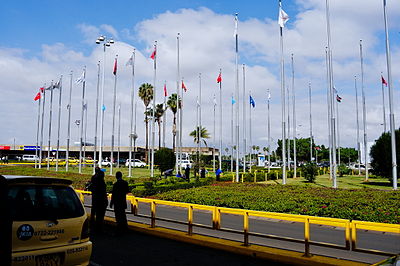
Jomo Kenyatta International Airport terminal building, 2025 (02)




Geopolitical Significance and Operational Scope
Jomo Kenyatta International Airport (JKIA), designated by IATA code NBO and ICAO code HKJK, is strategically positioned in the Embakasi suburb, approximately 18 kilometers southeast of Nairobi's central business district. This location places it as a critical gateway to East Africa, serving not only Nairobi, Kenya's capital and largest city, but also acting as a vital transit point for regional and international travel.
The airport's operational scope is immense, facilitating scheduled flights to an impressive array of destinations spanning over 50 countries. This extensive network underscores its role as a major hub, connecting Kenya to diverse global markets and cultural centers. In 2016, JKIA handled over 7 million passengers, solidifying its status as the seventh busiest airport in Africa by passenger traffic, a testament to its infrastructural capacity and operational efficiency in a competitive global aviation landscape.
From Embakasi to a National Icon
The airport's history is intertwined with Kenya's post-independence narrative. Originally established as Embakasi Airport, its name was formally changed in 1978 to honor Jomo Kenyatta. Kenyatta, a pivotal figure in Kenya's struggle for independence, served as the nation's first Prime Minister and subsequently its first President.
This renaming was a deliberate act to imbue the airport with national significance, associating it with the foundational leader and the aspirations of a newly independent nation. The transition from a functional facility to a namesake monument reflects the evolving identity of Kenya and the importance placed on recognizing its historical architects. This evolution mirrors the broader development of national infrastructure as symbols of sovereignty and progress.
Economic Catalyst and Employment Generator
JKIA functions as a powerful economic engine for Kenya. Its role extends far beyond passenger transport; it is a critical conduit for international trade and commerce. The airport facilitates the movement of significant volumes of cargo, enabling Kenyan businesses to export their goods to global markets and import essential products.
This trade activity is vital for economic growth, supporting industries ranging from agriculture and manufacturing to tourism. Furthermore, the airport is a substantial source of employment. Its operations require a diverse workforce, including pilots, air traffic controllers, ground crew, security personnel, customs officials, and a wide array of service industry professionals in retail, hospitality, and logistics.
The economic ripple effect of JKIA's operations is felt throughout Nairobi and the wider Kenyan economy, contributing to GDP and fostering development.
Cultural Exchange and Global Integration
The airport serves as a dynamic interface for cultural exchange, bringing people from disparate backgrounds together. As a primary point of entry and exit, JKIA facilitates tourism, allowing international visitors to experience Kenya's rich cultural heritage, diverse landscapes, and wildlife. Simultaneously, it enables Kenyans to travel abroad, fostering global awareness and cross-cultural understanding.
This constant flow of people, ideas, and perspectives enriches the national fabric and promotes Kenya's integration into the global community. The airport is a tangible representation of Kenya's outward-looking policy and its commitment to participating actively on the international stage, acting as a bridge between local traditions and global trends.
Infrastructure, Development, and Future Outlook
The continued development and expansion of JKIA are crucial for Kenya's future economic growth and its position as a regional aviation leader. As passenger and cargo volumes are projected to increase, ongoing investments in infrastructure, technology, and security are paramount. This includes enhancing terminal capacity, improving air traffic control systems, and ensuring compliance with international aviation standards.
The airport's ability to adapt to evolving aviation technologies and environmental regulations will be key to its long-term success. Its strategic importance means that its development is closely linked to national development strategies, aiming to enhance connectivity, facilitate trade, and support tourism, thereby reinforcing Kenya's role as a pivotal player in the global aviation network.
See also
Frequently Asked Questions
What is Jomo Kenyatta International Airport and where is it located?+
Why is the airport named after Jomo Kenyatta?+
How many passengers used the airport in 2016?+
What kinds of flights can you take from this airport?+
How does the airport help Kenya's economy?+
Based on content from Wikipedia · Licensed under CC BY-SA 4.0