

Irenaeus
Images
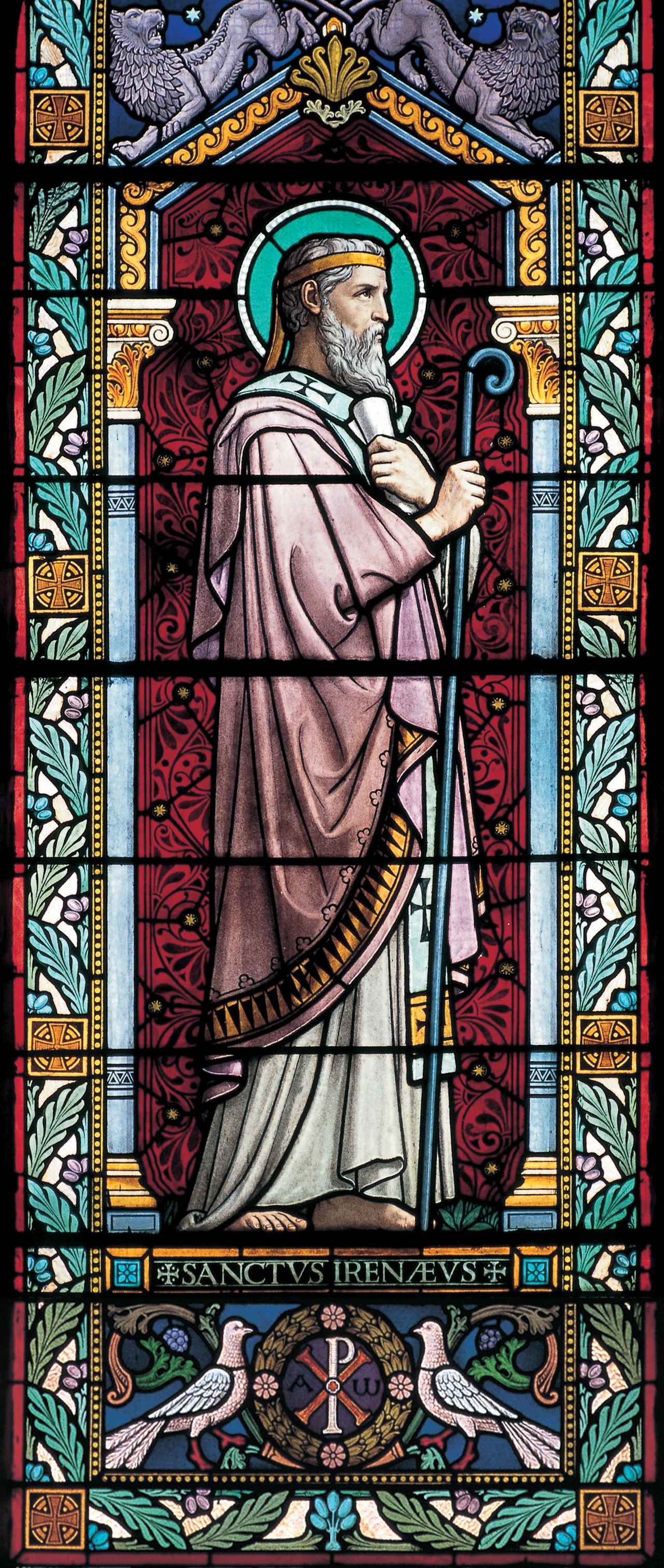
Irenaeus
Irenaeus's Intellectual Formation
Irenaeus's intellectual journey began in the vibrant Christian milieu of Asia Minor, likely Smyrna, around 130 AD. His formative years were marked by exposure to a rich tapestry of early Christian thought, crucially influenced by figures like Polycarp, a direct disciple of the Apostle John. This direct link to the apostolic generation provided Irenaeus with a deep grounding in what he considered the authentic Christian message.
His education was not confined to theological discourse; he was also well-versed in classical Greek philosophy and rhetoric, skills that would prove invaluable in his later polemical works. The move to Lugdunum in Gaul, a significant Roman administrative and commercial center, placed him on the western frontier of the empire. As bishop, he was tasked with shepherding a diverse flock and confronting the complex theological challenges arising from interactions with various Gnostic and other heterodox groups.
This geographical and cultural transition from the East to the West allowed him to synthesize diverse traditions and articulate a unified Christian vision for a broader audience, moving beyond regional specificities to address universal theological concerns.
Against the Gnostic Tide
Irenaeus's magnum opus, 'Adversus Haereses' (Against Heresies), stands as a monumental achievement in early Christian apologetics. This multi-volume work was a systematic and comprehensive refutation of the diverse Gnostic systems prevalent in the 2nd century. Irenaeus meticulously dissected Gnostic cosmology, their dualistic worldview, their esoteric interpretations of scripture, and their often-antinomian ethical stances.
He contrasted these with what he understood as the consistent, public, and universally accessible message of Christianity, rooted in the Old and New Testaments. A cornerstone of his argument was the doctrine of 'apostolic succession,' which he employed to demonstrate the continuity and legitimacy of the Church's teaching authority. By tracing the lineage of bishops back to the apostles, he provided a criterion for distinguishing true doctrine from novel interpretations.
His approach was not merely destructive; he sought to reconstruct the authentic narrative of salvation history, emphasizing the goodness of creation and the unified plan of God, directly countering the Gnostic devaluation of the material world and the creator God of the Old Testament.
Recapitulation and the Restoration of Humanity
Central to Irenaeus's theological framework is the concept of 'recapitulation' (Greek: anakephalaiōsis). This doctrine posits that Jesus Christ, as the second Adam, recapitulates or sums up all of human history and destiny within himself, restoring humanity to its intended state of communion with God. Irenaeus saw Christ's life, death, and resurrection as a cosmic event that reversed the Fall of Adam and redeemed creation.
He strongly affirmed the full humanity and full divinity of Christ, arguing that only a being who was both God and man could bridge the chasm between the divine and the human. This dual nature was essential for the redemptive work; Christ's humanity allowed him to represent humanity, while his divinity empowered him to overcome sin and death. This Christological understanding was intrinsically linked to his view of creation; he defended the goodness of the material world, arguing that God's plan encompassed the redemption and transformation of all creation, not its abandonment.
His theology thus presented a holistic vision of salvation that embraced both the spiritual and the material realms.
The Enduring Legacy
The influence of Irenaeus of Lyons reverberates through the subsequent history of Christian theology and ecclesiology. His systematic refutation of Gnosticism helped to clarify and solidify orthodox Christian doctrine, providing a theological bulwark against competing worldviews. The principle of apostolic succession, as articulated by Irenaeus, became a foundational element for the hierarchical structure and doctrinal authority of many major Christian denominations, including Catholicism, Orthodoxy, and Anglicanism.
His emphasis on the unity of scripture, the goodness of creation, and the comprehensive redemptive work of Christ continued to inform theological discourse for centuries. Scholars continue to analyze his writings for insights into early Christian hermeneutics, Christology, and the development of church structure. Irenaeus's legacy is that of a pivotal figure who, through rigorous intellectual engagement and unwavering commitment to what he perceived as apostolic truth, played an indispensable role in shaping the identity and trajectory of Christianity.
Go deeper
Frequently Asked Questions
Who was Irenaeus?+
What is the book "Against Heresies"?+
Why did Irenaeus talk about apostolic succession?+
What does the word recapitulation mean in Irenaeus's teaching?+
How did Irenaeus describe Jesus?+
Based on content from Wikipedia · Licensed under CC BY-SA 4.0