

Christology: Thinking About Jesus!
Images

File:Byzantine Empire Christological diptych 03.jpg



The Core Questions
Christology, a fundamental branch of Christian theology, is dedicated to the systematic study of Jesus Christ. Its primary focus is on discerning the nature of Jesus – was he solely human, exclusively divine, or a unique combination of both? This inquiry extends to his role as the Messiah, encompassing his mission to liberate the Jewish people, establish the Kingdom of God, and provide salvation from sin.
The historical and theological exploration of these questions has led to diverse interpretations and significant debates throughout Christian history, influencing the development of doctrine and the formation of various Christian traditions. Understanding Christology is essential for grasping the foundational beliefs of Christianity and its impact on global culture and philosophy.
Early Christian Understandings and Emerging Titles
The earliest Christian writings reveal a rich tapestry of titles attributed to Jesus, drawn directly from Hebrew scriptures. Terms such as 'Son of Man,' 'Son of God,' 'Messiah,' and 'Kyrios' (Lord) were employed to articulate his significance. These titles often coalesced around two contrasting conceptual frameworks.
One perspective viewed Jesus as a preexistent divine being who descended to Earth, experienced humanity, and subsequently returned to God. The opposing view, known as adoptionism, posited that Jesus was a human being who was divinely 'adopted' by God at a pivotal moment, such as his baptism, crucifixion, or resurrection. The scholarly consensus has evolved, with many now arguing that a 'high Christology' (emphasizing divinity) existed earlier than previously thought, even predating the Apostle Paul's writings.
The Great Councils
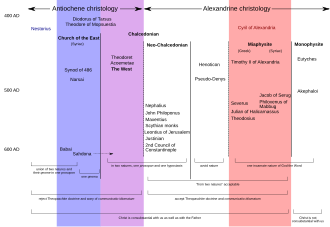
From the 2nd to the 5th centuries CE, the relationship between Christ's human and divine natures became a central and often contentious subject of debate within the early Church, culminating in the first seven ecumenical councils. These gatherings were crucial for defining orthodox Christian belief. A landmark moment occurred at the Council of Chalcedon in 451 CE, which formulated the doctrine of the hypostatic union.
This doctrine asserts that Jesus Christ is one person with two distinct natures, divine and human, united 'without confusion, without change, without division, without separation.' This formulation was affirmed by the majority of Western Christianity and Eastern Orthodoxy. However, it was rejected by the Oriental Orthodox Churches, who adhere to Miaphysitism, a view articulated at the Second Council of Ephesus, which affirms one composite divine-human nature after the union, stemming from earlier councils like the First Council of Ephesus.
Enduring Significance and Modern Relevance
The Christological debates of antiquity were not merely abstract theological exercises; they had profound and lasting implications for Christian doctrine, practice, and identity. The way Jesus is understood directly impacts beliefs about salvation, the nature of God's interaction with humanity, the authority of scripture, and the structure of the Church. In contemporary society, Christology continues to be a vibrant area of study, engaging with philosophical concepts, interfaith dialogue, and the evolving cultural landscape.
Understanding Christology allows for a deeper appreciation of the historical development of Christianity, the diversity within Christian thought, and the enduring questions about faith, reason, and the human experience of the divine.
Go deeper
Frequently Asked Questions
What is Christology?+
Was Jesus only human or only divine?+
What did the Council of Chalcedon decide about Jesus?+
Why do some churches disagree about Jesus' nature?+
How does Christology affect what Christians believe?+
Based on content from Wikipedia · Licensed under CC BY-SA 4.0