

Indianapolis 500
Images

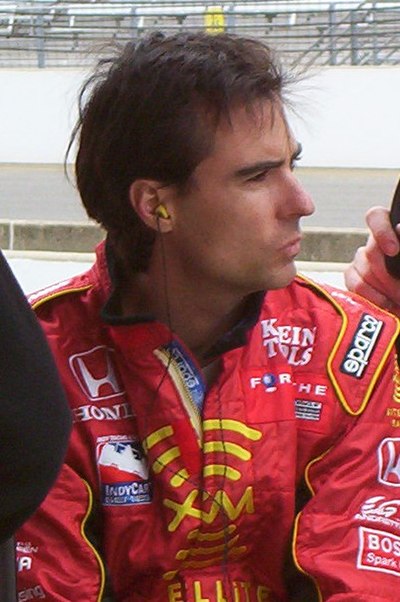
Dario Franchitti - 2015 Indianapolis 500 - Sarah Stierch 2


The Genesis and Evolution of the Brickyard's Grand Prix
The Indianapolis Motor Speedway, affectionately known as 'The Brickyard,' is more than just a racetrack; it's a monument to automotive history. Its transformation began in 1909 when it was paved with over three million bricks, a surface that defined its early identity and earned its enduring nickname. A small, symbolic section of these original bricks remains at the start/finish line, a tangible link to the past.
Located in Speedway, Indiana, an enclave of Indianapolis, the track's design as a 2.5-mile oval has facilitated extreme speeds and daring overtakes for over a century. The inaugural Indianapolis 500-Mile Race in 1911, won by Ray Harroun, set the stage for what would become 'The Greatest Spectacle in Racing.' The event's resilience is remarkable, having navigated interruptions due to World War I and World War II, only to emerge stronger and more anticipated each time.
Its status as part of the Triple Crown of Motorsport, alongside the 24 Hours of Le Mans and the Monaco Grand Prix, underscores its global racing prestige.
Architects of Victory
The annals of the Indianapolis 500 are filled with drivers and owners who have achieved legendary status. The quartet of A. J.
Foyt, Al Unser Sr., Rick Mears, and Hélio Castroneves, each with four victories, represent the pinnacle of driver achievement at this demanding circuit. Rick Mears' record for most career pole positions further solidifies his dominance in qualifying. Beyond the drivers, car owners play a pivotal role, and Roger Penske stands out with an unparalleled record of 20 wins and 19 poles as an owner, a testament to his team's consistent excellence.
The race has also been a proving ground for technological innovation, with teams constantly pushing the boundaries of engineering to gain a competitive edge. The pursuit of victory here is a complex interplay of driver skill, mechanical prowess, and strategic acumen.
The Enduring Rituals of Race Day
The Indianapolis 500 is deeply ingrained in American sporting culture, largely due to its rich tapestry of traditions. The starting grid, a precisely arranged 33 cars in 11 rows of three, is a visual spectacle. The pre-race ceremony includes the iconic rendition of 'Back Home Again in Indiana,' a moment that unites fans and participants in shared heritage.
The post-race tradition of the winner drinking a bottle of milk, a practice dating back to the 1930s, symbolizes purity and achievement. The qualification process itself is a significant event, requiring drivers to complete four timed laps, a more rigorous test than a single-lap dash, adding a distinct layer of strategic importance to the race weekend. These traditions are not mere formalities; they are the threads that weave the narrative of the Indy 500, making it more than just a race, but a cultural phenomenon.
Economic and Cultural Footprint
The Indianapolis 500 is a significant economic driver for the Indianapolis metropolitan area and the state of Indiana. The event draws hundreds of thousands of spectators, generating substantial revenue through ticket sales, hospitality, tourism, and related industries. The Speedway itself is a major employer, and the race fosters a vibrant ecosystem of racing technology companies, suppliers, and support services.
Culturally, the Indy 500 is a defining event for Indianapolis, shaping its identity and attracting global attention. It serves as a platform for technological advancement in automotive engineering, with innovations developed for the race often finding their way into consumer vehicles. The race's enduring appeal lies in its blend of high-octane competition, historical gravitas, and deeply cherished traditions, making it a unique and vital part of American sports heritage.
See also
Frequently Asked Questions
What is the Indianapolis 500?+
Why is the track called "The Brickyard"?+
How many cars start the Indy 500?+
What happens after a driver wins the Indy 500?+
Which drivers have won the Indy 500 four times?+
Based on content from Wikipedia · Licensed under CC BY-SA 4.0