

Holborn
Images

Knights Templar, Holborn, WC2


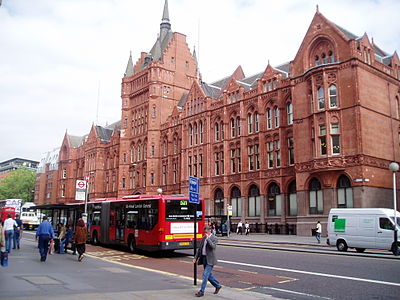


Echoes of the Holbourne
The geographical identity of Holborn is inextricably linked to the now-subterranean River Fleet, historically known as the Holbourne or Oldbourne. This ancient watercourse, which once meandered through the area, has profoundly influenced its nomenclature and development. The principal thoroughfares, Holborn and High Holborn, trace the path of this buried river, serving as a constant, albeit invisible, reminder of its historical significance.
The district's location on the west bank of the Fleet positioned it as a vital artery connecting the City of London to Westminster. While the river itself is no longer a visible feature, its legacy is embedded in the very fabric of the area, dictating street layouts and contributing to its unique historical character. This deep historical connection to a lost waterway provides a foundational layer to understanding Holborn's enduring appeal and its strategic importance within London's urban landscape.
The Legal Quarter
Holborn stands as a preeminent centre for the legal profession in the United Kingdom. It is home to a significant concentration of barristers' chambers, law firms, and professional legal bodies, including the Inner Temple and Middle Temple, two of the four historic Inns of Court. These institutions have trained lawyers for centuries and remain central to the functioning of the British legal system.
The presence of these esteemed legal establishments imbues Holborn with an atmosphere of gravitas and intellectual pursuit. This concentration of legal expertise not only shapes the local economy but also contributes to London's status as a global legal hub, attracting practitioners and clients from around the world. The district's identity is thus deeply intertwined with the administration of justice and the practice of law.
Hatton Garden
Adjacent to the legal heart of Holborn lies Hatton Garden, a district globally recognized as London's primary centre for the diamond and jewellery trade. This area hosts a dense network of diamond dealers, cutters, polishers, and jewellery designers. Hatton Garden's reputation is built on centuries of expertise, trust, and a unique concentration of specialized skills.
It serves as a crucial marketplace for both rough and polished diamonds, attracting international buyers and sellers. The district's specialized economy is a testament to the power of concentrated industry clusters, where shared knowledge, infrastructure, and a critical mass of businesses foster innovation and maintain a competitive edge. The juxtaposition of the solemnity of the legal profession with the glittering allure of the diamond trade creates a distinctive economic and cultural dynamic within Holborn.
Great Ormond Street Hospital
Adding another vital dimension to Holborn's multifaceted identity is Great Ormond Street Hospital (GOSH), one of the world's leading pediatric hospitals. Renowned for its pioneering work in treating complex childhood illnesses and rare diseases, GOSH is a beacon of hope for families globally. The hospital's commitment to research, advanced medical treatments, and compassionate care has established it as a cornerstone of Britain's National Health Service and a leader in pediatric medicine.
Its presence in Holborn underscores the district's role not only in commerce and law but also in profound human welfare. The hospital's impact extends beyond its medical achievements, contributing to the area's reputation as a place of significant social and ethical importance, drawing a diverse population of patients, families, and world-class medical professionals.
Economic Synergy and Urban Development
Holborn's economy is characterized by a powerful synergy between its key sectors. The legal profession provides a stable foundation, driving demand for professional services and supporting ancillary businesses. The diamond trade in Hatton Garden adds a unique, high-value commercial element, attracting international investment and specialized craftsmanship.
Great Ormond Street Hospital, while primarily a healthcare institution, also functions as a significant economic engine, providing substantial employment and driving innovation in medical technology and research. This diverse economic base, rooted in specialized knowledge and global connections, contributes to Holborn's resilience and its continued relevance as a vital district within central London. The area's strategic location and historical development have allowed these distinct yet complementary industries to flourish, creating a dynamic urban environment.
See also
Frequently Asked Questions
What is Holborn and why is it special?+
Why is the River Fleet important to Holborn?+
Where are the famous law schools in Holborn?+
What is Hatton Garden and how does it relate to Holborn?+
What is Great Ormond Street Hospital and why is it important?+
Based on content from Wikipedia · Licensed under CC BY-SA 4.0