

High Court of Australia
Images

High Court of Australia


The Constitutional Cornerstone
The High Court of Australia occupies the pinnacle of the nation's judicial hierarchy, serving as the ultimate appellate court and the principal guardian of the Australian Constitution. Its authority is not merely statutory but is deeply embedded within Chapter III of the Constitution itself, which vests the judicial power of the Commonwealth in the High Court and such other federal courts as the Parliament may establish.
This constitutional bedrock grants the court its supreme interpretive power, allowing it to rule on the validity of laws passed by both federal and state parliaments. The High Court of Australia Act 1979 further delineates its internal operations and procedures, ensuring a structured and consistent approach to justice. Its establishment in 1903, following the Judiciary Act, marked a critical step in Australia's journey towards legal sovereignty, providing a definitive forum for resolving constitutional questions and intergovernmental disputes.
The Architecture of Justice
The physical location and evolution of the High Court's presence reflect its growing national stature. For much of its early history, the court operated with a degree of mobility, with sittings rotating between state capitals, most notably Melbourne and Sydney. This itinerant practice underscored its role as a court for the entire nation, accessible across different regions.
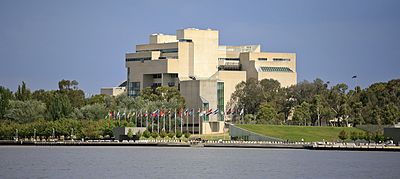
However, since 1980, the High Court has been permanently housed in a purpose-built edifice in Canberra, strategically situated within the Parliamentary Triangle. This move signifies a consolidation of its federal role and its close proximity to the legislative and executive branches of government. Despite its permanent home, the court continues to hold regular sittings outside Canberra, maintaining its connection to the broader Australian populace and legal community.
The Bench of Seven
The composition of the High Court is fixed at seven justices, including the Chief Justice, who presides over the court's proceedings and plays a key role in its administration. The appointment of these justices is a deliberate and carefully managed process. Nominated by the Attorney-General, appointments require the formal approval of the Prime Minister and the Cabinet, ensuring a consensus on the suitability of candidates.
Justices are appointed to hold office permanently until they reach the mandatory retirement age of 70, a provision designed to ensure judicial independence and prevent political interference in tenure. This long tenure allows justices to develop deep expertise and contribute significantly to the evolution of Australian jurisprudence, often shaping legal thought for decades through their reasoned judgments.
Navigating the Path to the Apex
The High Court exercises both original and appellate jurisdiction, though its appellate function is its most prominent. The primary pathway for cases to reach the High Court is through the 'special leave' process. Parties seeking to appeal a decision from a lower court must first apply for special leave, convincing the High Court that their case involves a significant question of law or public importance.
If granted, the court proceeds to a full hearing, involving detailed written submissions and oral arguments. While the court possesses original jurisdiction, particularly in matters concerning the interpretation of the Constitution, it typically delegates these cases to lower courts to manage its workload and focus on its appellate role. This tiered system ensures that the High Court addresses the most complex and precedent-setting legal issues.
The High Court's Enduring Impact on Australian Society
The High Court's decisions are not merely legal pronouncements; they are foundational to the development of Australian law and society. By interpreting the Constitution, the court defines the powers of government, the rights of citizens, and the relationship between the federal government and the states. Landmark cases have shaped everything from native title and freedom of speech to the balance of power between different levels of government. The court's rulings have a direct impact on public policy, social justice, and the everyday lives of Australians.
Its role as the ultimate interpreter of the nation's foundational document makes it a critical institution for maintaining the rule of law and ensuring a just and equitable society.
See also
Frequently Asked Questions
What is the High Court of Australia?+
Where does the High Court sit?+
How many justices are on the High Court?+
How are justices chosen and how long do they serve?+
Why does the High Court sometimes sit in other cities?+
Based on content from Wikipedia · Licensed under CC BY-SA 4.0