

Heat Wave
Images
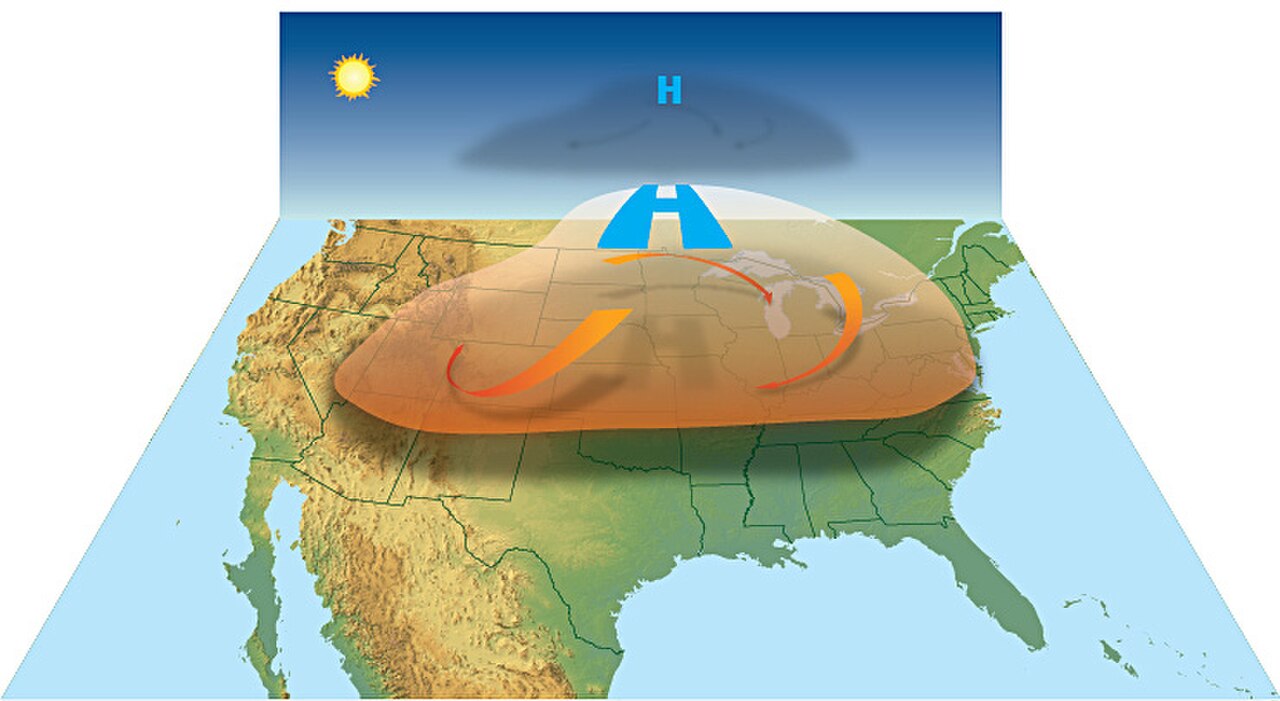
Heat wave
The Dynamics of Atmospheric Stagnation
Heat waves, often termed extreme heat events, are characterized by periods of abnormally hot weather that deviate significantly from typical seasonal norms. Their formation is primarily driven by the behavior of large-scale atmospheric pressure systems. Specifically, a robust and persistent high-pressure area, often referred to as a 'heat dome,' can become established over a region.
This anticyclonic system features descending air, which warms adiabatically as it compresses. The descending air suppresses cloud formation and vertical mixing, effectively trapping heat near the Earth's surface and preventing cooler air masses from intruding. The duration of a heat wave is dictated by the longevity and strength of this high-pressure system, which can persist for days to weeks, allowing temperatures to steadily climb and remain elevated.
Quantifying 'normal' temperature states and the spatial extent of these events remains a challenge for meteorologists, as heat waves are inherently relative to local climate patterns and seasonal expectations. Temperatures considered moderate in one climate zone can constitute a severe heat wave in another if they fall outside the established climatic envelope.
The Accelerating Trend
Since the mid-20th century, there has been a discernible and alarming increase in the frequency, intensity, and duration of heat waves, particularly over continental landmasses. This trend is overwhelmingly attributed to anthropogenic climate change. The enhanced greenhouse effect, driven by the emission of greenhouse gases like carbon dioxide and methane from human activities, leads to a general warming of the planet.
This background warming makes it easier for heat waves to form and reach more extreme temperatures. The World Meteorological Organization has consistently reported on the intensification of these events, with 2024 witnessing record-breaking temperatures in numerous regions, including Europe, North America, and China. Many areas have endured consecutive days exceeding 45°C (113°F), underscoring the escalating severity and frequency of extreme heat, which poses significant risks to ecosystems and human societies globally.
This intensification is not uniform, but the overall pattern points towards a future with more frequent and severe heat stress.
Cascading Impacts
The consequences of heat waves extend far beyond mere discomfort, triggering a cascade of socio-economic and environmental disruptions. For human health, extreme heat poses a direct threat by overwhelming the body's thermoregulatory mechanisms, leading to heat exhaustion, heatstroke, and increased mortality, particularly among vulnerable populations such as the elderly, children, and those with pre-existing health conditions. Economically, heat waves can cripple productivity, as outdoor labor becomes hazardous and indoor work may be hampered by heat or power outages.
Agricultural sectors are particularly susceptible, with severe heat waves capable of causing widespread crop failures, impacting food security and leading to significant economic losses. The increased risk of wildfires in drought-stricken areas is another critical environmental impact, leading to habitat destruction and air quality degradation. Furthermore, the surge in demand for air conditioning during heat waves places immense strain on electricity grids, often resulting in blackouts that exacerbate the crisis.
Forecasting and Mitigation
The predictability of heat waves has improved significantly, allowing meteorological agencies to issue timely warnings. The ability to forecast these events enables authorities to implement preparedness measures, such as establishing cooling centers, disseminating public health advisories, and coordinating emergency responses. These warnings are crucial for mitigating the adverse health impacts by encouraging individuals to take precautions like staying hydrated, seeking shade, and avoiding strenuous activities.
Beyond immediate public safety measures, long-term strategies are essential for adapting to the increasing threat of heat waves. These include urban planning initiatives to reduce the urban heat island effect, developing heat-resilient infrastructure, and implementing policies to curb greenhouse gas emissions to address the root cause of climate change. International cooperation and scientific research are vital for understanding evolving heat wave patterns and developing effective adaptation and mitigation strategies.
Go deeper
Frequently Asked Questions
What is a heat wave?+
Why does a heat wave happen?+
How long can a heat wave last?+
What can happen to people and animals during a heat wave?+
Why are heat waves getting more common?+
Based on content from Wikipedia · Licensed under CC BY-SA 4.0